The Benois Family: A Cradle of Russian Artistic Talent
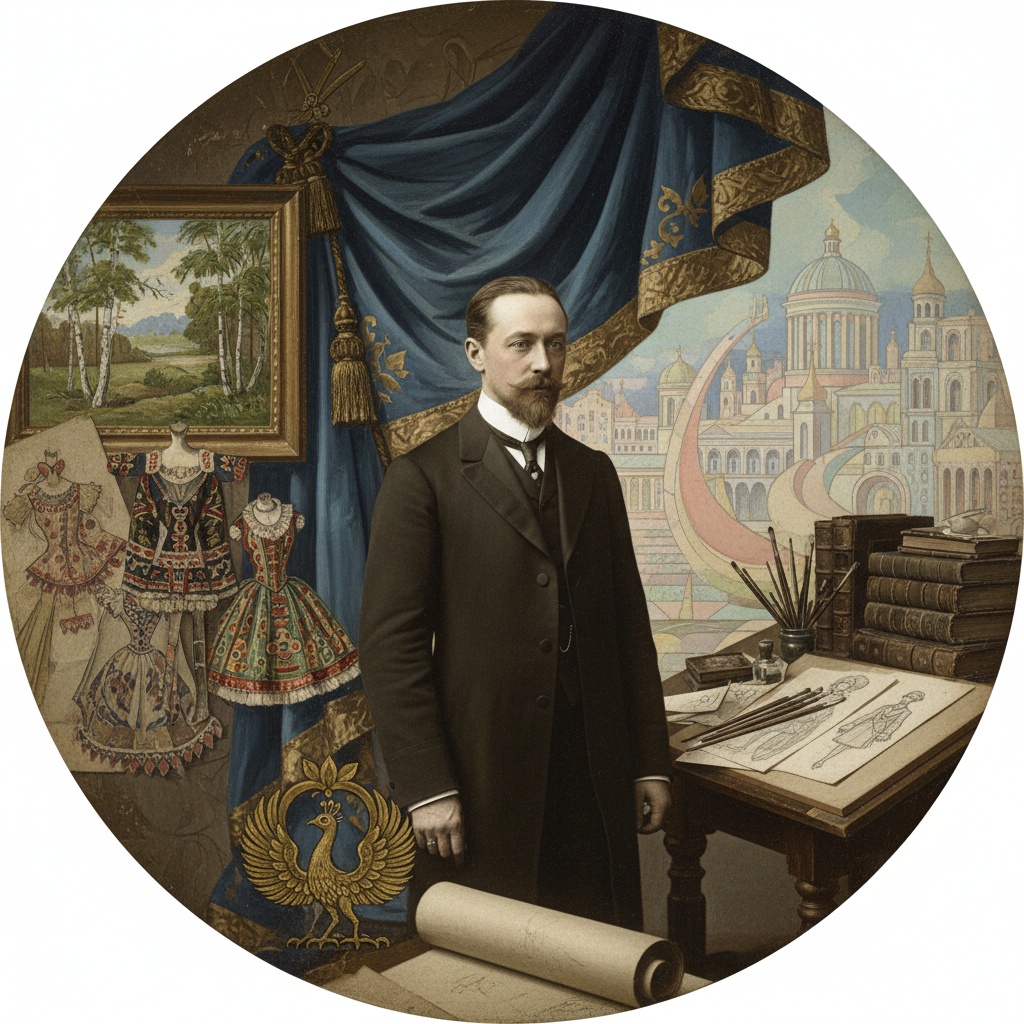
Alexandre Benois emerged not as a solitary genius, but from a lineage steeped in the intellectual and artistic currents of 19th-century Russia. The Benois family was far more than simply patrons or collectors; they were active participants in shaping the nation’s cultural landscape. His mother, Camilla Cavos, descended from a line with Italian roots, while his father, Nicholas Benois, was a respected architect. However, it was the collective spirit – the shared passion for art, history, and intellectual discourse – that truly defined the family's legacy. Brothers Albert, also a painter, and Leon, a prominent architect in his own right, formed a creative nucleus alongside Alexandre, fostering an environment of constant exchange and mutual inspiration. This familial constellation wasn’t merely supportive; it was foundational to Alexandre’s early development, instilling within him a deep appreciation for the past and a critical eye towards the present. Even his sister, Maria's marriage to composer Nikolai Tcherepnin would prove significant, forging further artistic collaborations throughout his life.
Born into privilege, Benois initially pursued legal studies at Saint Petersburg Imperial University, a path dictated by familial expectations rather than personal inclination. Yet, even during these years, the pull of art proved irresistible. A pivotal trip to Versailles in 1897 marked a turning point. There, he embarked on a series of watercolors depicting the “Last Promenades of Louis XIV,” works that would unexpectedly catapult him into the artistic spotlight and introduce him to two figures who would irrevocably alter the course of his career: Sergei Diaghilev and Léon Bakst.
Founding 'Mir Iskusstva': Challenging Academic Tradition
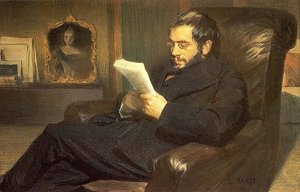
Alexandre (Alexander) Nikolayevich Benois (Russian: Алекса́ндр Никола́евич Бенуа́, romanized: Aleksandr Nikolayevich Benua; 3 May [O.S. 21 April] 1870 – 9 February 1960) was a Russian artist, art critic, historian, preservationist and founding membe...
The late 19th century in Russia was characterized by a stifling academicism, a rigid adherence to established styles that left little room for innovation. It was against this backdrop that Benois, Diaghilev, and Bakst conceived of Mir Iskusstva (“World of Art”), an art movement and magazine dedicated to challenging the status quo. More than just a publication, Mir Iskusstva became a rallying point for artists seeking to break free from convention and embrace new aesthetic possibilities. The movement championed the principles of the Aesthetic Movement, emphasizing beauty, symbolism, and refined craftsmanship.
Benois’s role was central: he served as editor, critic, and driving force behind the magazine's intellectual direction. He passionately advocated for a return to classical ideals, not through slavish imitation but through a sensitive reinterpretation informed by modern sensibilities. This wasn’t simply about rejecting realism; it was about imbuing art with meaning, emotion, and a sense of spiritual depth. The early years saw the publication of groundbreaking articles on 19th-century Russian art and meticulous studies of Tsarskoye Selo, demonstrating Benois's commitment to both scholarship and artistic innovation. His illustrations for Pushkin’s “The Bronze Horseman” in 1903 quickly became recognized as a landmark achievement, showcasing his masterful draftsmanship and evocative storytelling.
Benois's Stage Designs for the Ballets Russes: Revolutionizing Ballet
In 1901, Benois assumed the role of scenic director at the Mariinsky Theatre in Saint Petersburg, but it was his collaboration with Sergei Diaghilev’s Ballets Russes, beginning shortly thereafter, that would cement his international reputation. Diaghilev recognized Benois's unique talent for creating immersive worlds – sets and costumes that weren’t merely decorative backdrops but integral components of the balletic narrative.
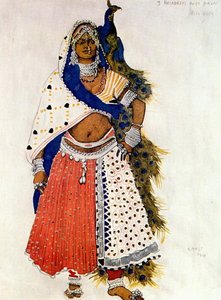
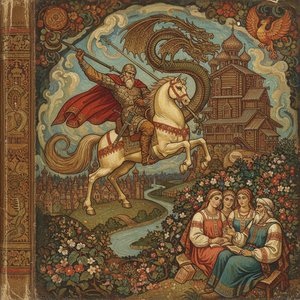
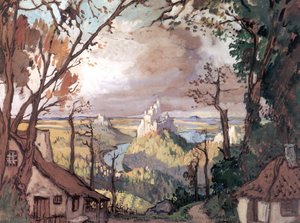
Benois’s designs were revolutionary. He drew inspiration from a diverse range of sources, including 18th-century court paintings, Russian folk art, and Japanese prints. His work for productions like “Les Sylphides” (1909), “Giselle” (1910), and perhaps most famously, “Petrushka” (1911) redefined the aesthetics of ballet. He moved away from the opulent realism of previous eras, favoring instead a stylized approach that emphasized atmosphere, emotion, and psychological depth. The costumes were equally innovative, blending historical accuracy with a distinctly modern sensibility. These weren’t simply garments; they were characters in their own right, contributing to the overall dramatic effect. His designs didn't just complement the choreography; they *informed* it, creating a synergistic relationship between music, dance, and visual art.
Beyond Theatre: Painting, Illustration & Historical Scholarship
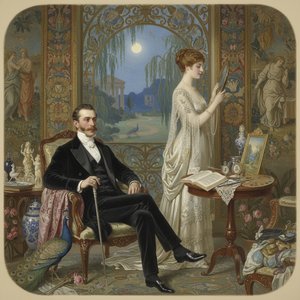
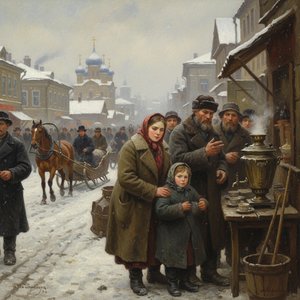
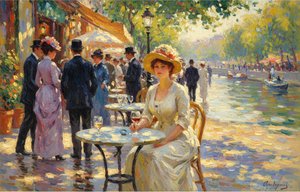
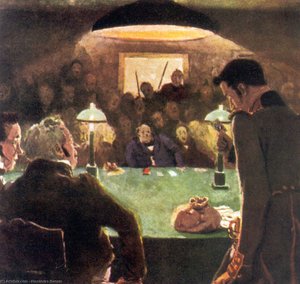
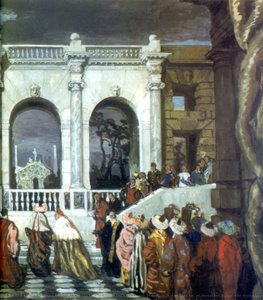
While Benois is perhaps best known for his stage designs, he was also a prolific painter and illustrator. His canvases often depicted historical scenes, imbued with a sense of nostalgia and romanticism. He possessed an exceptional ability to capture the atmosphere of bygone eras, recreating meticulously detailed interiors and evocative landscapes. His work wasn’t simply about documenting the past; it was about interpreting it, imbuing it with his own unique vision.
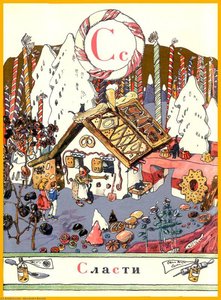
The Alphabet in Pictures, published in 1904, stands as a testament to his versatility. This elaborate art book served simultaneously as a children's primer and a showcase for his artistic skill. The illustrations are characterized by their whimsical charm and intricate detail, demonstrating Benois’s ability to appeal to both young and old. His dedication to scholarship continued throughout his career, resulting in numerous monographs on 19th-century Russian art and the history of Tsarskoye Selo. He wasn't content merely to create art; he sought to understand its historical context and share that knowledge with others.
A Legacy Preserved: Benois’s Influence on Russian Aesthetics
The tumultuous events of the Russian Revolution in 1917 presented immense challenges, but Benois persevered. He secured a position as curator of the gallery of Old Masters at the Hermitage Museum in Leningrad (now Saint Petersburg), dedicating himself to preserving Russia's artistic heritage. This role allowed him to safeguard his family’s heirloom – Leonardo da Vinci’s “Madonna Benois” – ensuring its survival for future generations.
In 1927, Benois left Russia and settled in Paris, where he continued to work as a set designer until his death in 1960. His influence on modern ballet and stage design remains profound. He demonstrated the power of art to transcend boundaries – to blend history, symbolism, and emotion into a cohesive and captivating whole. His legacy extends beyond specific artworks; it lies in his unwavering commitment to artistic innovation, his dedication to scholarship, and his ability to inspire generations of artists. Today, ArtsDot.com offers high-quality reproductions of Benois’s work, allowing art enthusiasts worldwide to experience the beauty and brilliance of this remarkable Russian master.