Defining Regionalism: The Power of Local Identity in Modern Interior Design
 Grant Wood & American Regionalism: Identity, Myth & the Rural Landscape
The Genesis of Regionalism: A Response to Modernity Wikipedia: Regionalism (art) American Regionalism is an American realist modern art movement that included paintings, murals, lithographs, and illustrations depicting realistic scenes of rural and s...
In the contemporary landscape of hospitality design, where globalized aesthetics often lead to a sense of placelessness, the emergence of Regionalism offers a profound architectural remedy. At its core, Regionalism is not merely an art movement but a deliberate aesthetic strategy designed to anchor a space within its geographical and cultural context. For the hotel designer or corporate decorator, integrating Regionalist principles means moving beyond generic luxury toward a curated experience of authenticity. This approach seeks to celebrate the specificities of a locale—its unique landscapes, historical narratives, and local customs—thereby creating an emotional resonance that connects travelers to the very ground upon which they stand. By utilizing art that reflects the "local color" of a region, designers can transform a transient hotel lobby into a meaningful cultural gateway, fostering a deep sense of belonging and place-making that distinguishes a premium property from its competitors.
The Aesthetic of Authenticity: Analyzing Key Works by Grant Wood
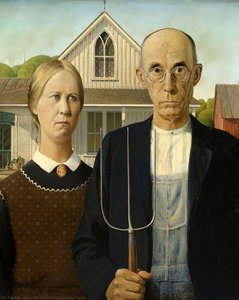
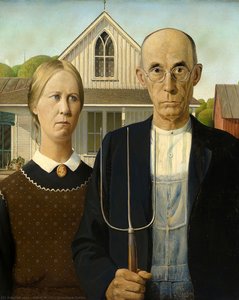 American Gothic
A Quintessential American Vision Grant Wood’s 1930 masterpiece, *American Gothic*, transcends its status as a painting; it is a cultural touchstone. More than just a portrait of rural life, this work encapsulates the anxieties and enduring values of ...
To understand the profound impact of Regionalist imagery, one must look to the masterworks of Grant Wood, whose 1930 masterpiece,
American Gothic, remains a definitive cultural touchstone. Wood’s work represents a sophisticated rejection of European abstraction in favor of a meticulous, figurative realism that finds extraordinary beauty in the ordinary. His technique, heavily influenced by the luminous precision of Flemish masters like Jan van Eyck, employs smooth brushwork and a controlled palette to render the textures of rural life with almost photographic clarity. In works such as
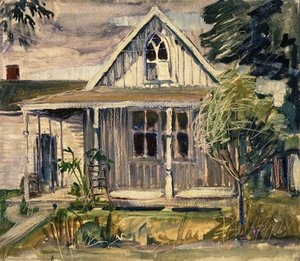
Portrait of Nan or his sketches for the iconic Carpenter Gothic farmhouse, Wood utilizes geometric forms—the sharp angles of a pitchfork, the rectangularity of architecture, and the soft curves of the landscape—to create a balanced, serene composition. For the designer, these works offer more than just visual interest; they provide a symbolic language of resilience, stability, and tradition. The subtle interplay of light and muted earthy tones in his landscapes can be strategically used to evoke feelings of tranquility and introspection within a sophisticated interior scheme.
Strategic Implementation: Integrating Regionalist Themes into Hotel and Corporate Spaces
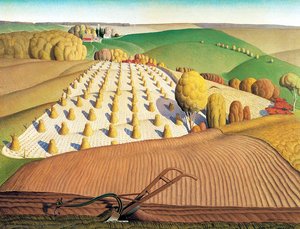
 Spring In Town
Grant Wood 's Spring in Town is a seminal work of American Regionalism, created in 1941. This painting is a quintessential representation of small-town life, showcasing the tranquility and beauty of rural America. As a leading online platform special...
Integrating Regionalist themes into large-scale commercial projects requires a strategic balance between historical reverence and modern functionality. The goal is not to create a museum-like atmosphere, but to use the movement's emphasis on landscape and local identity to inform the broader design narrative. When selecting pieces for a corporate lounge or a boutique hotel suite, consider how the subject matter—be it the rolling hills of the Midwest or the quiet dignity of small-town life—complements the existing color palette and architectural textures. The use of bold lines and vibrant, yet grounded, colors found in Regionalist paintings can serve as focal points that guide the eye through a large space. Furthermore, the movement’s focus on "local color" allows designers to implement a cohesive storytelling element across multiple rooms, using art to bridge the gap between the building's modern structure and the historical heritage of its surrounding environment. This creates a layered, sophisticated atmosphere that rewards the observant guest with a sense of discovery.
From Landscapes to Legacies: Utilizing Multi-Panel Formats for Large-Scale Architectural Features
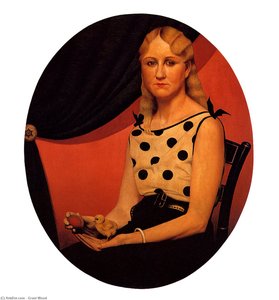 Portrait of Nan
The Portrait of Nan by Grant Wood is a captivating oil on canvas painting that showcases the artist's unique style and contribution to the Regionalism movement. Created in 1933, this masterpiece is a beautiful depiction of a woman with blonde hair si...
For the ambitious designer facing expansive walls, staircases, or grand entryways, the multi-panel trend offers a powerful tool for architectural impact. Regionalist landscapes, with their sweeping vistas and continuous horizons, are uniquely suited for transformation into multi-panel installations. By splitting a single, cohesive image across three, four, or even five panels, a designer can create a rhythmic, modern aesthetic that breaks up the monotony of large surfaces. This technique allows the artwork to become an integral part of the architecture itself, rather than a mere after-thought hung upon it. Our artists ensure that the brushstrokes and color transitions flow seamlessly across every panel, maintaining the integrity of the original composition while providing a contemporary, fragmented elegance. Such installations serve as monumental anchors for a room, capable of commanding attention in high-traffic areas like hotel corridors or corporate atriums, effectively turning a structural necessity into a legacy piece of fine art.
Sourcing Excellence: Procurement Solutions for High-Volume Art Installations
 Grant Wood
Grant DeVolson Wood (February 13, 1891 – February 12, 1942) was an American artist and representative of Regionalism, best known for his paintings depicting the rural American Midwest. He is particularly well known for American Gothic (1930), which h...
For procurement managers and hospitality professionals, the challenge of furnishing large-scale projects lies in balancing artistic excellence with operational efficiency. Sourcing high-quality, authentic reproductions requires a reliable partner capable of managing volume, scale, and logistics without compromising on detail. The ideal solution involves access to a deep catalog of masterworks that can be customized to meet specific project requirements—whether through bespoke sizing, color matching, or the application of specialized finishes like an aged craquelure effect. Professional procurement demands a streamlined workflow: from the initial digital mockup that allows for pre-painting approval to the reliable delivery of hand-painted oil canvases via global carriers like DHL or FedEx. In a high-pressure environment where timelines are tight and budgets are strictly monitored, the ability to secure consistent, museum-grade reproductions in repeatable standard sizes is essential. By focusing on the durability of materials—such as 100% cotton canvas and protective Damar varnish—designers can ensure that their art investments remain vibrant and structurally sound for decades of guest occupancy.
All professional inquiries regarding large-scale commissions, volume discounts for the hospitality sector, or custom art consultations can be directed to the expert team at ArtsDot.com.