Early Life and Trauma: The Seeds of Artistic Expression
 Wikipedia: Avigdor Arikha
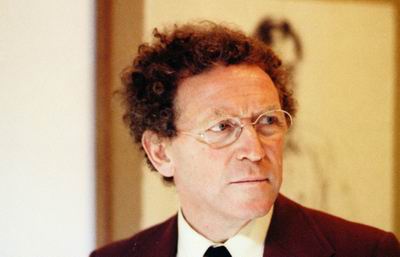
Avigdor Arikha (Hebrew: אביגדור אריכא; April 28, 1929 – April 29, 2010) was a Romanian-born French–Israeli artist, printmaker and art historian. == Biography == Victor Długacz (later Avigdor Arikha) was born to German-speaking Jewish parents in Răd...
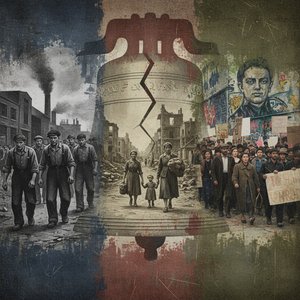
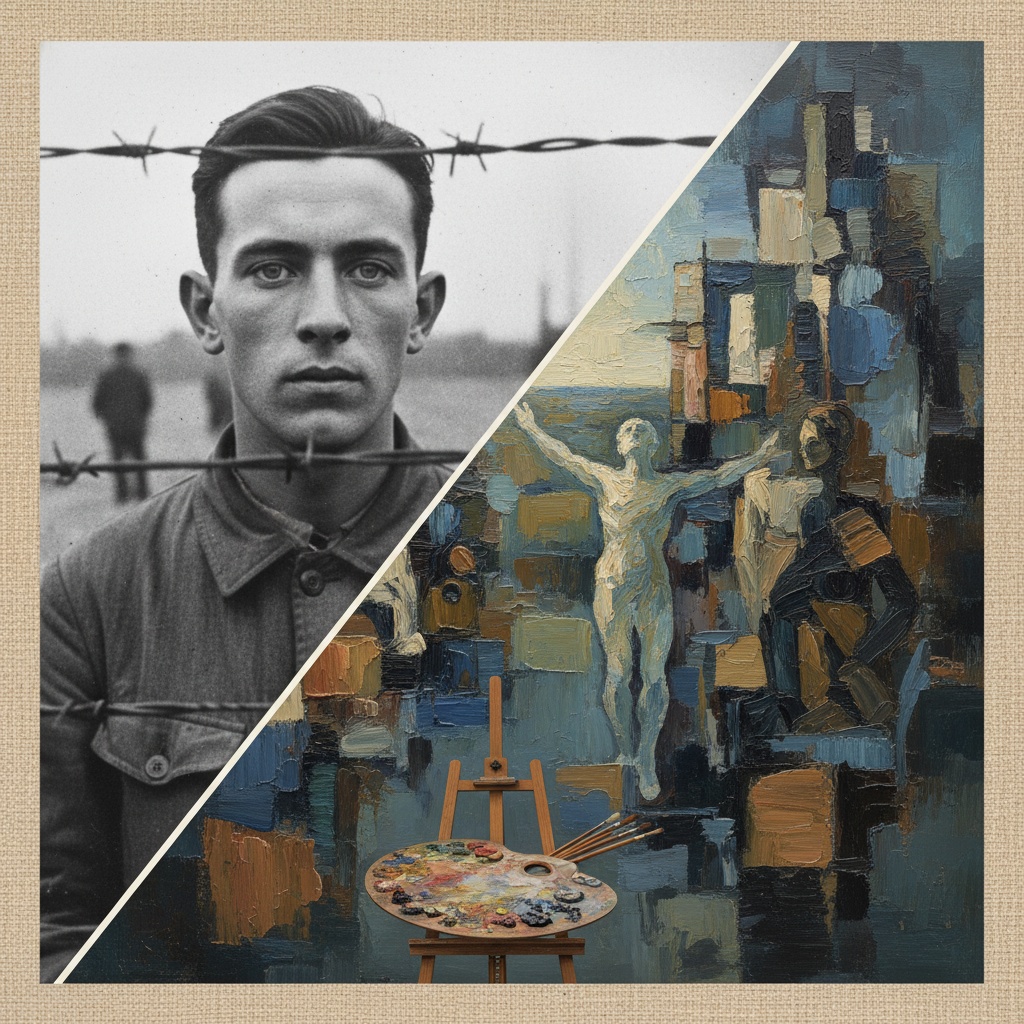
Avigdor Arikha’s life was indelibly marked by the horrors of the Second World War, a trauma that would profoundly shape his artistic trajectory. Born Victor Długacz in 1929 in Rădăuţi, Romania, to German-speaking Jewish parents, his early childhood unfolded amidst the burgeoning cultural life of Czernowitz. This idyllic existence was brutally shattered in 1941 with the family’s forced deportation to the Romanian concentration camps of Transnistria. It was within these unimaginable circumstances that Arikha first discovered the power of art – not as an aesthetic pursuit, but as a desperate act of survival. He began drawing scenes of the deportations, documenting the suffering and inhumanity he witnessed. These drawings, shown to delegates of the International Red Cross, were instrumental in securing his family’s eventual release, becoming a testament to the redemptive capacity of art even in the darkest of times.
The experience instilled within him a profound sense of responsibility towards truth and representation. Though he would later reject overtly political or narrative subject matter, this early commitment to bearing witness remained a foundational element of his artistic ethos. The move to Palestine in 1944 offered a fragile hope, but the wounds of war were deep. His subsequent studies at the Bezalel Academy in Jerusalem provided formal training, yet it was the raw urgency born from personal experience that truly fueled his early creative explorations.
From Abstract Experimentation to Radical Realism
Following his scholarship to the École des Beaux-Arts in Paris in 1949, Arikha initially embraced the prevailing currents of abstract painting. He established himself within the Parisian art scene, engaging with the dominant aesthetic language of the time. However, by the mid-1960s, a growing dissatisfaction began to surface. Arikha found abstraction increasingly limiting, feeling it lacked the necessary grounding in reality and direct engagement with the world. This wasn’t merely a stylistic shift; it was a fundamental reevaluation of his artistic purpose.
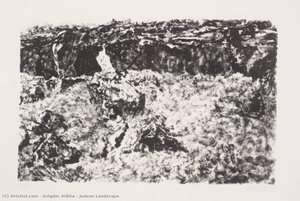
A pivotal moment came with an exhibition of Caravaggio's work. The visceral realism and emotional intensity of the Baroque master sparked a profound transformation within Arikha. He embarked on an eight-year period dedicated solely to drawing, meticulously honing his observational skills and rejecting all forms of color. This rigorous self-discipline was not simply about mastering technique; it was a deliberate stripping away of artifice, a quest for unmediated truth.
Painting from Life: A Commitment to Immediacy and Observation
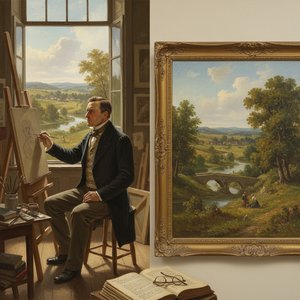
In 1973, Arikha resumed painting, but with a radically new approach. He committed himself to working entirely *from life*, completing each artwork in a single sitting, using only natural light. This was not an exercise in speed, but rather a profound engagement with the present moment – a refusal to rely on memory, photographs, or preconceived notions. His studio became a space of intense concentration, where the act of seeing and painting were inextricably linked.
This dedication stemmed from a deep understanding of art history, recognizing the limitations of traditional methods in conveying genuine experience. He sought a directness akin to Chinese brush painting, valuing spontaneity and capturing the fleeting essence of his subjects. As Arikha himself explained, it was about “truthfulness,” not merely replicating appearances but embodying the very act of perception.
The Power of Portraiture: Capturing Essence and Vulnerability
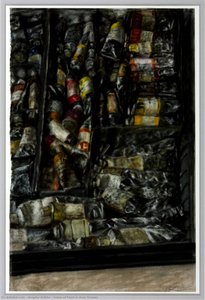
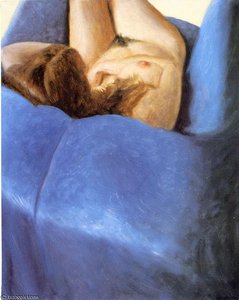
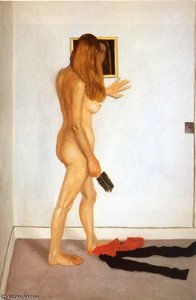 Untitled (496)
Explore Avigdor Arikha’s "Untitled (496)", a poignant oil painting of a nude figure in a stark room. Realistic style, earthy tones & symbolic depth – a captivating study of vulnerability.
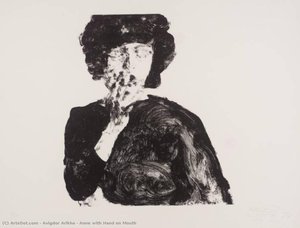
Portraiture became a central focus for Arikha, though he approached it with an unconventional sensibility. He wasn’t interested in capturing social status or outward appearance; instead, he sought to reveal the inner life of his sitters – their vulnerabilities, anxieties, and fleeting moments of repose. His portraits are characterized by a remarkable psychological depth, achieved through subtle nuances of expression and masterful handling of light and shadow.
Works like Untitled (496), with its poignant depiction of a nude figure in a stark room, exemplify this approach. The earthy tones and realistic style convey a sense of intimacy and vulnerability, inviting the viewer to contemplate the subject’s inner world. Similarly, his self-portraits, such as Self-Portrait with Open Mouth, reveal a raw honesty and self-awareness rarely seen in traditional portraiture.
Arikha as Art Historian: Bridging Technique and Scholarship
Beyond his practice as a painter, Arikha was a deeply erudite art historian. He curated important exhibitions on masters such as Poussin, Velázquez, and Ingres, demonstrating a profound understanding of artistic technique and historical context. His writings, collected in On Depiction, reveal a keen intellect and a passionate commitment to the principles of observation and representation.
Arikha’s scholarship wasn't separate from his painting; it informed and enriched his creative practice. He saw a direct lineage between the Renaissance masters and his own pursuit of immediacy, recognizing that true artistic innovation often lies in revisiting fundamental principles rather than chasing novelty. His ability to bridge theory and practice made him a unique figure in the art world.
Legacy and Influence: The Enduring Impact of a Singular Vision
Avigdor Arikha’s work continues to resonate with audiences today, challenging conventional notions of representation and reminding us of the power of direct observation. His commitment to painting from life, his psychological depth in portraiture, and his profound understanding of art history have left an indelible mark on contemporary art.
His influence can be seen in the work of numerous artists who prioritize authenticity and emotional honesty over technical virtuosity. Arikha’s legacy is not simply about a particular style or technique; it's about a way of seeing – a commitment to truthfulness, immediacy, and the enduring power of human connection. At ArtsDot.com, we are proud to offer reproductions of his captivating works, allowing you to experience the beauty and depth of Arikha’s vision firsthand.