The Impressionist Breakup: Why Light Wasn't Enough Anymore
 Beyond Light & Color: Impressionism vs. Post-Impressionism for the Discerning Collector
The Dawn of Impressionism: Capturing Fleeting Moments Impressionism, a revolutionary art movement born in 19th-century France, marked a radical departure from the academic traditions that had long dominated the art world. Artists like Claude Monet, P...
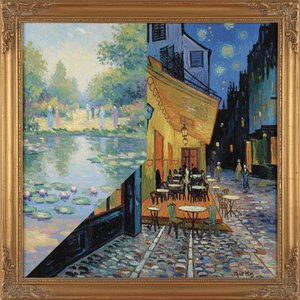
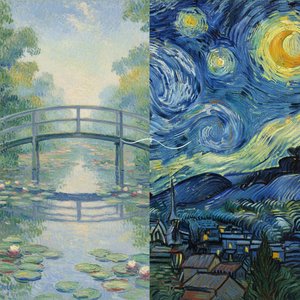
To understand the seismic shift that redefined the visual landscape of the late nineteenth century, one must first look at the shimmering, sun-drenched rebellion known as Impressionism. Before the Post-Impressionists arrived to flip the script, masters like Claude Monet and Pierre-Auguste Renoir had already shattered the rigid, stuffy constraints of the Académie des Beaux-Arts. They turned their gaze away from dusty historical allegories and toward the ephemeral beauty of a sun-drenched garden or the fleeting movement of water. Their revolution was one of pure perception, capturing the transient dance of light and atmosphere through broken brushstrokes and an unprecedented focus on naturalism.
However, as beautiful and luminous as these works were, they eventually hit a creative ceiling. While the Impressionists succeeded in recording the momentary sensation of a single sunbeam, their canvases often lacked a sense of structural permanence and emotional weight. There was a perceived incompleteness to the movement—a feeling that by chasing only the fleeting moment, the deeper, more lasting essence of reality was being left behind. This tension between the transient nature of light and the human desire for enduring form became the catalyst for a much more intense, much more visceral era of artistic expression.
The Post-Impressionist Glow-Up: Bold Colors and Emotional Impact
 Impressionism vs. Post-Impressionism: A Masterclass in the Revolution of Light, Color, and Emotion
The Impressionist Dawn: Capturing the Ephemeral Dance of Light and Atmosphere To step into the world of Impressionism is to witness a rebellion against the rigid, shadowed confines of the Academy. In the late 19th century, a group of visionary rebels...
Enter Post-Impressionism: the high-energy evolution that took the technical freedom of its predecessors and injected it with pure, unadulterated soul. Emerging roughly between 1886 and 1905, this movement wasn't just a continuation; it was a total aesthetic overhaul. While these artists retained the vibrant, unblended color palettes of the Impressionists, they rejected the need for naturalistic accuracy. They realized that color didn't have to describe what the eye saw; it could describe what the heart felt.
This era introduced a world where colors were used as emotional triggers rather than mere descriptive tools. We see the move toward unnatural or modified hues that prioritize impact over imitation. This wasn't about painting a landscape exactly as it appeared in the midday sun, but rather using saturated, often clashing tones to evoke a specific mood—be it the tranquil serenity of a Mediterranean afternoon or the turbulent psychological depth of a lonely night. It was a period where the canvas became a playground for subjective experience, setting the stage for the high-impact visual identities we crave in modern design today.
Architects of the Canvas: The Visionary Rebels Who Redefined Reality
 Post-Impressionism
Post-Impressionism (also spelled Postimpressionism) was a predominantly French art movement which developed roughly between 1886 and 1905, from the last Impressionist exhibition to the birth of Fauvism. Post-Impressionism emerged as a reaction agains...
The Post-Impressionist movement was never a single, unified school of thought; instead, it was a powerhouse collection of individual rebels, each forging their own path toward a new reality. At the forefront stood Paul Cézanne, often hailed as the "father of modern art." His mission was far more structured than that of his predecessors. He sought to make Impressionism something solid and durable, like the art of a museum, by finding the underlying geometry in nature. In works like his still lifes featuring peaches, pears, and grapes, Cézanne used bold brushstrokes and carefully constructed compositions to create a sense of depth and permanence that felt almost architectural.
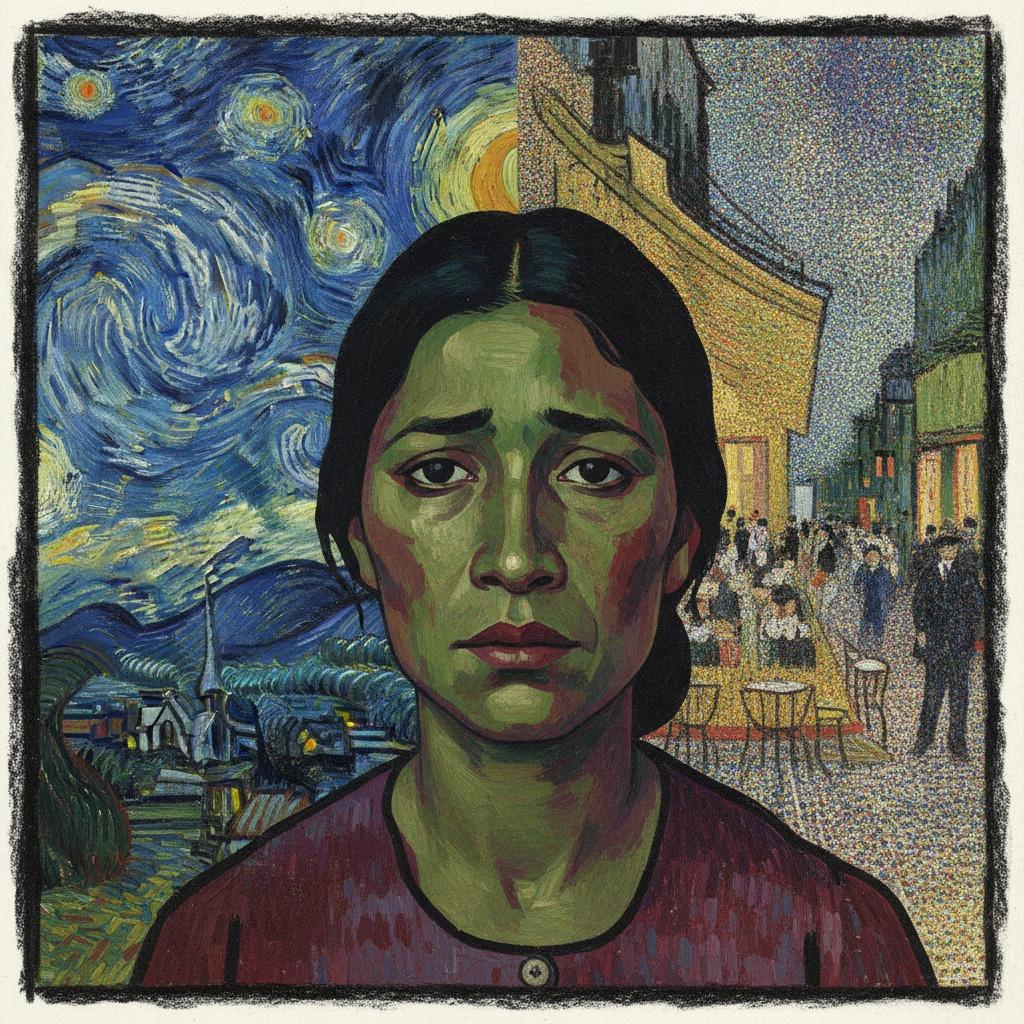
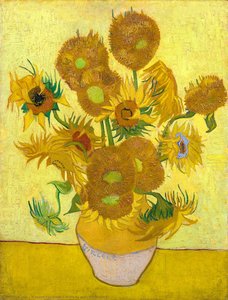
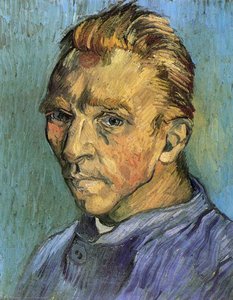
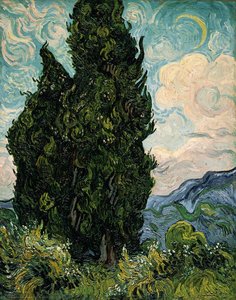
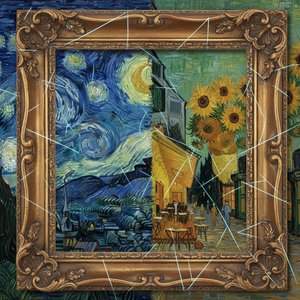
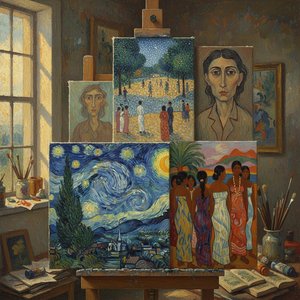
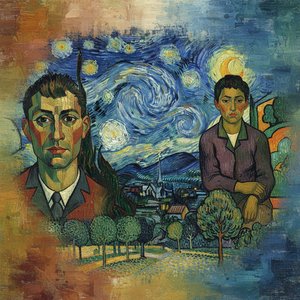
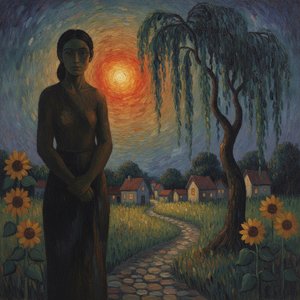
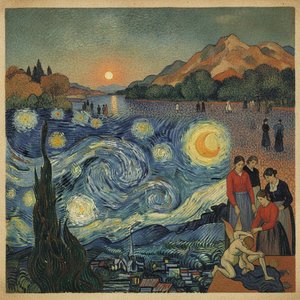
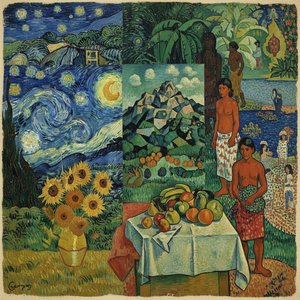
Alongside him were other titans who pushed the boundaries of what paint could achieve. Vincent van Gogh brought an unmatched intensity, using thick impasto and swirling, energetic lines to project his inner psyche onto the canvas. Paul Gauguin explored symbolism and flattened planes of color to tap into the primal and the exotic, while Georges Seurat pioneered Pointillism, a systematic, almost scientific use of tiny dots of color to build form. These artists were the true disruptors, providing the essential bridge between the nineteenth-century's obsession with observation and the twentieth-century's embrace of abstraction.
From Structure to Soul: How Geometric Forms Met Raw Emotion
 The Bather
Introduction to Paul Cézanne and Post-Impressionism Paul Cézanne (1839-1906) was a French artist who played a crucial role in the transition from 19th-century Impressionism to 20th-century Cubism. He is often referred to as the "father of modern art"...
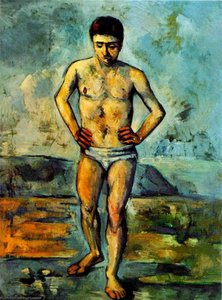
The magic of Post-Impressionism lies in its unique ability to balance the cerebral with the visceral. It is a movement where the rigid logic of geometry meets the wild unpredictability of human feeling. This duality is most evident in the way artists like Cézanne approached the world. By treating nature through the lens of the cylinder, the sphere, and the cone, he provided a structural foundation that would later inspire the birth of Cubism. His work, such as
The Bather, exemplifies this transition, using innovative color and form to create something that feels both grounded in reality and elevated by artistic intent.
Yet, this structural discipline was never allowed to stifle emotion. Even as artists explored more abstract qualities or symbolic content, the raw, tactile nature of the paint remained central. The use of heavy textures and exaggerated forms ensured that every stroke carried weight. Whether it was the carefully constructed meditation on light in Theo van Rysselberghe’s
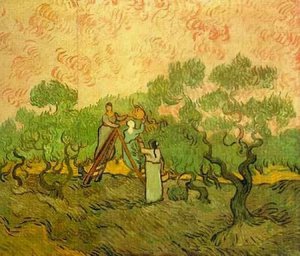
Olive Trees near Nice or the expressive distortions found in the works of the Pont-Aven School, the goal was always to move beyond mere representation toward a deeper understanding of artistic expression. It was about finding the soul within the structure.
Modernity Recharged: The Lasting Legacy of the Post-Impressionist Revolution
 Beyond Impressionism: A Deep Dive into the Vibrant Evolution of Post-Impressionist Art
The Impressionist Legacy: The Foundation of a Revolution To understand the profound shift that occurred at the end of the nineteenth century, one must first look back at the shimmering light of the Impressionists. Before the Post-Impressionists sough...
The impact of the Post-Impressionist revolution cannot be overstated; it essentially recharged the DNA of modern art. By breaking the final ties to photographic realism, these artists paved the way for everything from Fauvism and Expressionism to the graphic punch of Pop Art. They taught us that an artist's greatest tool is not their ability to mimic life, but their ability to interpret it through a personal, stylized lens. The movement’s emphasis on bold color, geometric structure, and symbolic depth continues to resonate in our contemporary visual culture, from street art to digital design.
Today, we see the echoes of this revolution in every high-impact image that prioritizes mood and identity over literal depiction. The Post-Impressionists proved that art could be both a structural masterpiece and an emotional explosion. They transformed the canvas from a window into the world into a mirror of the human spirit. As we continue to navigate an era of rapid visual change, the lessons of the Post-Impressionists—to seek depth, to embrace bold identity, and to find beauty in the expressive power of color—remain as vital and revolutionary as ever.
For those looking to bring this level of historical intensity into their own contemporary spaces, ArtsDot.com offers a gateway to this enduring legacy. Whether you are seeking a hand-painted oil reproduction that captures the thick, textured impasto of Van Gogh or a custom commission that reimagines your personal milestones through a Post-Impressionist lens, our master artists specialize in bringing these powerful aesthetics to life on premium canvas. Explore our collection and transform your environment with art that carries the weight of history and the pulse of modern emotion.