The Genesis of Grandeur: Understanding the Baroque Aesthetic Shift
 The Dramatic Flourish: Exploring the Baroque Movement's Enduring Legacy in Art History
The Genesis of Grandeur: Historical Context & The Counter-Reformation Wikipedia: Counter-Reformation The Counter-Reformation (Latin: Contrareformatio), also sometimes called the Catholic Revival, was the period of Catholic resurgence that was initiat...
To understand the Baroque landscape, one must first grasp the seismic shift that occurred in the seventeenth century. For generations, the Renaissance had reigned supreme, offering a world defined by rationality, balance, and mathematical harmony. It was an era of clarity, where every horizon line was measured and every figure placed with surgical precision. However, as Europe grappled with the profound religious and political uphepons of the Counter-Reformation, the art world underwent an artistic earthquake. The calm, symmetrical compositions of the past were no longer sufficient to express the intense spiritual fervor and the burgeoning power of absolute monarchies.
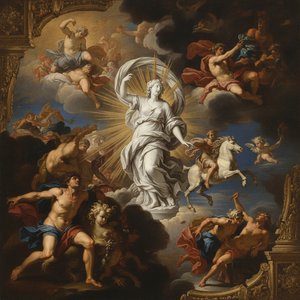
The Baroque movement emerged not as a rejection of Renaissance principles, but as an exuberant, visceral expansion upon them. It was a period where art ceased to be merely an object of intellectual contemplation and became a theatrical stage designed to move the soul. This era demanded spectacle; it sought to inspire awe, piety, and even a sense of divine terror through movement, dynamic diagonals, and an unprecedented emotional intensity. In the realm of landscape painting, this meant moving away from the idealized, static vistas of the past toward scenes that felt alive, unpredictable, and deeply immersive.
Chiaroscuro & Chaos: The Visual Language of Dramatic Landscapes
 The Visceral Stage: Exploring Dramatic Narratives & Emotional Intensity in Baroque Art
The Baroque Embrace of Emotion: A Shift from Renaissance Rationality Wikipedia: Baroque painting Baroque painting is the painting associated with the Baroque cultural movement. The movement is often identified with Absolutism, the Counter Reformation...
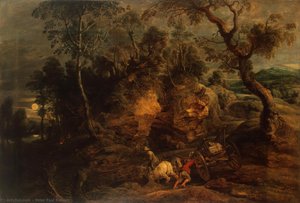
The true heartbeat of Baroque landscapes lies in their mastery of light and shadow—a technique known as chiaroscuro. This was not merely a stylistic choice but a psychological tool used to create depth, tension, and drama. By plunging large portions of the canvas into deep, velvety darkness and piercing them with sudden, brilliant highlights, artists could direct the viewer's eye through a complex narrative journey. In its most extreme form, tenebrism, this lighting becomes almost aggressive, creating a high-contrast environment where figures and terrain emerge from the gloom like apparitions.
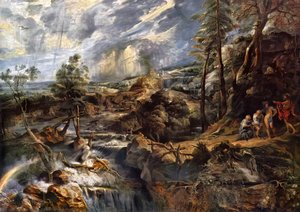
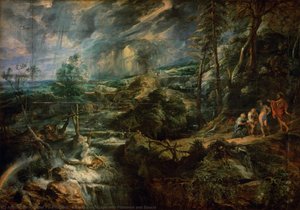
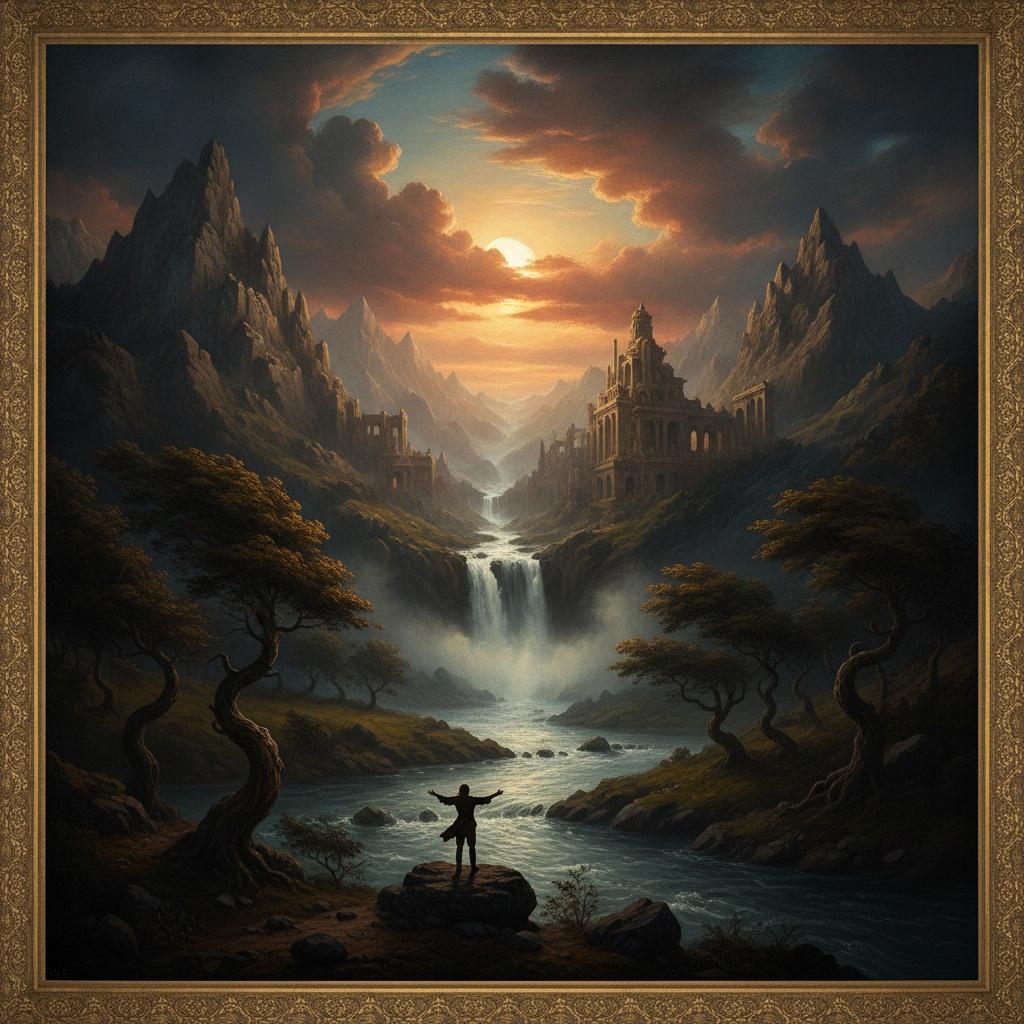
This manipulation of light works in tandem with a sense of controlled chaos. Unlike the serene, predictable horizons of earlier eras, Baroque landscapes often embrace the turbulent. We see swirling storm clouds, jagged mountain peaks, and the restless movement of water that mirrors the internal psychological states of the era's inhabitants. The landscape becomes a visceral experience; the viewer is no longer a detached observer standing before a window, but an active participant caught within the atmospheric weight of a world in flux. This interplay between the light of revelation and the shadow of the unknown provides the "dark vibe" that continues to captivate modern collectors.
Masters of the Mood: From Flemish Realism to Italian Capriccio
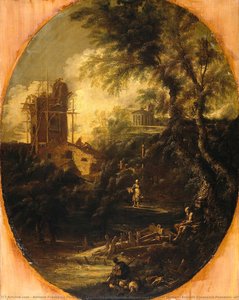 antonio francesco peruzzini
Antonio Francesco Peruzzini: Master of Italian Capriccio Antonio Francesco Peruzzini (c. 1643 – August 20, 1724) stands as a pivotal figure in the late Baroque landscape tradition of Italy, particularly renowned for his captivating capricci—scenes of...
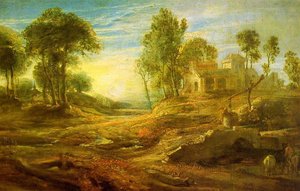
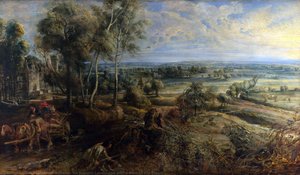
The brilliance of the Baroque era is found in its regional diversity, as different corners of Europe applied this dramatic lens to their unique environments. In the Southern Netherlands, the Flemish Baroque tradition flourished under the influence of luminaries like Peter Paul Rubens. While some artists embraced pure theatricality, others, such as Jan Wildens, brought a profound sense of realism and meticulous detail to the genre. Wildens possessed a rare ability to capture the essence of rural life with a quiet, enduring beauty, proving that even within the Baroque framework, there was room for subtle observation and tranquil landscapes.
In contrast, the Italian tradition explored the concept of the capriccio—the creation of imagined or fleeting architectural and natural scenes. Artists like Antonio Francesco Peruzzini mastered this art of the "imagined moment," imbuing their works with a profound sense of atmosphere and psychological depth. Meanwhile, the Spanish Baroque utilized a starker naturalism, often influenced by the dramatic illumination of Caravaggio, to meet the demands of the Counter-Reformation's need for decorum and clarity. Whether through the lush, painterly textures of the Flemish masters or the atmospheric fantasies of the Italians, the era’s landscape painters redefined the boundaries of what nature could communicate to the human spirit.
The Collector's Eye: Curating Dark Vibes and Epic Scale in Modern Interiors
 Baroque Masterpieces: 10 Paintings That Defined an Era |
Introduction To gaze upon the masterpieces of the Baroque is to step into a world ablaze with drama, emotion, and an almost overwhelming sense of grandeur. This wasn’t merely a style; it was a cultural earthquake, reshaping art, architecture, music, ...
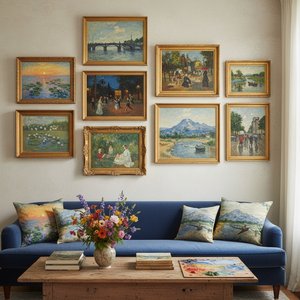
For the contemporary collector, integrating Baroque landscapes into a modern interior is an exercise in architectural storytelling. These works are not mere decorations; they are anchors of character. The "dark academia" aesthetic and the modern fascination with moody, high-contrast design find their ultimate expression in these canvases. A large-scale Baroque landscape, particularly when executed as a multi-panel set, can transform a minimalist room into a space of profound historical weight and epic scale. The deep tonal ranges and visible brushstrokes offer a tactile richness that digital prints simply cannot replicate.
When curating such pieces, consider the interplay of light within your own space. A painting defined by chiaroscuro thrives in environments where controlled lighting can accentuate its highlights and deepen its shadows. For those looking to bridge the gap between historical grandeur and contemporary flair, the concept of "remixing" history is particularly potent. Imagine a custom commission that takes the dramatic, light-drenched style of a Baroque master and applies it to a modern subject or a personal photograph. This creates a seamless dialogue between the opulence of the seventeenth century and the bold, graphic identity of the twenty-first.
Beyond the Canvas: Preserving the Legacy of Baroque Drama
 Baroque Realism: Illusion, Emotion & the Dramatic Transformation of 17th-Century Art
The Historical Context: From Renaissance Ideals to Baroque Sensibility Wikipedia: Baroque The Baroque (UK: bə-ROK, US: bə-ROHK, French: [baʁɔk]) is a Western style of architecture, music, dance, painting, sculpture, poetry, and other arts that flouri...
The enduring legacy of the Baroque lies in its ability to remain relevant across centuries. As we move further into a digital age, the physical presence of a hand-painted oil reproduction—with its heavy impasto and authentic textures—serves as a vital connection to human craftsmanship. Preserving this legacy requires more than just appreciation; it requires an understanding of the materials that allow these works to endure. The use of flexible gesso, high-quality oils like saffara, and protective damar varnishes ensures that the dramatic tension captured by the masters remains vibrant for generations.
Whether through the acquisition of museum-quality reproductions or the commissioning of bespoke works that reimagine historical styles, we continue to participate in the Baroque tradition of seeking the extraordinary. At ArtsDot.com, we are dedicated to making this profound artistic heritage accessible to a global audience. From transforming personal milestones into oil masterpieces to providing expert consultations for large-scale architectural murals, our mission is to ensure that the epic drama and dark, evocative beauty of the Baroque era continue to inspire awe in the modern home.