Introduction
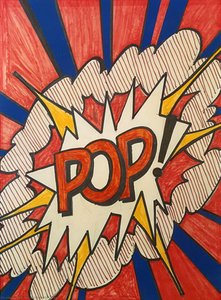
Forget everything you thought you knew about the stuffy, silent halls of traditional galleries. Imagine a world where the high-brow meets the street, where the glossy sheen of a soup can carries as much weight as a classical portrait, and where the pulse of consumer culture becomes the heartbeat of fine art. This is the electric, unapologetic energy of Pop Art .
Emerging from the mid-20th century amidst a tidal wave of post-war prosperity, Pop Art didn't just enter the art scene; it crashed it. It took the mundane—the comic books, the advertisements, the celebrity icons, and the mass-produced goods—and blasted them onto the canvas with a neon intensity that refused to be ignored. It was a cultural rebellion, stripping away the heavy, brooding layers of Abstract Expressionism to reveal something much more relatable, vibrant, and undeniably loud .
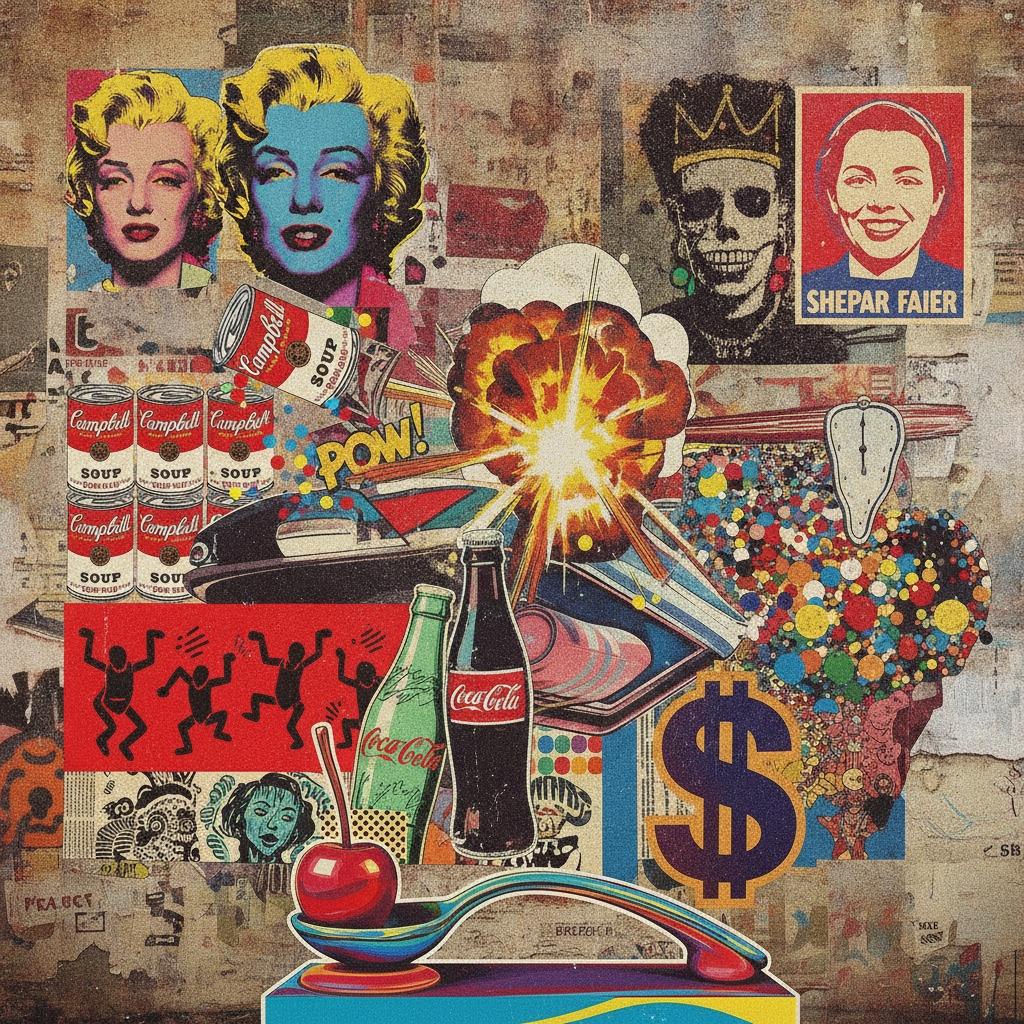
Today, these works remain deeply resonant because we are still living in the world they predicted. We inhabit a landscape of endless imagery, digital saturation, and celebrity worship—a reality that Warhol, Lichtenstein, and their contemporaries captured with prophetic precision. Their use of bold outlines, saturated palettes, and repetitive motifs laid the visual DNA for everything from modern street art to the high-impact graphic design we scroll through every single day.
In this exploration, we are stepping into the center of that colorful explosion. We have curated a journey through ten definitive masterpieces—works that didn't just reflect their era, but fundamentally rewrote the rules of what art could be. Get ready to experience the punchy, high-impact icons that turned the everyday into the extraordinary.
Marilyn Diptych - Andy Warhol
 Marilyn Diptych - Andy Warhol
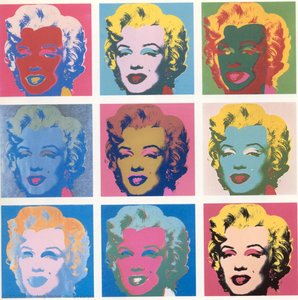
There’s a gaze in Marilyn Diptych by Andy Warhol that follows you—not with judgment, but with understanding . This isn’t just a portrait; it’s a mirror reflecting our obsession with the screen and the spotlight. As one of the most defining works in the Top 10 Masterpieces That Defined the Pop Art Art Movement , this piece captures the electric pulse of celebrity culture through a heavy, mechanical lens.
The left panel explodes with a saturated, neon fever dream—hot pinks and turquoise that scream of manufactured glamour. But as your eyes drift to the right, the color bleeds away into a ghostly, fading black and white, mimicking the inevitable decay of fame itself. Warhol uses the repetitive, gritty texture of silkscreen printing to turn a human icon into a mass-produced commodity, blurring the line between person and product. Now, imagine that gaze in your space. Not watching you, but reminding you : you are seen. You are part of the story.
Whaam! - Roy Lichtenstein
 Whaam! - Roy Lichtenstein
What story does the explosive collision of color and ink in Whaam! by Roy Lichtenstein tell about our obsession with media? Emerging from the high-voltage energy of 1963, this masterpiece redefined the boundaries between "lowbrow" comic strips and fine art. Lichtenstein took the frantic, onomatopoeic language of war comics—complete with his signature Ben-Day dots and heavy black outlines—and scaled it into a cinematic confrontation that demands attention.
The painting captures a frozen moment of aerial combat, where primary reds, yellows, and blues clash against a stark, graphic sky. It isn't just about the destruction; it is a profound commentary on how mass media stylizes violence, turning chaos into a clean, consumable image. For the modern collector seeking a high-impact statement piece, this work offers more than just a visual punch; it provides a curated escape into a bold, retro-futuristic aesthetic. Integrating such an iconic work of the Pop Art movement into your space brings a sense of historical rebellion and unmistakable design energy to any contemporary interior.
Campbell's soup cans - Andy Warhol
 Campbell's soup cans - Andy Warhol
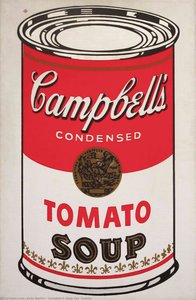
Before it became a global icon of consumerism, Andy Warhol’s Campbell's Soup Cans was essentially an experiment in mechanical repetition that blurred the line between the grocery aisle and the gallery floor. Imagine the scene in 1962: thirty-two canvases lined up like a supermarket shelf, stripping away the 'preciousness' of fine art to reveal the vibrant, pulsing heart of mass production. Warhol utilized the industrial energy of silkscreen printing to transform mundane red-and-white labels into a rhythmic, hypnotic grid of color.
The technical genius lies in this very tension—the way the flat, punchy color fields and precise edges celebrate the ubiquity of branding while demanding a closer look at our obsession with the everyday. There is a quiet prestige in its repetition; it doesn't just depict soup, it captures the pulse of an era. Bringing this level of bold, graphic energy into your space creates a high-impact visual anchor. Much like Warhol’s disciplined focus on pattern and pop culture, displaying such a masterpiece fosters a sharp, sophisticated atmosphere, perfect for inspiring deep focus in a modern home office or a design-conscious study.
Drowning girl - Roy Lichtenstein
 Drowning girl - Roy Lichtenstein
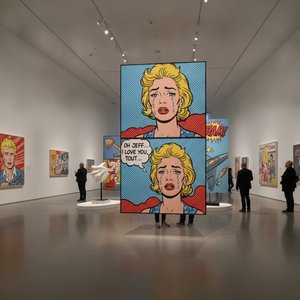
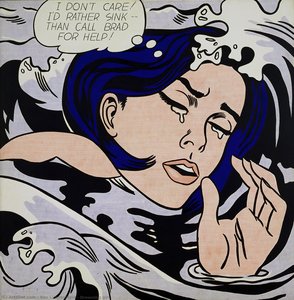
Forget everything you know about subtlety; Roy Lichtenstein’s 1963 masterpiece, Drowning Girl , doesn't just enter a room—it crashes into it with the high-voltage energy of a comic book climax. This isn't just paint on canvas; it is a masterclass in manufactured melodrama. Lichtenstein didn't just capture light; he engineered it through the iconic use of Ben-Day dots , creating a mechanical, graphic glow that feels both hyper-modern and deeply cinematic.
The visual impact is immediate: a striking palette of primary blues and stark blacks vibrates against the white space, pulling you into the swirling, turbulent water surrounding the central figure. As you gaze at her expression of defiant despair—captured perfectly in that legendary speech bubble—you feel the tension between mass-media detachment and raw, human emotion. The thick, bold outlines and flat, saturated colors turn a moment of romantic crisis into an architectural statement of Pop Art brilliance. It is a piece that doesn't just reflect the aesthetic of the 1960s; it invents a new visual language of impact and intensity, waiting to transform your space into a gallery of contemporary edge.
Flag - Jasper Johns
 Flag - Jasper Johns
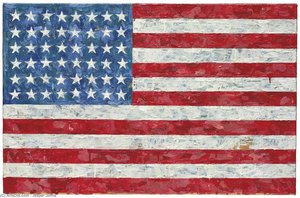
Imagine standing before a canvas where the familiar becomes profoundly strange. In Jasper Johns’ Flag , the iconic American symbol is stripped of its pristine perfection and reimagined through a heavy, tactile lens. This isn't just a painting; it is a sensory encounter. Using a revolutionary encaustic technique—layering oil paint with melted beeswax—Johns creates a surface so thick and sculptural that you can almost feel the grit and weight of history beneath your fingertips.
The red, white, and blue aren't mere colors; they are fragmented, rhythmic blocks of pigment that pulse with an uncertain energy. By blurring the lines between Abstract Expressionism and the emerging Pop Art movement, Johns forces us to look past the symbol to see the raw materiality of the art itself. The texture is rugged, the edges are soft, and the atmosphere is one of intense, quiet interrogation. Bringing a piece with this level of visual impact into a modern interior does more than decorate a wall; it introduces a focal point of deep reflection and architectural depth, turning a contemporary room into a space of curated, high-impact storytelling.
Girl with ball - Roy Lichtenstein
 Girl with ball - Roy Lichtenstein
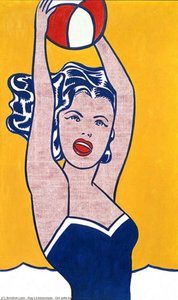
Roy Lichtenstein’s 1961 masterpiece, Girl with Ball , serves as a high-voltage pulse from the heart of mid-century Americana. It doesn't just depict a moment of leisure; it captures the precise second where mass media meets fine art. By elevating a simple advertisement into a monumental icon, Lichtenstein forces us to confront how consumer culture shapes our very perception of beauty and athleticism.
This piece earns its place among the top 10 masterpieces that defined the Pop Art movement through its unapologetic use of graphic impact. The composition is a masterclass in visual energy: thick, black outlines define a stylized figure against a searing yellow sky, while the flat, saturated color fields—vibrant reds, deep navies, and crisp whites—create an almost electric atmosphere. There is no room for shadows or depth here, only the raw, two-dimensional punch of comic-strip aesthetics . It invites us to reflect on the beauty of the artificial and the power of the simplified form. For the modern collector, this work brings a bold, rhythmic energy that transforms any contemporary space into a curated dialogue between historical rebellion and high-design impact.
Marilyn, leo castelli gallery, new york - Andy Warhol
 Marilyn, leo castelli gallery, new york - Andy Warhol
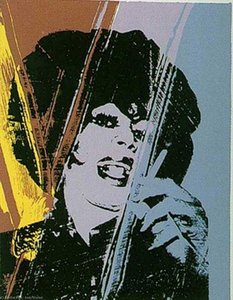
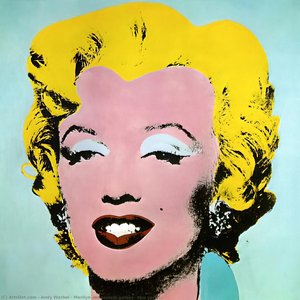
Look closer. The lines in Marilyn, leo castelli gallery, new york by Andy Warhol aren’t just drawn; they’re choreographed . This isn't merely a portrait of an icon; it is a dance frozen in time , where the electric shock of neon pink and sunshine yellow meets the heavy, graphic pulse of black ink. Warhol takes the tragedy of fame and transforms it into a high-voltage visual rhythm, using the mechanical precision of silkscreen to turn a human face into a cultural heartbeat.
The composition vibrates with a tension between mass production and raw emotion. As the vibrant hues collide against a cool blue gradient, the artwork achieves a rare equilibrium—making the chaos of celebrity culture feel like perfect harmony. It is a masterclass in impact, stripping away the layers of Hollywood glamour to reveal the stark, beautiful geometry underneath. What if your living room could hold that same balance? What if your walls could breathe rhythm and command attention with the same unapologetic energy as this Pop Art legend?
Still life no. 20 - Tom Wesselmann
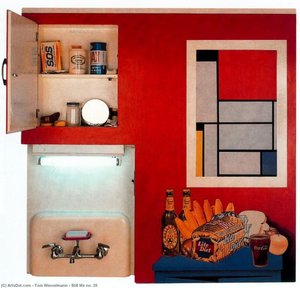 Still life no. 20 - Tom Wesselmann
What story does the electric, saturated environment of Still Life no. 20 by Tom Wesselmann tell about the heartbeat of post-war America? This masterpiece acts as a high-voltage snapshot of consumer culture, where the mundane becomes monumental. Emerging from an era of rapid industrial growth, Wesselmann broke ground by stripping away the heavy emotionalism of previous movements, replacing it with bold graphic lines and the unapologetic energy of mass production.
The composition is a sensory overload: a striking red background wall commands your attention, framing a curated chaos of everyday objects—from Coca-Cola bottles to vintage packaging—rendered with surgical precision. It is a rhythmic dance of primary colors and geometric shapes that blurs the line between high art and street-level advertising. For the modern collector, bringing this piece into a home offers more than just decor; it provides a curated escape into a world of vibrant nostalgia and playful irony. It is an essential pillar of the Pop Art movement, perfect for those seeking to inject a punch of contemporary soul and historical depth into their personal space.
Pool 2 figures - David Hockney
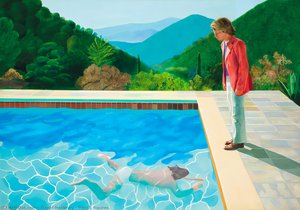 Pool 2 figures - David Hockney
Imagine standing at the edge of a sun-drenched poolside, where the air is still and the water holds a heavy, silent secret. In Pool 2 figures , David Hockney captures a cinematic moment of profound tension masked by mid-century leisure. The composition hits you with an immediate visual punch: a striking splash of vibrant red from a woman’s jacket cutting through a cool, saturated palette of poolside blues and lush, verdant greens.
This isn't just a painting; it is a masterclass in the Pop Art aesthetic, blending high-impact graphic clarity with a haunting, surreal undertone. As you gaze at the submerged figure beneath the surface, the smooth, meticulous oil textures evoke a sense of quiet melancholy and deep contemplation. The interplay of geometric pool edges against organic, rolling hills creates a balanced, architectural beauty that feels both modern and timeless. For the contemporary collector, bringing this piece into a living space offers more than just a bold design statement—it introduces a layer of narrative depth and a sophisticated, introspective energy that transforms any room into a curated sanctuary of thought.
A bigger splash - David Hockney
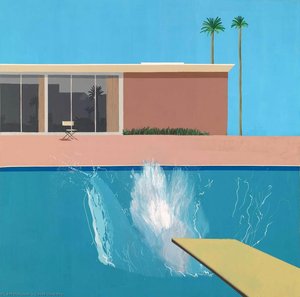 A bigger splash - David Hockney
Imagine the sudden, sharp crack of silence being broken by a single, crystalline explosion of water. In David Hockney’s 1967 masterpiece, A Bigger Splash , that moment is frozen in time. This isn't just a painting; it is a high-definition snapshot of California cool, where the sun-drenched stillness of mid-century modernism meets a sudden burst of kinetic energy. The composition hits you with a punch of vibrant cobalt and turquoise, set against the sharp, geometric lines of a poolside retreat.
Hockney masterfully uses flat planes of color and clean, graphic shapes to capture the essence of the Pop Art movement, turning a mundane summer afternoon into something iconic and cinematic. The way the white spray erupts against the deep blue pool creates a visual rhythm that is both soothing and electrifying. For the modern collector, bringing this level of bold, sun-soaked aesthetic into a living space does more than decorate a wall—it injects a sense of curated leisure and bright, architectural clarity into your home, making every glance feel like an escape to the Pacific coast.
Conclusion
As the lights dim on this retrospective of Pop Art’s most iconic icons, we are left with more than just a collection of vibrant pigments and bold outlines; we are left with a profound realization that these works never truly left our side. The heavy industrial lines of Lichtenstein, the electric repetition of Warhol, and the gritty, street-level energy of the movement do not exist merely in museum archives or history books. Instead, they live on in the pulse of our streets, the aesthetics of our digital screens, and the very way we curate the sanctuaries we call home.
These masterpieces serve as a bridge between the high-brow and the everyday, proving that there is deep, soulful meaning to be found in the most common objects and the loudest colors. They remind us that art is not a distant, untouchable relic, but a living, breathing dialogue—a way to capture the fleeting electricity of modern life and freeze it in time. When we bring these pieces into our personal spaces, we aren't just decorating walls; we are inviting a legacy of rebellion, joy, and visual truth to sit with us at the table.
Whether through a massive multi-panel canvas that commands a room or a subtle, stylized print that catches the eye in a quiet corner, the spirit of Pop Art continues to shape our cultural DNA. It remains an eternal echo of human creativity, constantly reinventing itself to reflect our ever-changing world. We invite you to continue this journey and find your own piece of this vibrant legacy within our full collection , where the bold energy of the past meets the design-conscious soul of the present.