The Foundations of Color Perception: From Optics to Early Theories
 Wikipedia: Color psychology
Color psychology is the study of colors and hues as a determinant of human behavior. Color influences perceptions that are not obvious, such as the taste of food. Colors have qualities that may cause certain emotions in people. How color influences i...
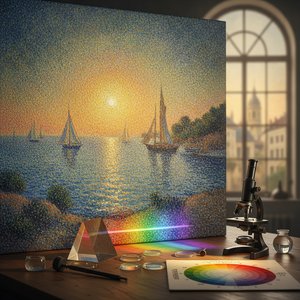
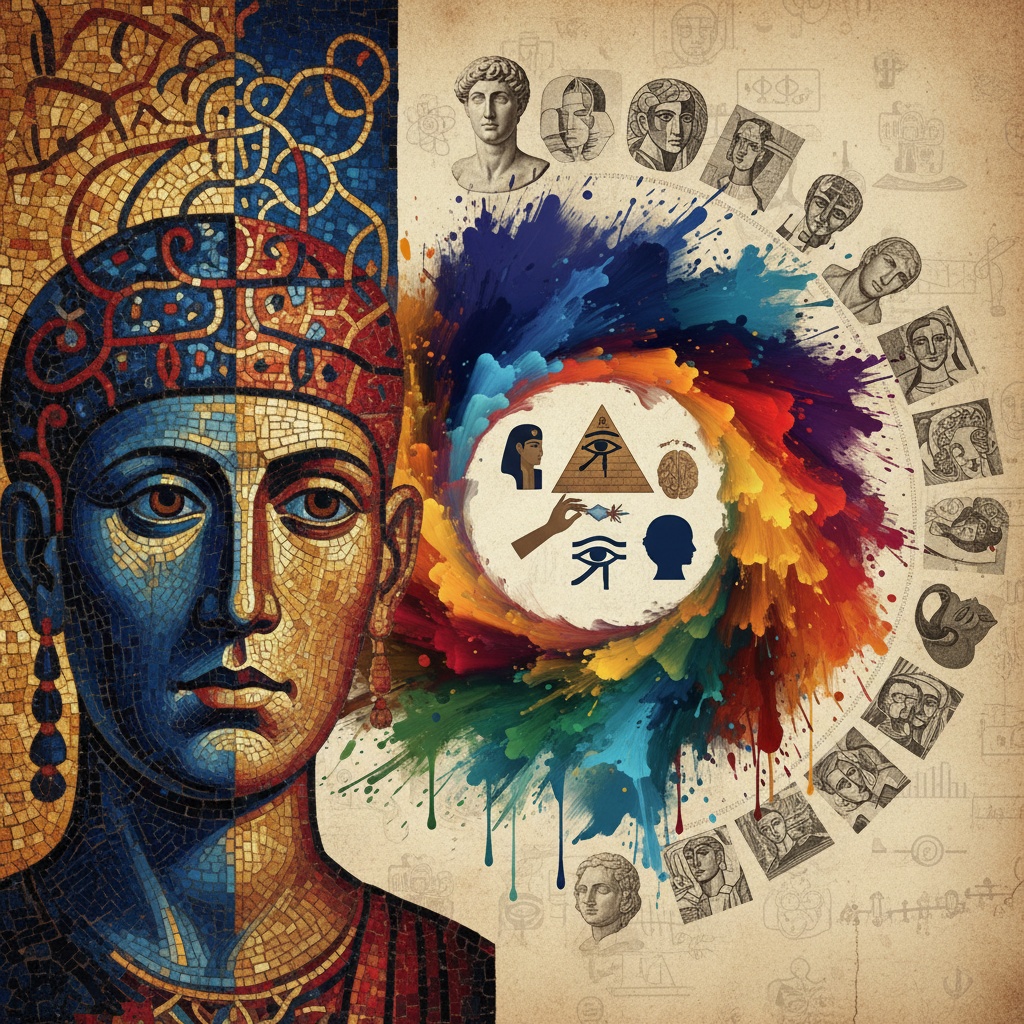
Before the brushstrokes of Monet or the calculated dots of Seurat, lay a burgeoning understanding of color itself – not merely as a visual phenomenon, but as an intrinsic component of human perception. The earliest explorations were rooted in optics, with thinkers like Isaac Newton demonstrating that white light could be refracted into a spectrum of colors through a prism. This revelation moved color from the realm of philosophical speculation to scientific inquiry. However, it was the subsequent attempts to explain what we experienced when encountering these hues that truly laid the groundwork for the psychological study of color. Ancient civilizations, notably the Egyptians and Chinese, intuitively grasped color’s power, employing specific shades in healing practices and symbolic rituals long before any formal theory existed. These early applications suggest an inherent recognition of color's ability to influence mood and even physical well-being – a concept that would be revisited centuries later.
Visual perception is the ability to detect light and use it to form an image of the surrounding environment. Photodetection without image formation is classified as light sensing. In most vertebrates, visual perception can be enabled by photopic vision—the ability to see in bright light—and scotopic vision—the ability to see in dim light. Before the brushstrokes of Monet or the calculated dots of Seurat, lay a burgeoning understanding of color itself – not merely as a visual phenomenon, but as an intrinsic component of human perception.
Goethe, Chevreul & Jung: Pioneering the Psychological Study of Hue
Color psychology is the study of colors and hues as a determinant of human behavior. Color influences perceptions that are not obvious, such as the taste of food. Colors have qualities that may cause certain emotions in people. How color influences individuals may differ depending on age, gender, and culture. Although color associations may vary contextually from culture to culture, one author asserts that color preference may be relatively uniform across gender and race.
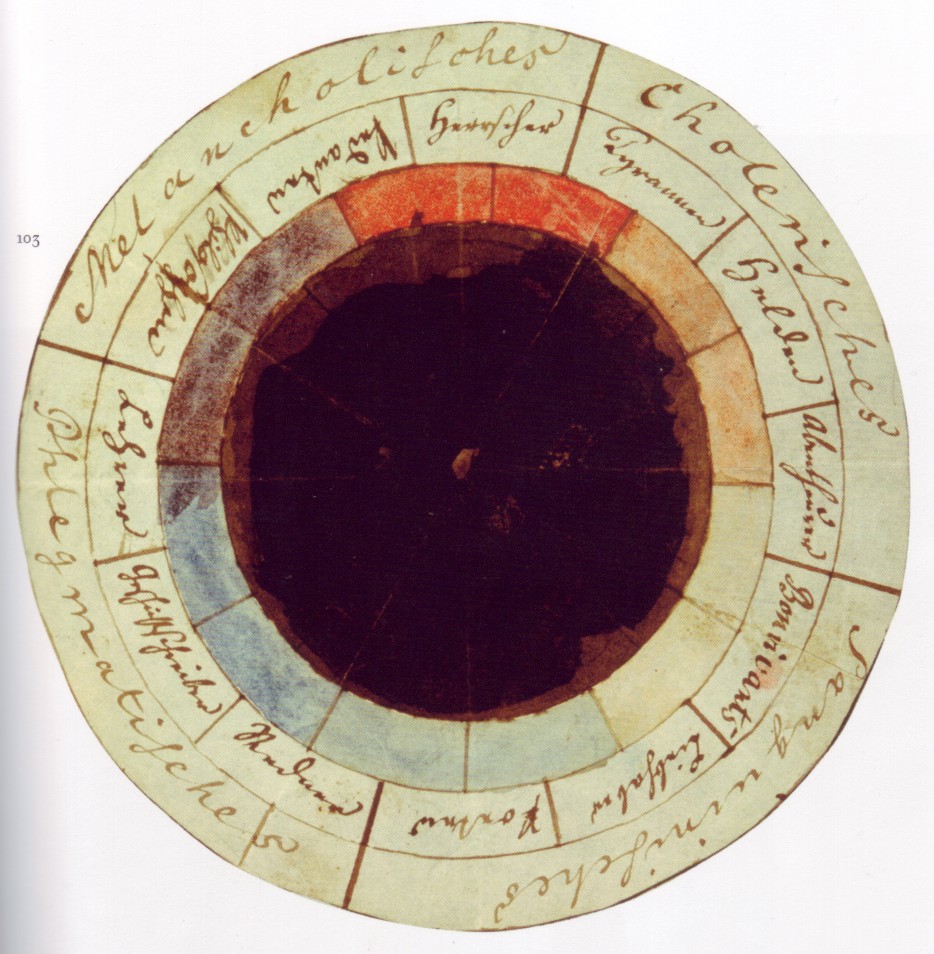
The 19th century witnessed a shift from purely optical analysis towards understanding the subjective experience of color. Johann Wolfgang von Goethe’s *Theory of Colors* (1810), though scientifically flawed by modern standards, was profoundly influential in its emphasis on the emotional and physiological effects of color. Goethe posited that color arose not simply from light refraction but from the interplay between light and darkness, a dynamic he associated with human perception. Later, Michel Eugène Chevreul’s work on simultaneous contrast – initially focused on tapestry weaving to prevent fading – revealed how colors influence each other when placed in proximity. His observations had a significant impact on artists seeking to maximize visual intensity. Perhaps most profoundly, Carl Jung delved into the archetypal symbolism of color, viewing hues as expressions of universal psychological patterns embedded within the collective unconscious. He saw gold, for instance, representing the apex of spiritual intuition and transformation, drawing connections to alchemical traditions. These thinkers moved beyond simply seeing color to understanding its profound resonance within the human psyche.
Impressionism: Capturing Fleeting Light and Subjective Color Experience
Impressionism was a 19th-century art movement characterized by visible brush strokes, open composition, emphasis on accurate depiction of light in its changing qualities (often accentuating the effects of the passage of time), ordinary subject matter...
Impressionism was a 19th-century art movement characterized by visible brush strokes, open composition, emphasis on accurate depiction of light in its changing qualities (often accentuating the effects of the passage of time), ordinary subject matter, unusual visual angles, and inclusion of movement as a crucial element of human perception and experience. The Impressionists faced harsh opposition from the conventional art community in France. The name of the style derives from the title of a Claude Monet work, *Impression, soleil levant* (Impression, Sunrise), which provoked the critic Louis Leroy to coin the term in 1874.
The Impressionist movement irrevocably altered the course of art history by prioritizing the fleeting effects of light and atmosphere. Artists like Claude Monet weren’t interested in depicting objects with photographic accuracy; instead, they sought to capture the *impression* of a moment – the way light danced on water, the shifting hues of a sunset. This required a radical departure from traditional techniques, embracing visible brushstrokes and an open composition that emphasized the immediacy of perception. Monet’s *Impression, soleil levant*, became emblematic of the movement's focus on capturing transient color effects. The broken colors applied directly to the canvas weren’t blended but allowed to mix optically in the viewer’s eye, creating a vibrant and dynamic surface that mirrored the ever-changing qualities of light. This wasn’t merely about aesthetics; it was an attempt to represent how we actually see – not as fixed forms, but as constantly shifting patterns of color and light.
Neo-Impressionism & Pointillism: A Scientific Approach to Visual Harmony
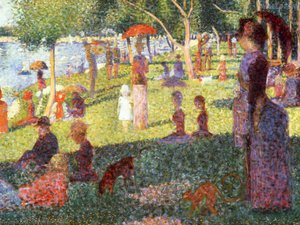
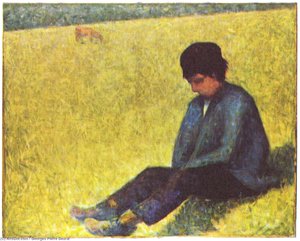
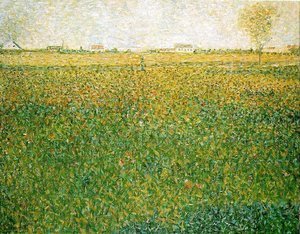
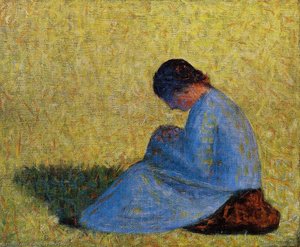
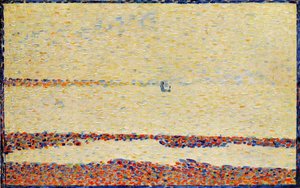
While Impressionism embraced a subjective experience of light, Neo-Impressionism sought to apply scientific principles to the study of color. Georges Seurat, driven by an understanding of Chevreul's theories and the emerging field of chromatics, developed pointillism – a technique involving the meticulous application of tiny dots of pure color that blended optically when viewed from a distance. His masterpiece, *A Sunday on La Grande Jatte* (1884-1886), exemplifies this approach. Seurat wasn’t simply applying colors randomly; he carefully calculated their placement based on principles of simultaneous contrast and optical mixing, aiming to achieve maximum luminosity and visual impact. This methodical approach, born from scientific inquiry, resulted in a unique aesthetic characterized by stillness, order, and a shimmering quality that anticipated the abstract art movements of the 20th century.
Chromaticism is a compositional technique interspersing the primary diatonic pitches and chords with other pitches of the chromatic scale. In simple terms, within each octave, diatonic music uses only seven different notes, rather than the twelve available on a standard piano keyboard. Music is chromatic when it uses more than just these seven notes.
Cultural Chromaticism: Exploring Diverse Symbolism Across Traditions
The perception and interpretation of color are deeply intertwined with cultural context. What might signify joy in one society could represent mourning or danger in another. In Western cultures, white often symbolizes purity and innocence, frequently associated with weddings and religious ceremonies. However, in many Eastern traditions, white is the traditional color of grief and death. Similarly, red carries vastly different connotations across the globe. While it represents passion, love, and excitement in many Western contexts, it’s considered a symbol of luck, prosperity, and celebration in China. Understanding these nuances is crucial when interpreting art from diverse cultural backgrounds.
Consider the vibrant palettes employed in traditional Mexican folk art, where bold colors are integral to religious rituals and celebrations. Or examine the symbolic use of indigo in Japanese textiles, representing depth, serenity, and a connection to nature. These examples demonstrate that color is not merely an aesthetic choice but a powerful form of communication deeply rooted in cultural values and beliefs.
The Emotional Resonance of Color in Modern Art Movements
The 20th century witnessed an explosion of artistic experimentation with color, as artists sought to express inner emotions and explore the psychological impact of hue. Artists like Wassily Kandinsky, a pioneer of abstract art, believed that colors possessed spiritual qualities and could evoke specific emotional responses. His compositions were often driven by a desire to translate musical harmonies into visual forms, using color as a primary means of expression. Mark Rothko’s monumental canvases, characterized by large blocks of saturated color, aimed to create immersive experiences that evoked feelings of awe, contemplation, and transcendence.
Even movements like Fauvism, with its unrestrained use of bold, non-naturalistic colors, can be seen as an exploration of the emotional power of hue. Hermenegildo Anglada Camarasa’s vibrant depictions of Spanish folklore demonstrate a similar passion for expressive color, impacting artists like Picasso and Kandinsky. Ultimately, the legacy of these modern masters lies in their ability to liberate color from its descriptive function and harness its potential to communicate directly with the human psyche. Through their innovative techniques and profound understanding of color psychology, they paved the way for generations of artists to explore the emotional depths of the visual world.