Early Life & Formation: From Seminary to Seafaring – The Genesis of a Marine Painter
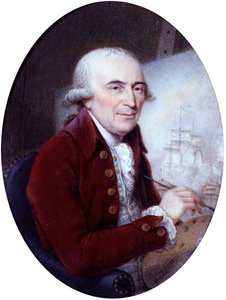
Dominic Serres’s journey to becoming one of Britain’s most celebrated marine painters was anything but conventional. Born Dominique Serres in Auch, Gascony, sometime between 1719 and 1723—the precise date remains elusive—his early life pointed towards a decidedly different path. Initially destined for the priesthood, he entered the Benedictine seminary at Douai, yet this cloistered existence proved ill-suited to his adventurous spirit. A departure from religious studies soon led him through Spain, a period of apparent mercantile activity in the Mediterranean, and even a stint as a merchant captain navigating the waters of Cuba and Havana. This formative period, steeped in the realities of seafaring life—the unpredictable temperament of the ocean, the intricate workings of ships, the vibrant cultures encountered in distant ports—would become the bedrock of his artistic vision.
The pivotal moment arrived in 1748 when Serres was captured by British forces during a Caribbean encounter and taken as a prisoner to England. Imprisonment within the Marshalsea prison, far from stifling his creativity, ignited it. Deprived of traditional materials, he began to paint, initially copying the works of Willem van de Velde the Elder, a Dutch master whose detailed depictions of naval scenes were already highly esteemed in British circles. This period of self-taught artistry laid the foundation for his distinctive style, characterized by meticulous observation and a growing understanding of maritime subjects. While some accounts suggest tutelage under Charles Brooking, the timeline remains debated; regardless, Serres rapidly developed a unique voice that resonated with the burgeoning public interest in naval power.
Naval Battles & the Rise to Prominence: Serres’s Art During the Seven Years' War and American Revolution
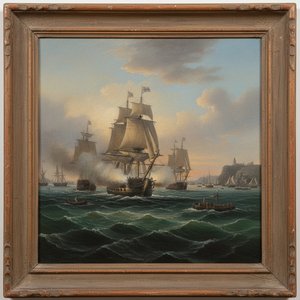
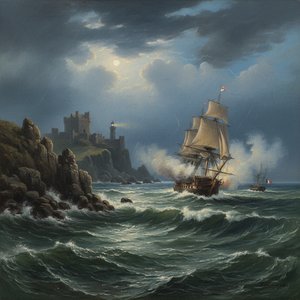
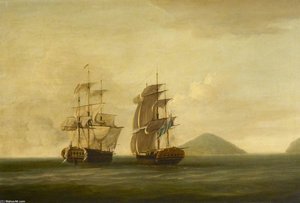
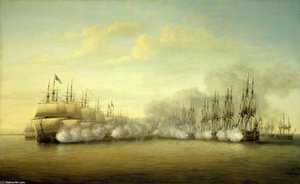
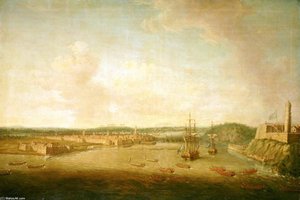
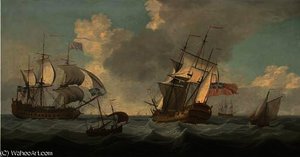
The mid-18th century witnessed a dramatic escalation of maritime conflict, most notably during the Seven Years’ War (1756-1763) and subsequently with the outbreak of the American Revolutionary War. This era provided Serres with an unprecedented opportunity to establish his reputation as a chronicler of naval events. The British fleet's successes—the capture of Havana in 1762, battles across the Atlantic—captured the public imagination, fueling demand for paintings that documented these victories. Serres skillfully capitalized on this appetite, working initially for publishers creating series depicting key moments from the Seven Years’ War.
His depictions weren't merely topographical records; they possessed a dynamic energy and attention to detail that set them apart. He captured not just the grandeur of warships but also the human element—the bustle of activity on deck, the tension of battle, the sheer scale of naval operations. This ability to convey both the spectacle and the reality of maritime warfare proved crucial in securing his position as a leading marine artist. As the conflict shifted westward with the American Revolution, Serres continued to document significant events, including the ill-fated Penobscot Expedition of 1779, offering a visual record of both triumph and setback.
A Founding Academician: Dominic Serres and the Royal Academy – Establishing Standards in British Art
Serres’s growing recognition culminated in a landmark achievement: his election as a founding member of the Royal Academy (RA) in 1768. This was no small feat, signifying not only his artistic merit but also his contribution to establishing standards within the burgeoning British art world. The RA, championed by Sir Joshua Reynolds, aimed to elevate the status of painting and sculpture, fostering a sense of national identity through artistic excellence. Serres’s inclusion underscored the importance of marine painting as a legitimate genre worthy of academic recognition.
His role extended beyond mere membership; he served as the RA's librarian from 1792 until his death, demonstrating a commitment to preserving and promoting artistic knowledge. This position allowed him to shape the Academy’s collection and influence future generations of artists. The very act of co-founding the RA speaks volumes about Serres’s ambition and his desire to establish a formal structure for artistic training and exhibition—a legacy that continues to resonate within British art history.
The Science Within the Scene: Meteorology, Observation, and Accuracy in Serres’s Landscapes
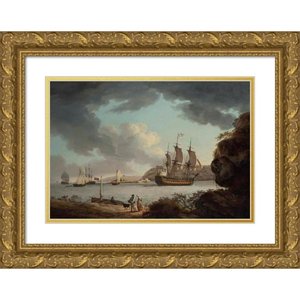
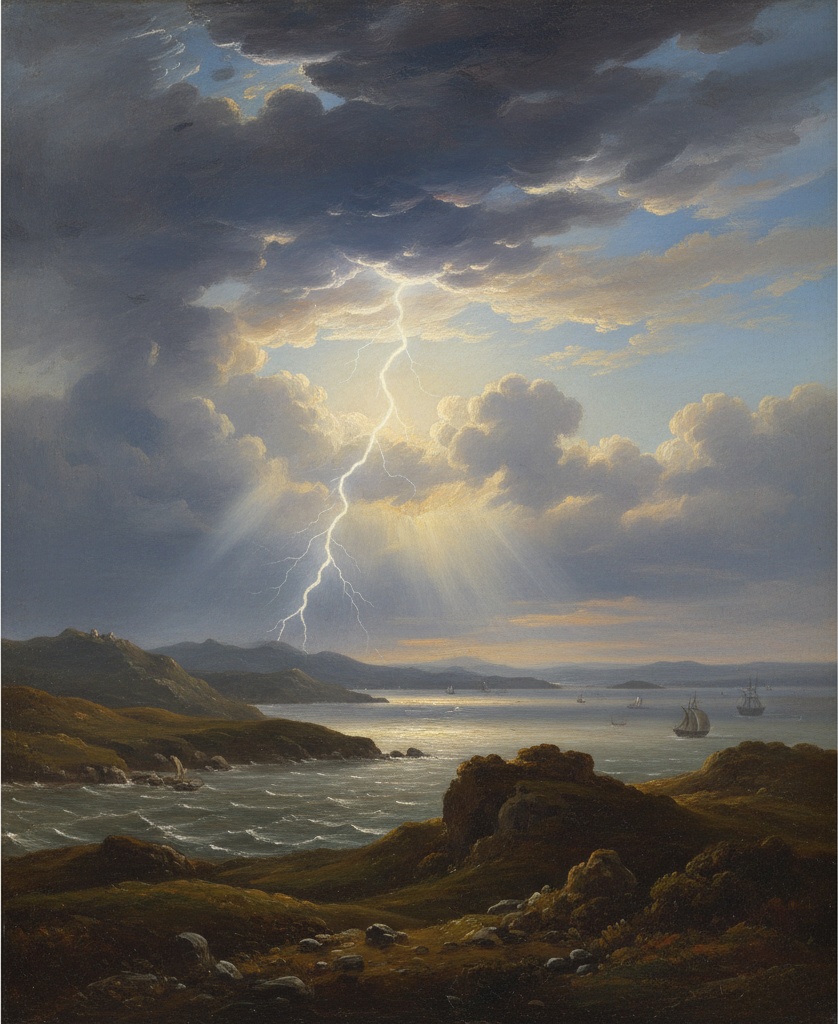
While celebrated for their dramatic depictions of naval battles, Serres’s paintings are also remarkable for their underlying scientific precision. His early life as a seafarer instilled in him a deep understanding of meteorology—the subtle shifts in wind patterns, the formation of clouds, the changing hues of the sea under different lighting conditions. This knowledge is evident in his meticulous rendering of skies and water, capturing not just visual appearance but also atmospheric effects with striking accuracy.
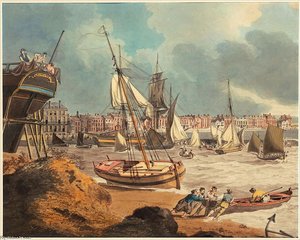
His landscapes are not merely backdrops; they are integral to the narrative, reflecting a keen observational eye and a desire to portray the natural world realistically. He wasn’t simply painting what he *saw* but what he *understood* about the forces shaping the maritime environment. This commitment to accuracy extended to his depictions of ships themselves—the rigging, sails, and hull construction are rendered with painstaking detail, reflecting a deep familiarity with naval architecture. This blend of artistic skill and scientific understanding distinguishes Serres’s work from many of his contemporaries.
Serres’s Legacy & Family of Artists: Continuing a Tradition of Maritime Painting
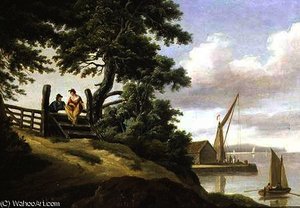
Dominic Serres’s influence extended beyond his own prolific output; he established a veritable dynasty of marine painters. His marriage to Mary Colldycutt in 1749 produced a family deeply immersed in the artistic world. His eldest son, John Thomas Serres (1783-1864), followed in his father’s footsteps, becoming a successful and well-respected marine artist in his own right, even serving as Marine Painter to King George III after his father's death. Dominique Michael Serres, the younger son, also pursued painting, specializing in landscape subjects.
The continuation of this artistic lineage speaks volumes about the enduring appeal of Serres’s style and techniques. His emphasis on meticulous observation, atmospheric effects, and dynamic composition resonated with subsequent generations of artists. The family's collective body of work provides a fascinating insight into the evolution of marine painting during the late 18th and early 19th centuries.
Collecting Serres Today: Authenticity, Value, and Placement within a Distinguished Collection
Today, Dominic Serres’s paintings are highly sought after by collectors who appreciate their historical significance, artistic merit, and evocative power. Authenticating a Serres painting requires careful examination of style, subject matter, and provenance. His works frequently depict specific naval events or harbor scenes, making detailed research essential to verify authenticity.
The value of a Serres painting is determined by factors such as size, condition, subject matter, and the presence of any historical documentation. Larger, more dramatic compositions depicting significant battles typically command higher prices. Placement within a distinguished collection—a museum or private estate with a strong focus on British art—further enhances its value. ArtsDot offers meticulously reproduced versions of Serres’s masterpieces, allowing collectors to experience the beauty and drama of his work without the expense of acquiring an original. Whether seeking a statement piece for a grand hall or a refined addition to a smaller space, Serres’s paintings continue to captivate and inspire.