The Shadow of War: Contextualizing 1916
The First World War, which was fought between 1914 and 1918, had an immediate impact on popular culture. In the over a hundred years since the war ended, the war has resulted in many artistic and cultural works from all sides and nations that partic...
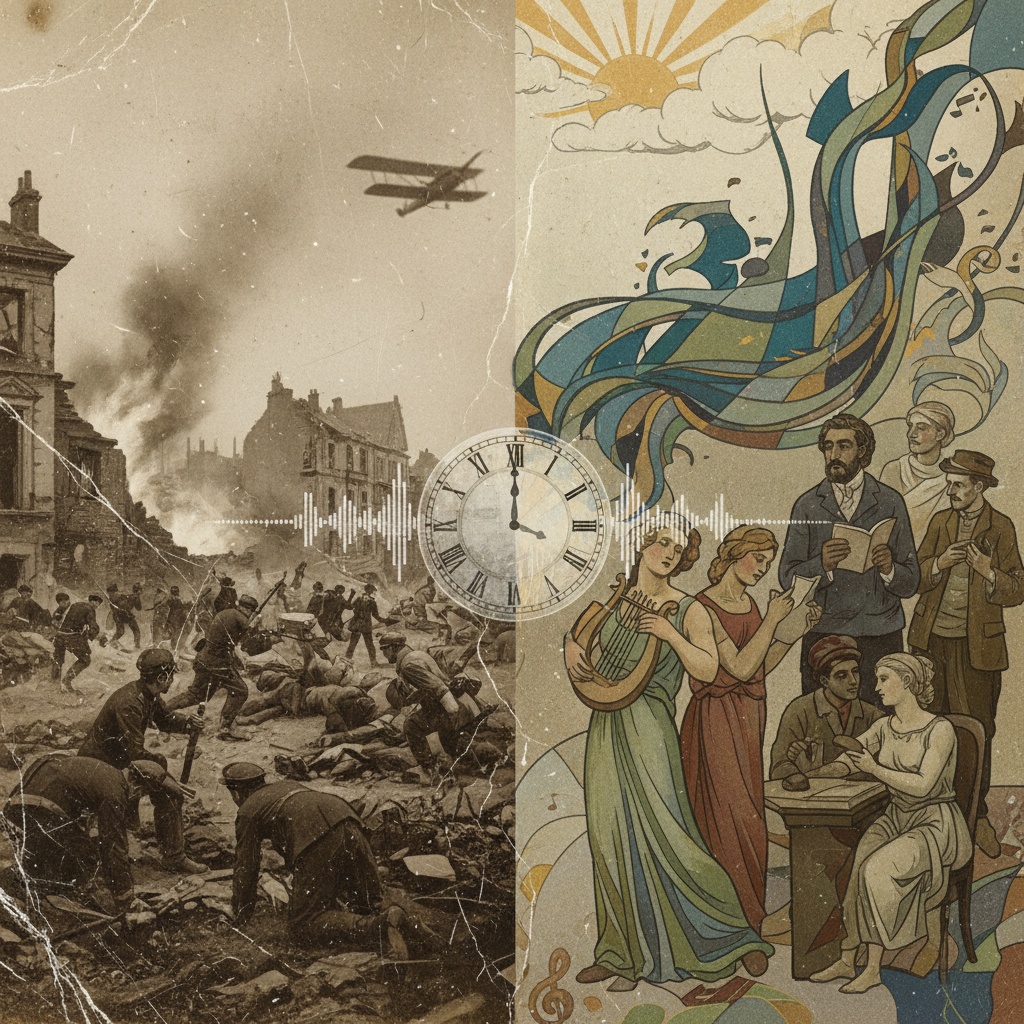
The year 1916 stands as a stark demarcation in the narrative of modern history, a period indelibly scarred by the unrelenting brutality of the First World War. Beyond the trenches and battlefields lay a fertile, if agonizingly fraught, landscape for artistic innovation. It was a moment when established aesthetic conventions fractured under the weight of unprecedented global conflict, giving rise to new modes of expression that sought not merely to depict the horrors witnessed but to grapple with their very essence. The prevailing sense of societal upheaval—the collapse of empires, the staggering loss of life, and the rapid advancement of technology—created a profound existential crisis for artists across Europe. This wasn’t simply about documenting events; it was about understanding how those events fundamentally altered the human condition. The war forced a reckoning with traditional values, prompting a search for new spiritual anchors and a re-evaluation of what constituted beauty in a world seemingly devoid of it.
Futurism's Embrace of Conflict: Boccioni and the Dynamism of Modern Warfare
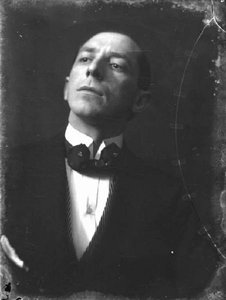 Umberto Boccioni
Umberto Boccioni (1882-1916): Pioneer of Italian Futurism! Explore dynamic paintings & sculptures capturing motion, modernity & deconstructed form. Discover 'Dynamism of a Human Body' & more!
Perhaps no artistic movement was as directly entangled with the fervor – and paradoxes – of 1916 as Italian Futurism. Founded by Filippo Tommaso Marinetti in 1909, Futurism celebrated speed, technology, violence, and the dynamism of modern life. For artists like Umberto Boccioni, the war wasn’t a tragedy to be lamented but rather an opportunity to demonstrate the power and energy of the machine age. His sculptures and paintings attempted to capture motion itself, deconstructing form to reflect the fragmented experience of modernity. While seemingly callous in its embrace of conflict, Futurism’s fascination with warfare stemmed from a belief that it represented a necessary cleansing force, sweeping away the stagnation of the past. Boccioni's work, tragically cut short by his death in 1916, embodies this complex relationship – a celebration of dynamism interwoven with the grim realities of battle. His “Dynamism of a Human Body”, for example, isn’t simply an aesthetic exercise; it’s a visual metaphor for the relentless energy unleashed by war, a force that simultaneously creates and destroys.
Abstracting Trauma: Kandinsky, Spirituality, and 'To the Unknown Voice'
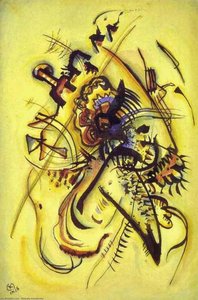 To the Unknown Voice
Kandinsky's 'To the Unknown Voice' (1916) is a pivotal work of abstract expressionism, exploring emotion and spirituality through vibrant color & form. Discover its history & influence.
In stark contrast to the outward exuberance of Futurism stood the introspective world of Wassily Kandinsky. While not directly depicting scenes of battle, Kandinsky’s work from 1916—most notably “To the Unknown Voice”—reflects a deep spiritual turmoil born from the war's devastation. As Europe descended into chaos, Kandinsky increasingly turned towards abstraction as a means of expressing emotions and inner states that defied representational depiction. The vibrant colors and swirling forms in ‘To the Unknown Voice’ aren’t merely aesthetic choices; they are attempts to access a deeper reality beyond the material world, a search for solace and meaning amidst unimaginable suffering. Kandinsky believed that art could serve as a conduit to the spiritual realm, offering a refuge from the horrors of war through pure form and color. This period marked a pivotal shift in his artistic trajectory, solidifying his position as a pioneer of abstract expressionism and demonstrating the power of non-figurative art to convey profound emotional depth.
Realism on the Front Lines: Nevinson’s ‘Dog Tired’ and the Brutality of WWI
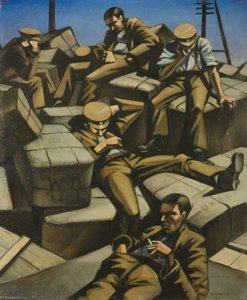 Dog Tired
Experience 'Dog Tired' by C.R.W. Nevinson (1916). A powerful WWI painting of weary men & a dog, rendered in striking black & white. Hand-painted reproduction available.
C.R.W. Nevinson, initially aligned with Futurism, underwent a dramatic transformation as he directly experienced the realities of trench warfare. His 1916 painting “Dog Tired” offers a starkly realistic depiction of exhausted soldiers slumped against a desolate landscape. Unlike the idealized depictions of heroism often found in earlier war art, Nevinson’s work conveys the sheer physical and emotional toll of conflict. The striking black-and-white palette amplifies the sense of bleakness and despair, while the angular forms and fragmented composition reflect the disorientation and trauma experienced by those on the front lines. “Dog Tired” isn't a glorification of war; it’s a harrowing indictment of its dehumanizing effects. It captures the weariness, the futility, and the profound sense of loss that permeated the lives of soldiers during this period. The painting serves as a powerful reminder of the human cost of conflict, stripped bare of any romantic illusion.
Beyond the Battlefield: Matisse's Domesticity as a Counterpoint to Conflict
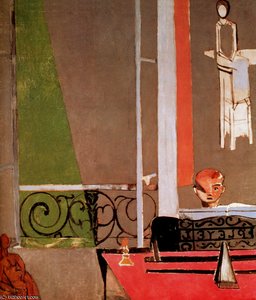 La Leçon de piano Huile sur Toile New York, The Museum of Modern Art
Explore Henri Matisse’s ‘La Leçon de piano’! A vibrant Fauvist masterpiece showcasing geometric forms & domestic tranquility. Discover this iconic 1916 painting at MoMA.
While many artists directly confronted the horrors of war, others sought refuge in more intimate and domestic scenes. Henri Matisse’s “La Leçon de piano,” painted in 1916, offers a striking contrast to the bleak landscapes of Nevinson or the fragmented forms of Boccioni. This vibrant Fauvist masterpiece depicts a peaceful scene of domestic tranquility—a young woman receiving a piano lesson. While seemingly removed from the turmoil of war, “La Leçon de piano” can be interpreted as an act of resistance, a deliberate affirmation of beauty and harmony in the face of chaos. The geometric forms and bold colors create a sense of order and stability, offering a momentary escape from the anxieties of the outside world. Matisse’s choice to focus on such intimate subjects during this period wasn't a denial of conflict but rather a testament to the enduring power of human connection and the importance of preserving moments of beauty amidst suffering.
The Lingering Impact: Modernism, Symbolism, and the Search for Meaning After 1916
The artistic responses to 1916 weren’t confined to a single style or movement. The year served as a catalyst for broader shifts in modern art, fostering experimentation with form, color, and subject matter. Symbolism, already established as a powerful force in the late 19th century, found renewed relevance as artists sought to express emotions and ideas that defied direct representation. The war’s trauma prompted a re-evaluation of traditional values and a search for new spiritual anchors, leading many artists to explore abstract forms and non-figurative imagery. The legacy of 1916 extends far beyond the immediate aftermath of the conflict. It laid the groundwork for subsequent artistic movements—Surrealism, Dadaism, and Abstract Expressionism—and continues to resonate with contemporary artists grappling with themes of trauma, loss, and the search for meaning in a fragmented world. The works created during this period serve as enduring reminders of the power of art to confront even the most harrowing realities and offer glimpses of hope amidst despair.