The Pre-Raphaelite Spark: Origins & Rejection of Academic Tradition
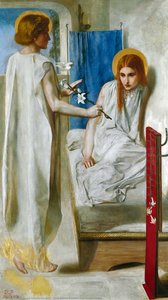
In the bustling artistic landscape of mid-19th century England, a rebellion was brewing. A group of young painters, poets, and critics—dissatisfied with the rigid conventions of the Royal Academy and what they perceived as its soulless imitation of Renaissance masters—formed a secret society in 1848. This collective, known as the Pre-Raphaelite Brotherhood (PRB), wasn’t merely seeking stylistic innovation; it was a profound rejection of established norms, a yearning for artistic authenticity rooted in a return to the perceived purity and sincerity of art *before* Raphael. The Academy championed a polished, idealized aesthetic, often prioritizing historical grandeur over genuine emotional expression. For artists like William Holman Hunt, Dante Gabriel Rossetti, and John Everett Millais—the core founders—this felt stifling, a betrayal of nature’s beauty and the power of individual vision.
The name itself, “Pre-Raphaelite,” was a deliberate provocation. It signified a preference for the art that predated Raphael (1483–1520), specifically the period before High Renaissance classicism took hold. They admired the detailed realism, vibrant colors, and spiritual intensity of early Italian painters like Fra Angelico and Botticelli—artists who, in their view, possessed an uncorrupted connection to nature and a more profound sense of religious devotion. This wasn’t simply about mimicking past styles; it was about recapturing a spirit, a way of seeing the world with fresh eyes, untainted by academic dogma. The Brotherhood's initial manifesto emphasized “genuine ideas,” attentive study of nature, and a rejection of anything “conventional or self-parading.”
This nascent movement wasn’t without its critics. Early works were often met with scorn for their perceived lack of finish, unconventional compositions, and unflinching realism—a stark contrast to the smooth surfaces and idealized forms favored by the establishment. However, fueled by a shared passion and championed by influential art critic John Ruskin, the Pre-Raphaelites gradually gained recognition, paving the way for a new era in British art.
Burne-Jones's Mythic World: Sources of Inspiration & Recurring Themes
 Wikipedia: Pre-Raphaelite Brotherhood
The Pre-Raphaelite Brotherhood (PRB), later known as the Pre-Raphaelites, was a group of English painters, poets, and art critics, founded in 1848 by William Holman Hunt, John Everett Millais, Dante Gabriel Rossetti, William Michael Rossetti, James ...
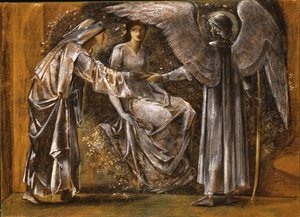
Edward Burne-Jones (1833–1898) emerged as one of the most distinctive and influential figures within the second wave of the Pre-Raphaelite movement. While initially inspired by the Brotherhood’s core principles, he quickly developed a unique artistic voice characterized by dreamlike imagery, intricate detail, and a profound engagement with mythology, literature, and symbolism. Unlike Hunt's meticulous realism or Millais's narrative precision, Burne-Jones sought to evoke atmosphere and emotion through suggestion rather than explicit depiction.
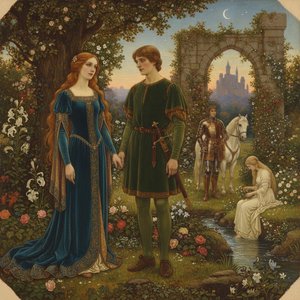
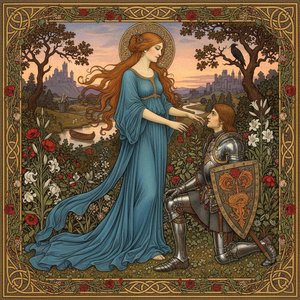
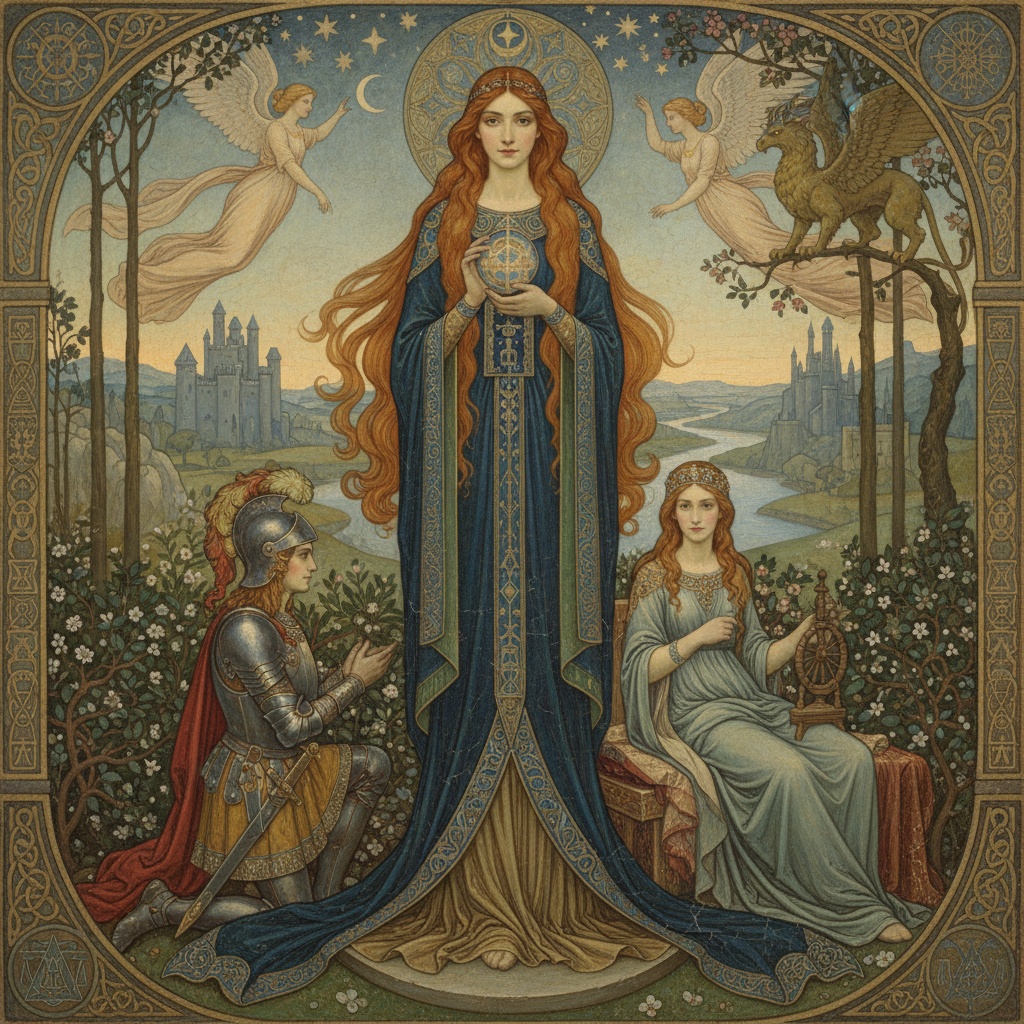
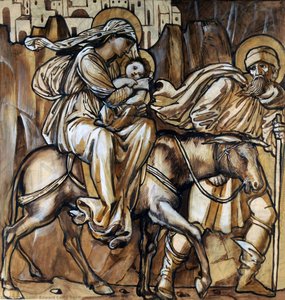
His canvases are populated with figures drawn from medieval romances—Arthurian legends, tales of Perseus and Andromeda, and the poetry of Tennyson. These weren’t simply illustrations; they were reinterpretations, imbued with a melancholic beauty and a sense of otherworldly longing. Burne-Jones often eschewed direct narrative clarity, preferring to focus on moments of quiet contemplation or symbolic resonance. The stories served as vehicles for exploring themes of love, loss, fate, and the ephemeral nature of beauty.
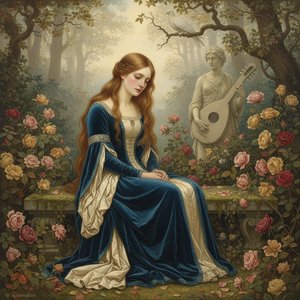
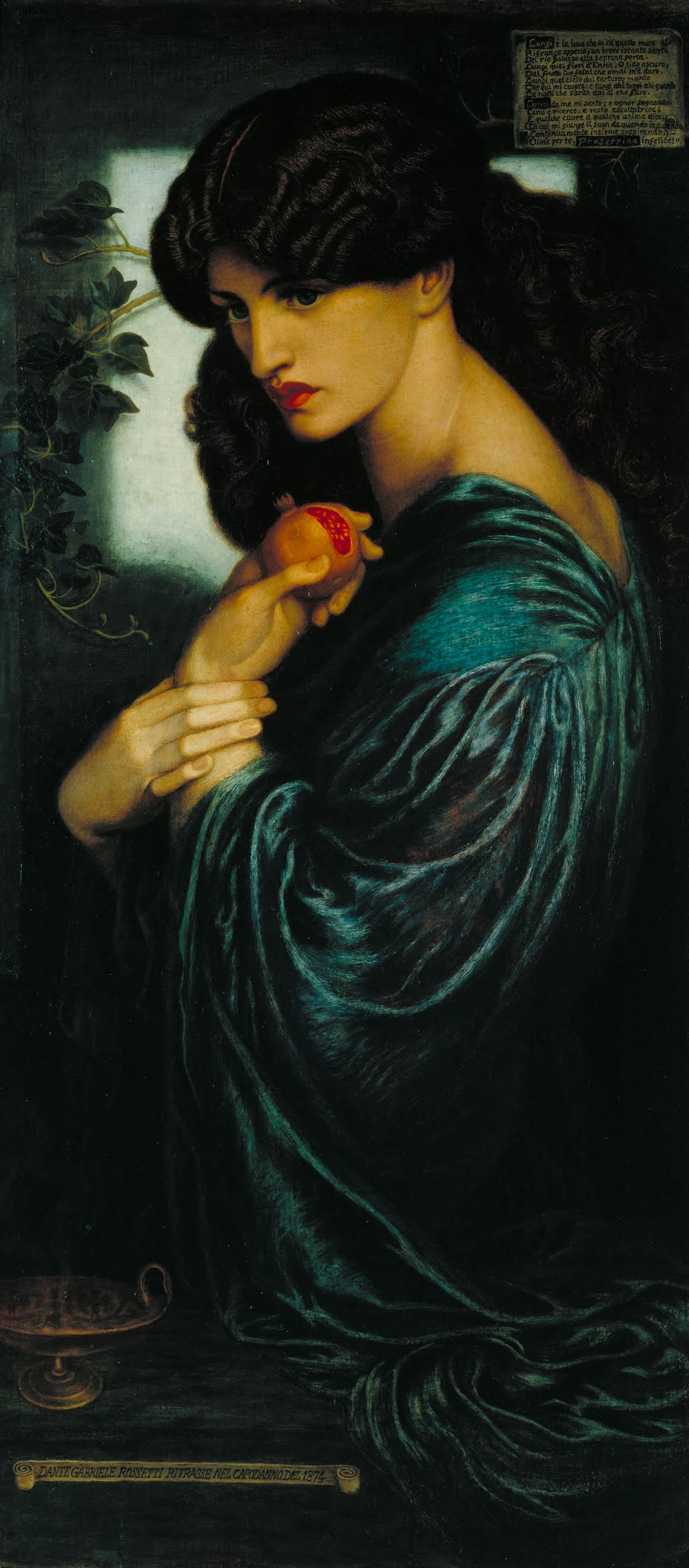
Recurring motifs appear throughout his oeuvre: golden staircases representing spiritual ascent, lush gardens symbolizing paradise lost, and figures draped in flowing robes, their faces often veiled or turned away, hinting at hidden emotions. He was particularly fascinated by the figure of Persephone, Queen of the Underworld, whose story resonated with his own preoccupation with themes of death, rebirth, and the cyclical nature of life.
A Master of Technique: Burne-Jones’s Distinctive Style and Materials
Burne-Jones's technical approach was as distinctive as his subject matter. He rejected the conventional layering techniques favored by academic painters, instead employing a method that emphasized luminosity and transparency. His colors were rich and jewel-toned, often achieved through the use of thin glazes applied over a white ground—a technique reminiscent of early Renaissance masters. This created a sense of depth and radiance, as if light emanated from within the canvas itself.
He was meticulous in his attention to detail, painstakingly rendering every fold of fabric, every strand of hair, every leaf on a tree. However, this wasn’t about photographic accuracy; it was about creating an atmosphere of heightened reality, a world imbued with beauty and enchantment. Burne-Jones often worked slowly, revising and refining his compositions over extended periods. He frequently used metallic paints—gold leaf in particular—to accentuate certain details and create a sense of opulence.
His commitment to craftsmanship extended beyond painting. He was also a prolific designer of stained glass, tapestries, and furniture, believing that art should be integrated into all aspects of life. This holistic approach reflects the influence of William Morris and the Arts and Crafts movement, which sought to revive traditional methods of production and celebrate the beauty of handmade objects.
Symbolism in Bloom: Decoding the Hidden Meanings within Burne-Jones’s Art
In works of art, literature, and narrative, a symbol is a concrete element like an object, character, image, situation, or action that suggests or hints at abstract, deeper, or non-literal meanings or ideas. The use of symbols artistically is symboli...
Symbolism is at the heart of Burne-Jones's artistic vision. His paintings are not simply beautiful images; they are complex allegories, laden with hidden meanings and allusions. Understanding these symbols requires a familiarity with medieval literature, mythology, and Victorian culture.
Flowers, for example, often carry specific connotations: lilies represent purity, roses symbolize love, and poppies evoke sleep or death. Animals also play a significant role—peacocks are associated with pride, swans embody grace, and horses represent strength and nobility. The use of color is equally symbolic: gold represents divinity, blue signifies spirituality, and red evokes passion or sacrifice.
Burne-Jones frequently employed visual puns and literary references to create layers of meaning within his compositions. His paintings often allude to classical myths, biblical stories, and the poetry of Dante, Tennyson, and Keats. However, these allusions are rarely straightforward; they are often fragmented or reinterpreted, inviting viewers to engage in a process of decipherment. The ambiguity inherent in his symbolism adds to the enigmatic quality of his work, prompting contemplation and personal interpretation.
The Aesthetic Movement & Burne-Jones's Legacy: A Pursuit of Beauty
Aestheticism (also known as the aesthetic movement) was an art movement in the late 19th century that valued the appearance of literature, music, fonts, and the arts over their functions. According to Aestheticism, art should be produced to be beauti...
As the Pre-Raphaelite Brotherhood evolved, it increasingly overlapped with the Aesthetic Movement, a broader cultural phenomenon that championed “art for art’s sake.” This philosophy rejected the Victorian emphasis on moral didacticism, arguing that beauty was its own justification. Burne-Jones became a leading figure in this movement, advocating for a purely aesthetic experience—an appreciation of form, color, and composition divorced from any practical or ethical considerations.
His pursuit of beauty wasn’t simply about creating pleasing images; it was about elevating the human spirit, offering an escape from the ugliness and materialism of modern life. He believed that art had the power to transform our perceptions, to awaken us to a higher realm of experience. This idealistic vision resonated with a generation disillusioned by industrialization and social upheaval.
Burne-Jones’s influence extended far beyond his own lifetime. His work inspired artists such as Salvador Dalí and continues to captivate audiences today. He left behind a legacy of dreamlike imagery, intricate detail, and a profound commitment to the power of beauty—a testament to the enduring allure of myth, symbolism, and artistic vision.
Explore the timeless masterpieces of Edward Burne-Jones and other Pre-Raphaelite artists at ArtsDot.com, where you can discover high-quality reproductions and delve deeper into the world of Victorian art.