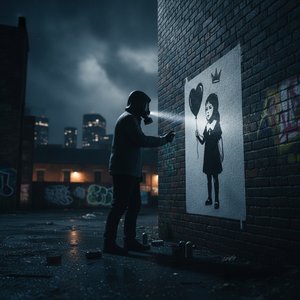
The Enigma of Anonymity: Banksy and the Subversion of Authorship
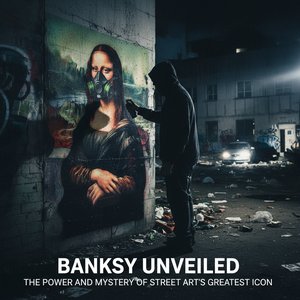 Banksy Unveiled: The Power and Mystery of Street Art's Greatest Icon
The Ghost in the Machine: Decoding Banksy's Anonymity In the grand tapestry of art history, few figures have commanded as much reverence and curiosity as the specter known only as Banksy. To discuss Banksy is to engage with a paradox; he is a global ...
In the grand, sweeping tapestry of art history, few figures have commanded as much reverence and curiosity as the specter known only as Banksy. To discuss this artist is to engage with a profound paradox; he is a global phenomenon whose face remains hidden behind a veil of anonymity, a phantom operating within the very heart of the public eye. This deliberate erasure of identity serves as far more than a mere shield against legal repercussions or the watchful eyes of authorities. It is a fundamental artistic statement that critiques the very nature of authorship, commodification, and the cult of personality that often defines the modern art market. By removing the persona of the creator, Banksy forces the viewer to confront the inherent value we place on an artist’s celebrity versus the intrinsic message contained within the work itself.
The question of “who is Banksy?” has become a secondary narrative, a shadow cast by the brilliance of the works themselves. While early speculation often pointed toward the gritty, underground graffiti scenes of Bristol, the lack of definitive proof only serves to amplify the legend. This strategic obfuscation allows the art to transcend the individual, turning the name Banksy into a symbol of resistance rather than just a person. In an era where the artist's brand is often as significant as their brushstroke, Banksy’s refusal to step into the light remains one of the most potent acts of rebellion in contemporary culture, ensuring that the focus remains squarely on the social and political dialogues his pieces ignite.
The Stencil Revolution: Technical Precision as a Tactical Strike
 Banksy Unmasked: The Street Art Icon Redefining Modern Rebellion and the Future of Urban Aesthetics
The Stencil Revolution: How Banksy Rewrote the Rules of Urban Rebellion In the gritty, rain-slicked streets of Bristol, a new kind of visual language was being forged, one that didn't require a gallery invitation or a velvet rope. Before the auction ...
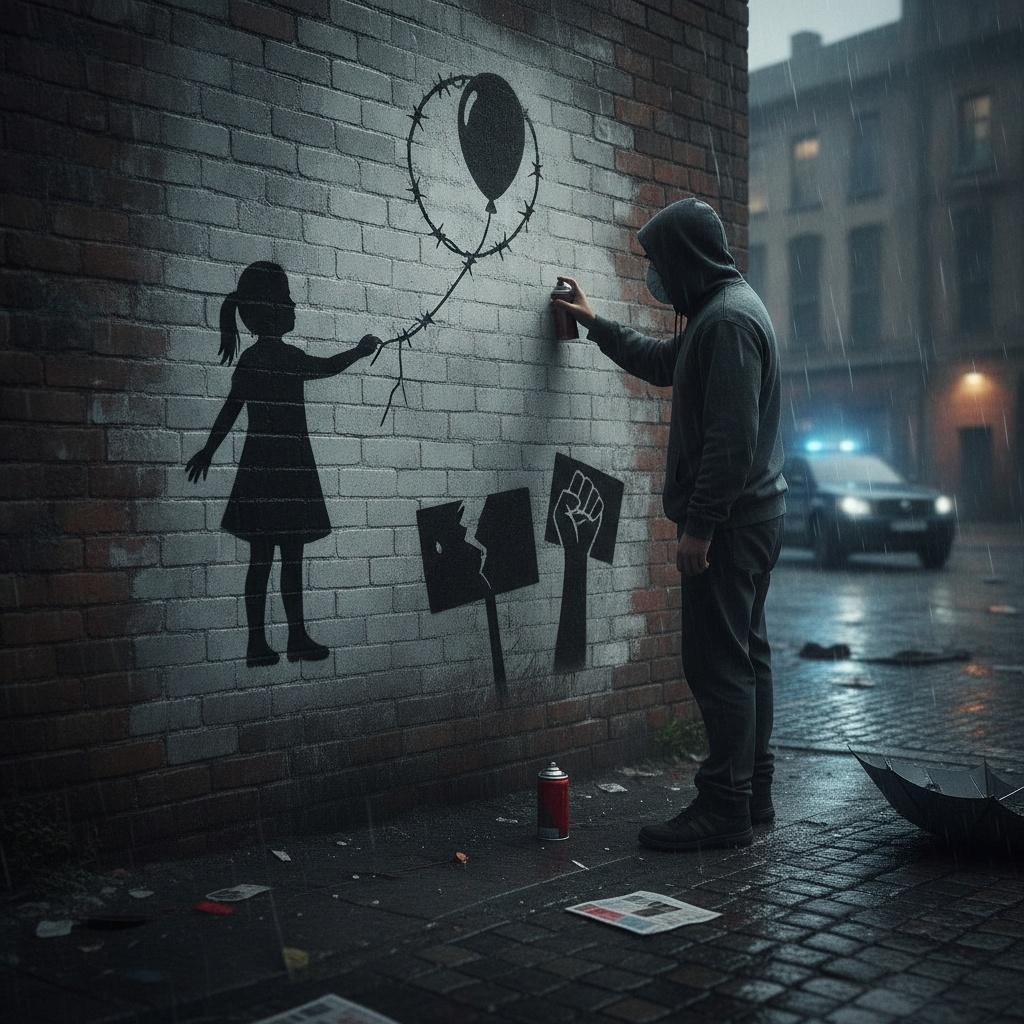
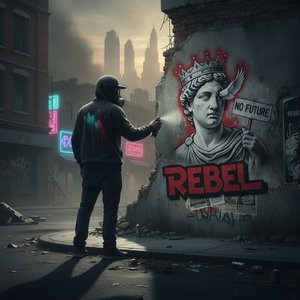
The evolution of Banksy’s visual language marks a pivotal moment in the history of urban expression, transitioning from the raw, freehand graffiti of the early 1990s to a highly sophisticated stencil technique. This shift was not merely an aesthetic choice but a tactical necessity born from the shadows of the Bristol underground. The adoption of stencilling allowed for a rapid-fire efficiency that is essential for unsanctioned street art interventions. By preparing complex designs in advance, the artist can execute intricate works overnight, claiming the urban landscape with a speed that defies traditional notions of artistic production and avoids the immediate detection of law enforcement.
This technique, while appearing clean and precise, carries a heavy weight of symbolism. The crisp lines and stark contrasts characteristic of stencil graffiti create a visual dialogue that commands attention against the weathered, textured surfaces of city walls. Much like the masters of the Renaissance used light and shadow to direct the eye, Banksy utilizes the monochrome precision of the stencil to highlight poignant moments of tension. This method also allows for the reproducibility of his message, enabling a single subversive idea to be echoed across different urban environments. It is a form of guerrilla art that uses the tools of mass production to deliver messages of individual dissent, turning every spray-painted edge into a deliberate strike on the collective consciousness.
Urban Narratives: Decoding Social Commentary in Iconic Works
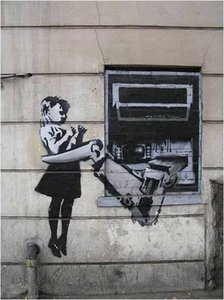 Cash machine girl
Captivating Subject and Modern Urban Narrative This striking piece of street art captures a poignant moment of interaction between innocence and modernity. Depicting a monochrome girl engaging with an ATM embedded into a textured urban wall, the artw...
Beyond the technical mastery lies a profound depth of narrative, where the streets become a canvas for complex social critiques. Banksy’s oeuvre is a masterclass in using juxtaposition to provoke thought. Consider the striking piece
Cash Machine Girl, which captures a poignant moment of interaction between childhood innocence and the cold reality of modernity. By depicting a monochrome girl engaging with an ATM embedded into a textured urban wall, the artwork invites us to reflect on themes of consumerism and our growing technological dependence. The simplicity of the scene belies a powerful commentary on how pervasive money and technology have become in the lives of even the most vulnerable.
Similarly, works such as
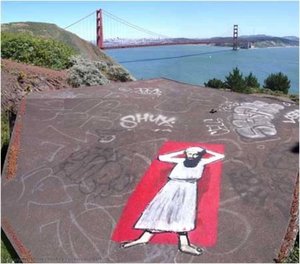
Osama Sunbathing or his satirical takes on media influence, like the
Simpsons Blackboard, utilize dark humor to dissect political landscapes and the impact of popular culture. In these pieces, the artist often places familiar, even comforting, icons in jarringly inappropriate or subversive contexts. This technique of "subverting convention" forces the viewer to look past the initial humor to find the underlying critique of power dynamics, authority, and societal decay. Whether it is a policeman searching a girl or a political leader in a relaxed, beach-like pose, the artwork serves as a mirror to our contemporary anxieties, making the urban environment a living, breathing gallery of social justice and political activism.
From Bristol Underground to Global Icon: The Evolution of Street Art
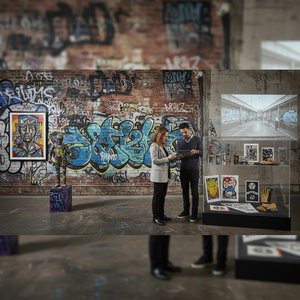 Beyond Graffiti: Exploring the Evolution & Cultural Impact of Street Art for Collectors
The Genesis of Urban Expression: From Tagging to Early Graffiti Beyond the Gallery Walls: The Rise of Contemporary Street Art Explore the captivating world of contemporary street art! Discover its history, influential artists like Banksy, and evolvin...
The journey of Banksy is inextricably linked to the vibrant, restless energy of the Bristol underground scene of the 1990s. This period was characterized by collaborations between artists, musicians, and a shared desire to reclaim public space from the sterile confines of traditional galleries. Emerging from the DryBreadZ Crew (DBZ), Banksy’s early work was part of a larger movement that sought to mark territory and claim identity within the anonymity of the urban landscape. This era laid the foundation for a new kind of visual language—one that did not require a gallery invitation or a velvet rope, but instead relied on the raw, unfiltered creativity of the streets.
As this movement matured, it began to bridge the chasm between "vandalism" and "fine art." What started as defiant graffiti evolved into a global phenomenon known as post-graffiti or neo-graffiti. This evolution has seen street art move from the periphery of culture to the center of international discourse, with institutions like the Global Street Art Foundation London working to recognize these murals as significant artistic forces. The transition from the gritty streets of Bristol to the auction houses of London and New York represents a profound shift in perspective, acknowledging that the most powerful forms of communication often blossom in the most unexpected, public spaces.
The Legacy of Rebellion: Street Art’s Integration into the Fine Art Canon
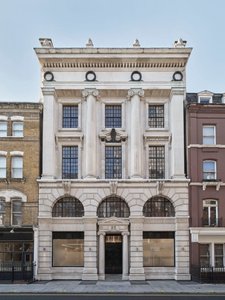 Global Street Art Foundation
A City Unveiled: Exploring the Global Street Art Foundation London pulses with a restless energy, an urban heartbeat that finds its most immediate expression not within hallowed halls, but splashed across the city’s very surfaces. The Global Street A...
Today, we witness a fascinating convergence where the rebellious spirit of street art meets the academic rigor of the fine art world. The boundaries that once separated "high art" from "street art" are increasingly blurred. We see this in the way contemporary collectors and institutions now approach works that were once considered mere ephemeral interventions. The legacy of Banksy is not just found in the physical pieces that remain on walls, but in the way he has redefined the very concept of what art can be: a tool for activism, a medium for satire, and a democratic force accessible to all passersby.
For those who find inspiration in this era of rebellion, the desire to bring these powerful aesthetics into the home is profound. At
Most-Famous-Paintings.com, we celebrate this intersection of history and emotion. While our collection focuses on the timeless masterpieces of the classical canon, we understand the passion for works that carry deep narrative weight. For enthusiasts who wish to capture the spirit of a specific era or even "remix" history, we offer bespoke services. Our artists can transform personal memories into the impasto style of Van Gogh or recreate historical scenes with the textured depth of an oil painting on 100% cotton canvas. Whether it is a custom portrait or a large-scale mural to transform a modern space, we provide the craftsmanship to turn the power of visual storytelling into a lasting legacy for your own collection.