
The Genesis of Chaos: From SAMO© to the Streets of New York
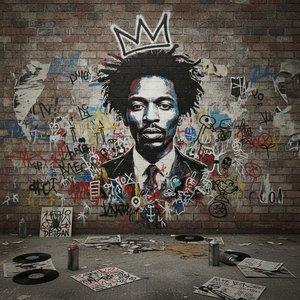 Basquiat & Raw Pop: The Unfiltered Energy of Neo-Expressionism and the Legacy of Urban Rebellion
The Genesis of Chaos: From SAMO© to the Streets of New York Jean-Michel Basquiat: Deconstructing Identity & Power Through Neo-Expressionist Graffiti The Rise of SAMO: Basquiat’s Early Provocations & New York Roots Jean-Michel Basquiat Explore the raw...
To understand the seismic shift that occurred in the late twentieth century, one must look past the polished galleries and listen to the rhythmic, chaotic heartbeat of the city streets. Before Jean-Michel Basquiat became a titan of the international art market, his voice was etched into the very skin of Manhattan. Emerging from the vibrant, often turbulent landscape of 1970s New York, Basquiat did not seek permission from the hallowed halls of academia; instead, he found his medium in the urban sprawl. Alongside Al Diaz, he operated under the enigmatic pseudonym SAMO©, a collaborative project that functioned less as traditional graffiti and as a poetic intervention.
These were not mere tags, but cryptic, thought-provoking epigrams scrawled across Lower Manhattan, designed to challenge societal norms and question established power structures. This early period was a crucible of creativity, where the energies of disco, punk, and the nascent hip-hop culture converged. The streets provided a raw, unfiltered classroom where language, symbol, and social commentary could be tested in real-time. As the boundaries between high culture and street rebellion began to dissolve, Basquiat transitioned from the ephemeral nature of the wall to the permanence of the canvas, carrying with him the grit, the noise, and the unvarnished truth of a city in transition.
Defining Neo-Expressionism: The Rejection of Minimalism and the Return to Visceral Painting
 Neo-Expressionism Explained: A Professional Guide to Integrating Raw Power and Emotional Intensity into Modern Interior Design
Defining Neo-Expressionism: The Rejection of Minimalism and the Return to Visceral Painting Neo-expressionism - Tate --- title: Neo-expressionism | Tate url: https://www.tate.org.uk/art/art-terms/n/neo-expressionism hostname: tate.org.uk description:...
The late twentieth century witnessed a profound transformation in the global art landscape, a moment when the sterile, intellectualized corridors of Minimalism and Conceptual Art were suddenly breached by a wave of unbridered emotion. This was the emergence of Neo-Expressionism—a movement that rejected the cool, detached intellectualism of its predecessors to embrace the primal and the visceral. Where Minimalism sought reduction and formal restraint, Neo-Expressionism returned to the power of recognizable objects, the human body, and the intense subjectivity of the artist's hand.
This movement was characterized by a rough handling of materials and an unapologetic intensity. It was an era where the boundaries between high culture and street rebellion dissolved, allowing for a new kind of visual language to emerge—one that was deeply personal yet universally resonant. The Neo-Expressionists, sometimes referred to as the New Wild Ones, sought to reintroduce narrative, myth, and raw emotion into painting. This resurgence of figurative art allowed for a more direct confrontation with the anxieties of the modern age, utilizing aggressive brushwork and vibrant, often clashing palettes to evoke a sense of urgency and psychological depth.
A Visual Vocabulary: Deconstructing Identity, Power, and Anatomical Imagery
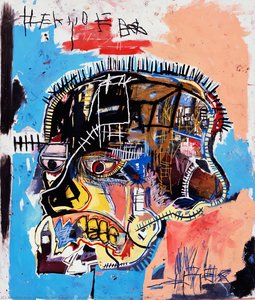
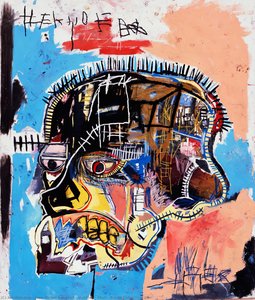 Untitled - Skull, (Broad Collection, LA)
A Haunting Vision of Mortality & Identity Jean-Michel Basquiat’s 1981 work is a visceral and emotionally charged exploration of the human condition, distilled through the powerful imagery of a fragmented skull. This painting, originating from the est...
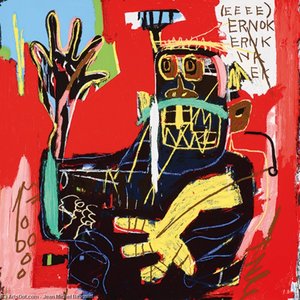
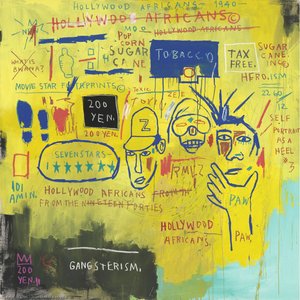
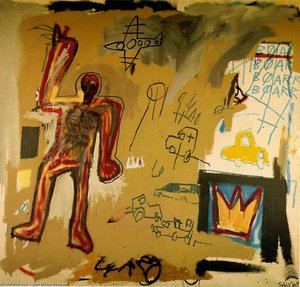
Basquiat’s work is far more than a collection of frantic marks; it is a meticulously constructed visual vocabulary designed to interrogate the very fabric of existence. His upbringing—a rich tapestry of Haitian and Puerto Rican heritage—infused his work with a multilingual and multicultural depth that would later define his aesthetic. Within his compositions, one finds a dense layering of text, geometric shapes, and organic forms that reflect the overwhelming influx of information characterizing urban life. He utilized symbols like the iconic crown to explore notions of royalty, power, and the struggle for recognition within a complex social hierarchy.
A hauntingly beautiful motif in his oeuvre is the presence of anatomical imagery, a fascination rooted in his childhood convalescence following a car accident. A copy of Gray’s Anatomy, gifted by his mother, became a foundational text, leading to the frequent appearance of fragmented skulls and skeletal structures. In works such as his 1982 Untitled skull painting, the anatomy is not merely a biological study but a visceral exploration of mortality and vulnerability. Through these anatomical sketches, Basquiat deconstructs the human form to reveal the underlying tensions of identity and the weight of existence, creating a dialogue between the physical body and the social self.
The Urban Pulse: How 1980s New York City Shaped a Global Movement
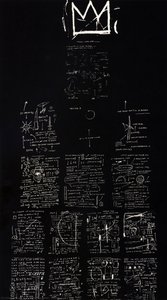 Tuxedo
Jean-Michel Basquiat’s “Tuxedo”: A Chronicle of Urban Noise “Tuxedo,” painted in 1982, is more than just an image; it's a visceral eruption of raw energy and fragmented thought – a quintessential work by the tragically short-lived genius that was Jea...
The frenetic pulse of 1980s New York City acted as the primary catalyst for Basquiat’s aesthetic evolution. The city was a landscape of intense contrasts, where the glittering surface of high society collided with the gritty reality of urban decay. This environment is palpable in works like Tuxedo, which serves as a chronicle of urban noise, presenting a chaotic symphony of black and white markings and text fragments that mirror the sensory overload of the metropolis. The energy of this period—a confluence of street culture and fine art—fundamentally shaped his approach to composition.
The Lower East Side served as a laboratory for this new movement, where the textures of the city—the layers of posters, the scrawled graffiti, and the industrial decay—were translated onto canvas. This era was not about observing the city from a distance but actively participating in its dialogue. The movement drew strength from the very chaos it depicted, utilizing bold primary colors and dynamic, intersecting lines to capture the movement and disarray of a world in constant flux. It was an art form that breathed with the rhythm of the streets, ensuring that the social commentary remained as immediate and unsettling as the city itself.
The Enduring Legacy of Raw Pop: From Graffiti to Museum Masterpieces
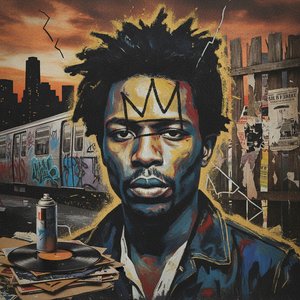 Basquiat & Raw Pop: The Electric Energy of Neo-Expressionism and the Legacy of Urban Rebellion
The Pulse of the Street: Defining Neo-Expressionism's Raw Rebellion To understand the seismic shift that occurred in the late twentieth century, one must look past the polished galleries and listen to the rhythmic, chaotic heartbeat of the city stree...
The legacy of Basquiat and the Neo-Expressionist movement continues to resonate profoundly within the contemporary art world. What began as an enigmatic tag on a Manhattan wall has evolved into a celebrated canon of museum masterpieces that challenge our perceptions of value, race, and power. The transition from the ephemeral nature of street art to the permanence of oil on canvas has allowed his social critiques to endure, providing a foundation for generations of artists exploring the intersections of identity and urban rebellion.
Today, we see his influence in the way contemporary artists navigate the complexities of globalized culture and digital information. His ability to synthesize diverse influences—from Abstract Expressionism to tribal art and comic books—remains a blueprint for artistic innovation. As we reflect on this era of high-energy rebellion, we recognize that Basquiat did not merely paint; he reconstructed the very way we perceive the relationship between the artist, the street, and the institution. His work remains a testament to the power of raw, unvarnished truth to transcend its origins and achieve a timeless, universal significance.
At ArtsDot.com, we are dedicated to preserving the profound impact of art history by making these legendary aesthetics accessible to all. While the original works of masters like Basquiat reside in the world's most prestigious collections, our mission is to bring that same emotional intensity into your personal space through museum-quality reproductions. Whether you seek a Handmade Oil Reproduction—where our skilled artists meticulously recreate every visible brushstroke and textural nuance on 100% cotton canvas—or a high-fidelity Giclée print, we ensure the spirit of the movement is captured with academic precision. For those looking to transform their own history, our Custom Painting Service allows you to reimagine personal milestones in the iconic, expressive styles of the masters.