
The Great Rejection: How Realism Challenged Romanticism and Academic Tradition
 The Poetic Truth of Observation: Exploring 19th-Century Realism in Painting
The Rise of Realism: A Rejection of Idealism Wikipedia: Realism (art movement) Realism was an artistic movement that emerged in France in the 1840s. Realists rejected Romanticism, which had dominated French literature and art since the early 19th cen...
To understand the seismic shift brought about by the Realist movement, one must first envision the gilded, often suffocating atmosphere of the mid-1s century European art world. For decades, the Académie des Beaux-Arts had held a near-monopoly on taste, championing Neoclassicism and the sweeping, emotional dramas of Romanticism. These movements sought to transport the viewer to exalted realms—mythological landscapes, heroic battles, and exotic locales that existed far beyond the reach of the common man. Art was a window into the sublime, often polished to a mirror-like smoothness that erased the grit and sweat of actual existence.
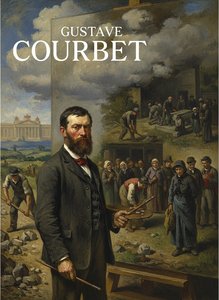
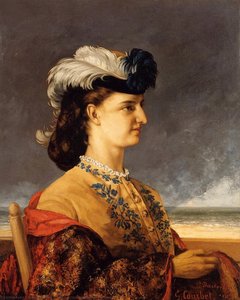
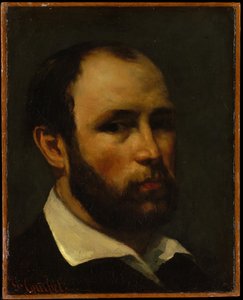
However, as the 1840s dawned, a new generation of artists began to feel the weight of this artifice. They looked upon the idealized figures of the Academy and saw not truth, but a beautiful lie. The emergence of Realism was not merely a change in brushwork; it was an act of artistic rebellion. Artists like Gustave Courbet sought to dismantle the hierarchy of subject matter that placed history painting on a pedestal while relegating everyday life to the shadows. This rejection was profound, a deliberate turning away from the exaggerated emotionalism and theatricality of the Romantics in favor of something far more daunting: the unvarnished present.
This period of transition was marked by a desire to strip away the layers of allegory and myth. Where the Romantic painter might depict a tragic hero lost in a storm, the Realist would instead focus on the weary eyes of a laborer caught in the rain. It was a movement that demanded the viewer confront the world as it truly was, challenging the very definition of what was considered "worthy" of the canvas. By refusing to embellish, these artists forced a dialogue about the legitimacy of the contemporary experience, forever altering the trajectory of Western art.
The Lens of Truth: Direct Observation and the Democratization of Subject Matter
--- title: Nineteenth-Century French Realism - The Metropolitan Museum of Art author: Ross Finocchio url: https://www.metmuseum.org/essays/nineteenth-century-french-realism hostname: metmuseum.org description: Rejecting the idealized classicism of ac...
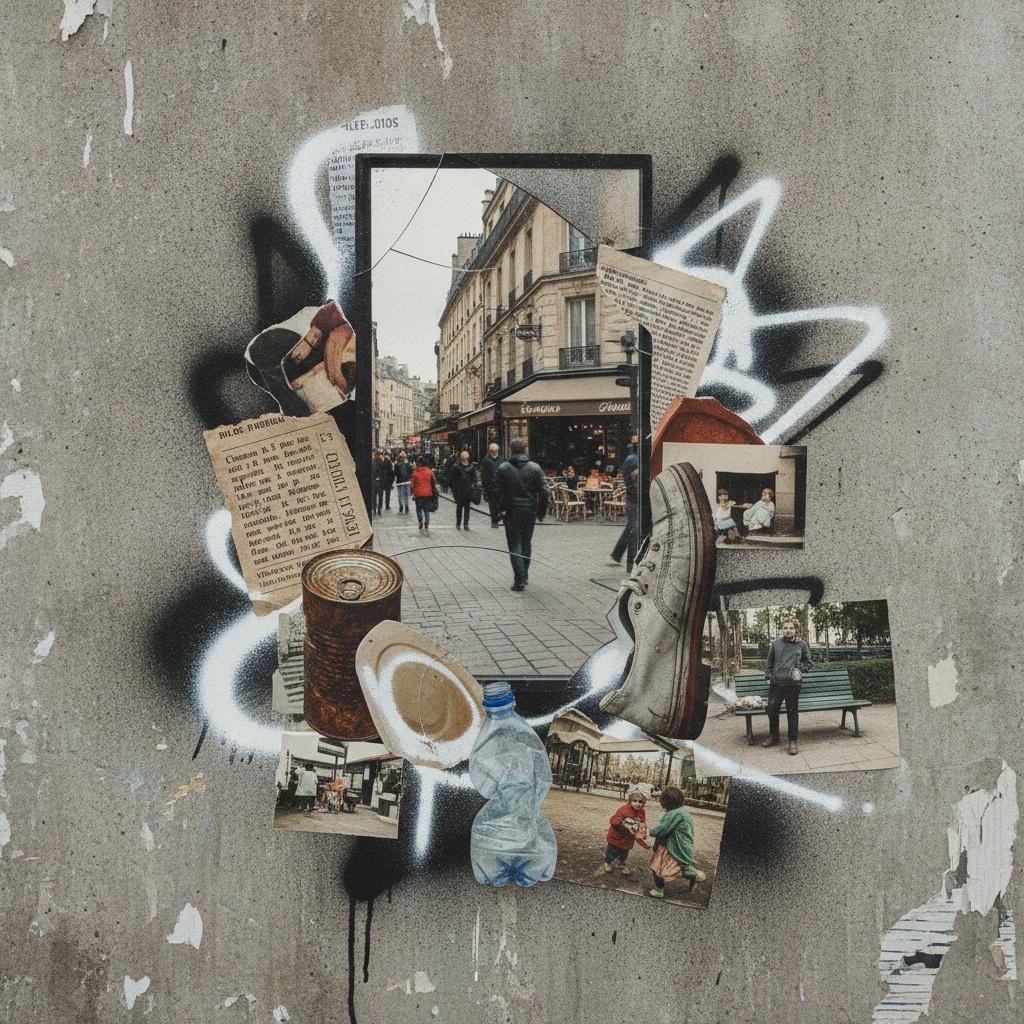
At the heart of the Realist manifesto lay a deceptively simple principle: the commitment to painting only what one can see. This dedication to direct observation served as the movement's moral compass. No longer would artists rely on classical texts or historical chronicles to provide their inspiration; instead, they turned their gaze toward the streets, the fields, and the workshops of their own time. This shift effectively democratized the canvas, bringing the lives of the uncelebrated—the peasants, the merchants, and the urban poor—into the sacred space of high art.
Consider the monumental impact of Courbet’s approach. By applying a scale previously reserved for kings and gods to scenes of provincial life, he scandalized the establishment. His work did not shy away from the "unpleasant" or the "sordid." In doing so, he elevated the mundane to the level of the monumental. This was not a pursuit of mere photographic accuracy, but a search for a poetic truth found within the textures of reality. The Realists believed that there was as much dignity in a stonebreaker’s toil as there was in a Roman emperor's triumph.
This democratization extended beyond subject matter to include the very way light and form were perceived. By focusing on the tangible, the palpable, and the contemporary, Realism broke the monopoly of the "ideal." It invited the viewer to find beauty not in perfection, but in authenticity. This era taught us that the true essence of humanity is found not in the legends we tell ourselves, but in the quiet, unadorned moments of our shared existence.
Social Landscapes: The Industrial Revolution and the Rise of the Working Class in Art
 Social realism
Social realism is work produced by painters, printmakers, photographers, writers, filmmakers and some musicians that aims to draw attention to the real socio-political conditions of the working class as a means to critique the power structures behind...
The mid-19th century was a period of unprecedented upheaval, characterized by the relentless march of the Industrial Revolution and the simmering tensions of social reform. As factories rose and urban populations swelled, the traditional structures of European society began to fracture. Realism emerged as the visual chronicler of this era of seismic shifts. The movement became a mirror to the growing awareness of social inequalities, capturing the friction between the burgeoning middle class and the laboring masses.
The paintings of this era often serve as profound social commentaries. We see the heavy toll of industrialization reflected in the weary postures of workers and the stark, often bleak landscapes of a changing Europe. Artists became witnesses to the struggles of the proletariat, documenting the realities of poverty, migration, and class tension. This was art with a conscience, deeply intertwined with the political currents of the time, including the rise of socialist philosophies and the revolutionary spirit that swept through France in 1848.
Even as the movement spread to other nations—finding voices in the Naturalism of Norway through artists like Christian Krohg or capturing the soul of Romanian life via Nicolae Vermont—the core theme remained: the human condition within a changing social fabric. The Realists did not merely observe; they recorded the heartbeat of a world in transition, ensuring that the struggles and triumphs of the working class would be etched into the permanent record of art history.
Mastering the Mundane: Technical Innovations from Impasto to Naturalistic Light
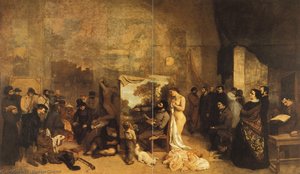 The Painter's Studio
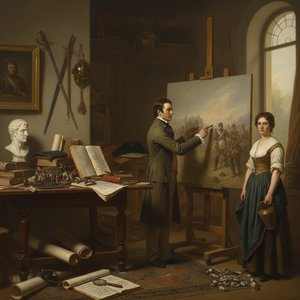
A Bold Declaration of Realism: Gustave Courbet’s The Painter's Studio Dr. Steven Zucker begins his exploration of Gustave Courbet’s monumental painting, “The Painter’s Studio,” by highlighting its significance within the broader artistic landscape of...
To convey the weight of reality, Realist artists had to innovate technically. The polished, porcelain-like surfaces of Neoclassicism were insufficient for depicting the rough texture of burlap, the grit of stone, or the weathered skin of a laborer. Consequently, many Realists embraced a more tactile and visceral approach to paint application. The use of impasto—applying paint in thick, heavy layers—became a hallmark of the movement, particularly in the works of Courbet. This technique added a physical dimension to the work, allowing the light to catch the ridges of the brushstrokes and create a sense of palpable immediacy.
Furthermore, the treatment of light underwent a radical transformation. Moving away from the dramatic, stage-like lighting of Romanticism, Realists sought a more naturalistic illumination. They studied how light fell upon everyday objects and skin in unadorned settings, capturing the subtle gradations of shadow that define form in the real world. This focus on optical truth allowed for a greater sense of atmosphere and depth, grounding the subjects in a believable, lived-in environment.
This technical mastery was not about mere decoration; it was an essential component of their truth-telling. The visible brushstroke and the textured surface served to remind the viewer of the physical reality of the painting itself, mirroring the physical reality of the subject matter. In this way, the very medium of oil on canvas became an extension of the Realist mission: to present a world that was felt as much as it was seen.
The Enduring Legacy: How Realism Redefined the Boundaries of Modern Artistic Expression
 Romantic Realism's Finest: 10 Masterpieces for Your Home | ArtsDot
Introduction To gaze upon these ten masterpieces is to step into a world suspended between dream and reality, where the raw power of human emotion collides with meticulous observation. The Romantic Realism movement, though relatively short-lived, lef...
The ripples of the Realist movement extended far beyond the mid-19th century, laying the foundational stones for much of modern art. By breaking the stranglehold of academic tradition and validating the importance of the contemporary subject, Realism paved the way for Impressionism, Naturalism, and even the more radical abstractions of the 20th century. The movement’s insistence on direct observation and social relevance fundamentally changed the relationship between the artist, the subject, and the audience.
Today, we see the legacy of Realism in our continued fascination with the authentic and the unadorned. The movement taught us that there is profound power in vulnerability and immense beauty in the mundane. It challenged us to look closer, to look deeper, and to find meaning in the very things we might otherwise overlook. The "truth" that Courbet and his contemporaries sought to capture remains a vital pursuit in contemporary visual culture.
For those who wish to bring this sense of historical prestige and intellectual depth into their own homes, ArtsDot.com offers an unparalleled collection of museum-quality reproductions. Whether you are drawn to the bold, textured impasto of a Courbet masterpiece or the quiet, naturalistic intimacy of a 19th-century genre scene, our hand-painted oil works on 100% cotton canvas allow you to possess a piece of this transformative era. Each reproduction is meticulously crafted by skilled artists to ensure that the soul, the brushwork, and the historical truth of the original are preserved for generations to come.