The Genesis of Fragmentation: Breaking from Traditional Perspective
Cubism - The Metropolitan Museum of Art--- title: Cubism - The Metropolitan Museum of Art author: Sabine Rewald url: https://www.metmuseum.org/essays/cubism hostname: metmuseum.org description: The Cubist painters rejected the inherited concept that art should copy nature, or that they sh...
To understand the seismic shift brought about by Cubism, one must first envision the world as it was viewed through the lens of the Renaissance. For centuries, Western art adhered to a sacred contract with reality: the use of linear perspective, modeling, and foreshortening served to create a window-like illusion of depth, a singular, unmoving viewpoint that anchored the spectator in a fixed position. However, as the dawn of the twentieth century approached, the rapid industrialization of Europe and the profound scientific revelations of the era—most notably Einstein’s theories regarding the relativity of time and space—begently began to erode this stability. The artists who would become the architects of Cubism felt this tension acutely. They sought to move beyond the mere imitation of nature, a concept they found increasingly hollow in a world that was no longer static.
The departure from tradition was not a sudden rupture but an intellectual evolution. Influenced by the late works of Paul Cézanne, who famously suggested that all forms in nature could be reduced to the cylinder, the sphere, and the cone, young Pablo Picasso and Georges Braque began to experiment with the very architecture of the canvas. They rejected the inherited notion that art should act as a mirror to the physical world. Instead, they turned their gaze toward the underlying structure of objects, seeking to capture not just how an object appears under a specific light at a specific moment, but its essential, permanent form. This period marked the end of the "single viewpoint" and the beginning of a radical new way of seeing, where the artist’s eye could wander around a subject, bringing various facets of its existence into a single, unified composition.
The Analytical Phase: Deconstructing Reality through Geometric Planes
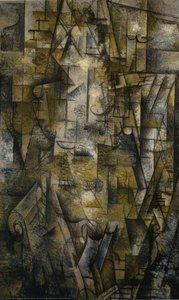
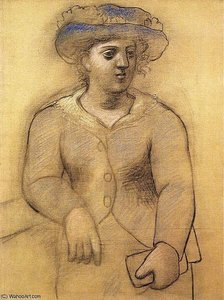
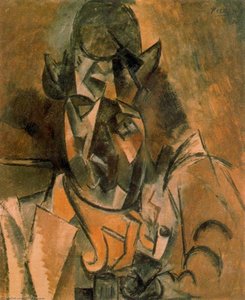 Portrait of Georges Braque
Subject and Composition The artwork, "Portrait of Georges Braque," created by Pablo Picasso in 1910, presents an intimate depiction of the artist's close friend and fellow pioneer of Cubism, Georges Braque. The portrait is not a traditional represent...
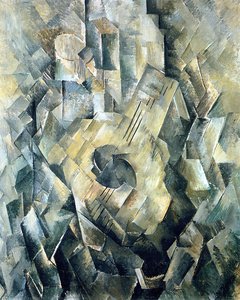
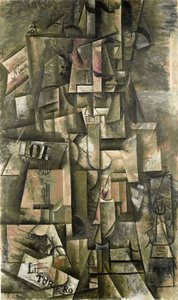
As the movement matured between 1907 and 1912, it entered what historians now call the Analytic phase, a period of intense intellectual rigor and almost scientific deconstruction. During this stage, Picasso and Braque worked with such close collaboration that their individual styles often became indistinguishable, a shared pursuit of dissecting the subject into its most fundamental components. The goal was to analyze the object from multiple perspectives simultaneously. Imagine a portrait where the profile of a face, the front of an eye, and the curve of a jawline are all presented on a single plane; this was the Cubist ambition. They broke down the subject into a complex network of interlocking, translucent planes and geometric facets, creating a shallow, relief-like space that emphasized the two-dimensionality of the canvas rather than hiding it behind an illusion of depth.
This deconstruction required a disciplined, often monochromatic palette. To prevent the emotional distraction of vibrant color from obscuring the structural investigation, the artists relied heavily on earthy tones—ochres, browns, grays, and blacks. In works such as Picasso’s
Portrait of Georges Braque (1910), we see this mastery in action. The subject is not rendered through soft shadows or realistic skin tones but through a meticulous arrangement of angles and light-catching edges. While the figure may appear fragmented to the untrained eye, there is a profound sense of order within the chaos. The viewer is invited to participate in the reconstruction of the image, mentally reassembling the shattered pieces into a coherent whole. It is an active, cerebral engagement with art that demands more than mere observation; it requires an intellectual synthesis of form and space.
Synthetic Cubism: The Revolution of Collage and Texture
 Crystal Cubism
Crystal Cubism (French: Cubisme cristal or Cubisme de cristal) is a distilled form of Cubism consistent with a shift, between 1915 and 1916, towards a strong emphasis on flat surface activity and large overlapping geometric planes. The primacy of the...
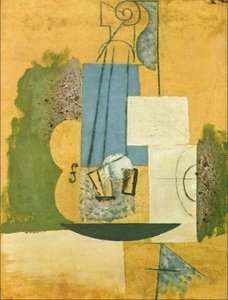
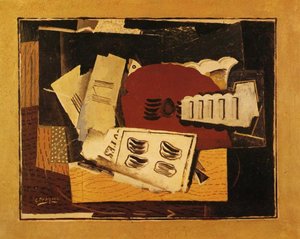
By 1912, the movement underwent another transformative shift, moving from the analytical deconstruction of forms to what is known as Synthetic Cubism. If the previous phase was about taking things apart, this new era was about putting them back together using entirely new materials. This period introduced the revolutionary concept of collage, where artists began to incorporate non-art elements—newspaper clippings, wallpaper, sand, and cloth—directly onto the canvas. This was a profound ontological shift in the definition of art. By introducing "real" fragments of the everyday world into the painted space, Picasso and Braque blurred the boundary between the representation of reality and reality itself.
Synthetic Cubism brought a renewed sense of color and texture to the movement. The compositions became flatter, simpler, and more decorative, moving away from the dense, monochromatic complexity of the Analytic period toward larger, more legible shapes. The use of collage allowed for a play of textures that added a tactile dimension to the work; one could almost feel the grain of the paper or the roughness of the sand through the visual cues provided by the artist. This phase was not merely about aesthetic change but about expanding the vocabulary of art. It challenged the viewer to recognize that meaning could be constructed from disparate, often mundane, fragments. This spirit of innovation paved the way for much of the twentieth-century avant-garde, proving that the artist’s role was not just to depict the world, and even more so, to invent new ways of constructing it.
The Collaborative Vision: The Symbiotic Relationship of Picasso and Braque
 Georges Braque's Masterpieces: 25 Paintings That Defined Cubism & Modern Art | ArtsDot
Introduction To gaze upon the canvases of Georges Braque is to witness a quiet revolution unfold. This collection of his top 25 artworks isn’t merely a survey of paintings; it's an intimate journey into the mind of an artist who dared to dismantle an...
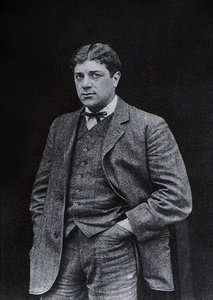
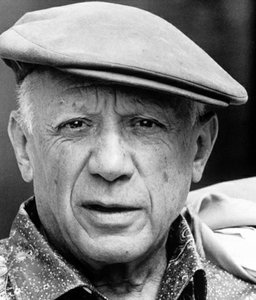
It is impossible to discuss the triumph of Cubism without acknowledging the profound, almost symbiotic relationship between Pablo Picasso and Georges Braque. Their partnership was one of the most significant collaborations in the history of Western art, a period of intense dialogue and shared experimentation that lasted until the outbreak of World War I. While Picasso possessed a restless, often explosive creative energy—a talent for radical reinvention that would define his entire career—Braque brought a more methodical, structural approach, rooted in his technical training as a decorator. Together, they functioned as two sides of a single creative force, pushing each other toward the boundaries of what was possible on a flat surface.
Their work during these years was characterized by a shared language of form and a mutual rejection of the decorative excesses of the past. They were often described as "mountain climbers roped together," navigating the treacherous terrain of modernism in tandem. This collaboration allowed for a rapid-fire exchange of ideas, where a breakthrough in one artist's studio could be immediately reflected and expanded upon in the other's. While history has often cast Picasso as the singular protagonist of the era, the quiet revolution led by Braque was equally essential. His ability to find harmony within dissonance and his deep understanding of the structural potential of paint provided the necessary foundation for their shared Cubist breakthroughs. Their legacy is not just found in individual masterpieces, but in the very concept of a collaborative, evolving artistic movement.
Beyond Paris: The Global Expansion and Legacy of the Cubist Movement
 Czech Cubism
Czech Cubism (referred to more generally as Cubo-Expressionism) was an avant-garde art movement of Czech proponents of Cubism, active mostly in Prague from 1912 to 1914. Prague was perhaps the most important center for Cubism outside Paris before the...
While the heart of Cubism beat most vibrantly in the studios of Montmartre and Montparnasse, its influence quickly transcended the borders of France, sparking a global revolution in visual language. The movement’s radical approach to form and perspective resonated with artists across the continent and beyond, leading to unique regional interpretations. In Prague, for instance, Czech Cubism emerged as a fascinating branch of the movement, where artists like Bohumil Kubišta applied Cubist principles to sculpture, painting, and even architecture, creating a distinctively crystalline and angular aesthetic. This expansion demonstrated that the core tenets of Cubism—the fragmentation of form and the rejection of traditional perspective—were universal enough to be adapted into diverse cultural contexts.
The enduring legacy of Cubism lies in its role as the foundational language of modern art. It shattered the long-standing hegemony of naturalism and opened the floodgates for subsequent movements, from Futurism and Constructivism to the abstract explorations of the mid-twentieth century. Even today, when we encounter the fragmented imagery of contemporary digital media or the geometric abstractions of modern graphic design, we are seeing the echoes of Picasso and Braque’s revolution. Cubism taught us that art does not need to be a window into another world; it can be a construction of our own, a way to navigate the complexities of perception, memory, and reality.
For those who wish to bring this profound historical energy into their own environments, ArtsDot.com offers an unparalleled collection of museum-quality reproductions. Whether you are drawn to the intellectual depth of an Analytic Cubist portrait or the vibrant textures of a Synthetic collage, our master artists specialize in capturing the authentic brushstrokes and tonal complexities of these masterpieces. From hand-painted oil recreations on 100% cotton canvas to high-fidelity Giclée prints, we provide the means to preserve and celebrate the revolutionary spirit of Cubism in your home or professional space. Explore our curated selection of the world's most iconic works and discover how the fractured beauty of the twentieth century can redefine your modern interior.