The Academic Constraint: Breaking from Neoclassical Idealism
 The Barbizon School: Pioneering Realism & the Pastoral Vision in 19th-Century French Painting
The Rise of Landscape: Challenging Academic Tradition Before the Barbizon school, landscape painting occupied a decidedly secondary position within the French art hierarchy. The prestigious Académie des Beaux-Arts championed historical and mythologic...
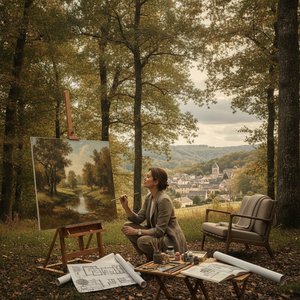
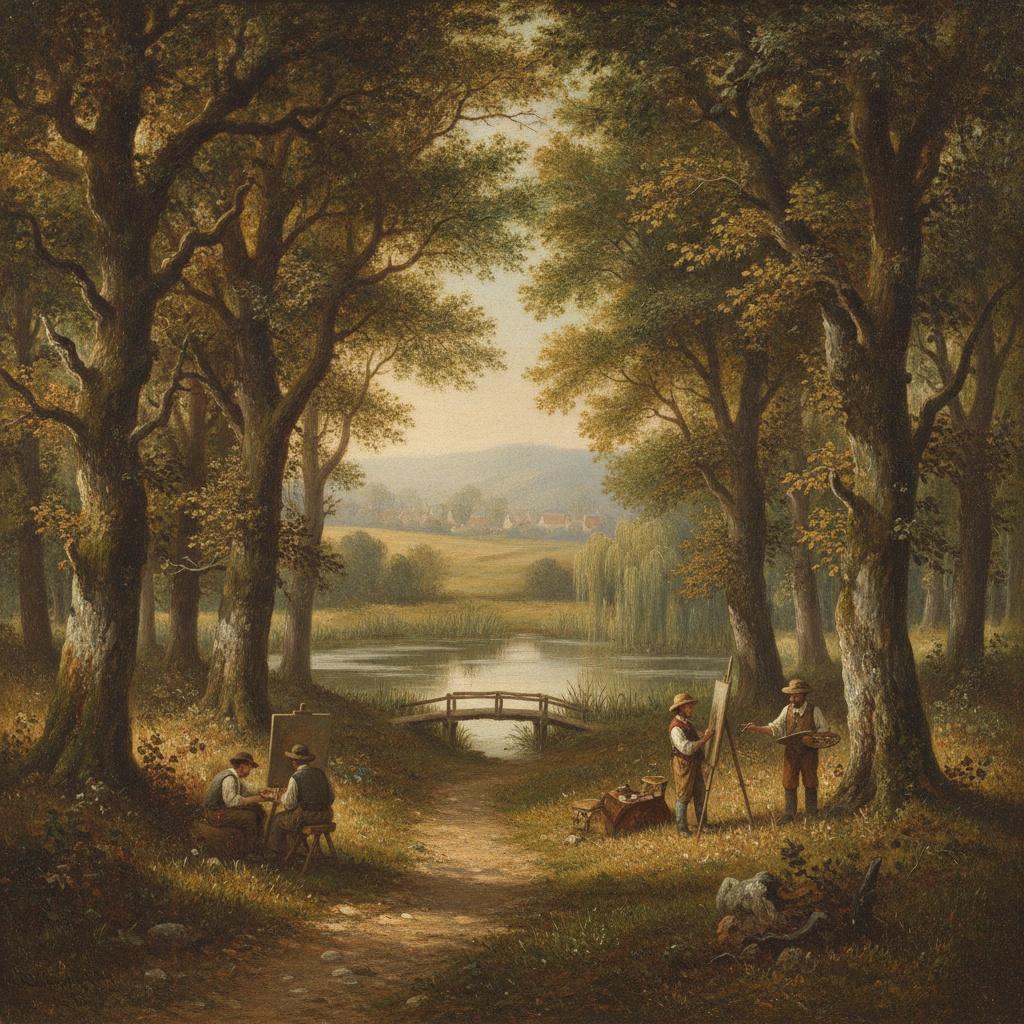
In the rigid corridors of the early nineteenth-century French art world, the hierarchy of subject matter was an iron law. The prestigious Académie des Beaux-Arts maintained a strict aesthetic code, placing historical, mythological, and religious narratives at the absolute pinnacle of artistic achievement. In this era of Academic Idealism, landscape painting was never intended to stand as an independent protagonist; rather, it was relegated to a secondary, decorative role, serving merely as a polished stage for grand human dramas. The landscapes produced under this regime were often far removed from the damp, verdant reality of the French countryside. Instead, they were constructed within the controlled environment of the studio, heavily influenced by the classical traditions of masters like Nicolas Poussin and Claude Lorrain. These works presented a version of nature that was intellectually composed and "perfected"—a Mediterranean light shining upon Roman ruins, far removed from the unvarnished truth of the local terrain. For the discerning collector, these works represent the height of formal beauty, yet they lacked the raw, breathing essence of the earth itself.
Fontainebleau: The Natural Sanctuary of the Barbizon Masters
 Forest of Fontainebleau
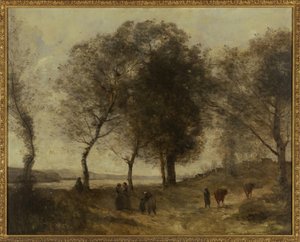
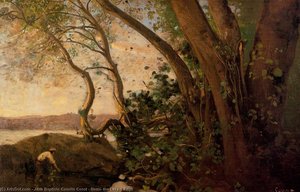
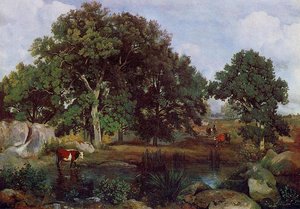
Forest of Fontainebleau – A Symphony of Light and Rustic Beauty The Forest of Fontainebleau stands as an enduring testament to Jean Baptiste Camille Corot’s mastery of Barbizon School landscape painting, capturing not merely a visual representation b...
A quiet rebellion began to brew on the outskirts of Paris, far from the polished marble of the official Salons. This movement found its sanctuary in the village of Barbizon, nestled against the edge of the sprawling Forest of Fontainebleau. This ancient expanse of oaks and beech trees became more than just a geographic location; it became an artistic refuge for those seeking to dismantle the artifice of Neoclassicism. The forest offered a rich tapestry of varied terrain—dense woodlands, open glades, and rocky outcrops—that provided the perfect laboratory for a new kind of observation. For the artists gathered here, the landscape was no longer a backdrop but a subject worthy of profound exploration. This shift in focus brought about a newfound appreciation for the local, the rustic, and the immediate. At ArtsDot.com, we recognize this historical yearning for authenticity, which is why our Handmade Oil Reproductions are meticulously crafted on 100% cotton canvas to capture the very textures of the forest floor and the heavy, textured bark of these ancient trees, ensuring that the soul of the landscape is preserved in every brushstroke.
Pioneers of the Landscape: Corot, Rousseau, and the Spirit of Realism
 A Clearing in the Forest of Fontainebleau
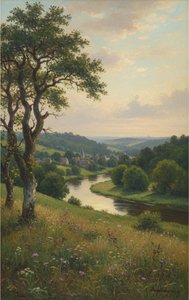
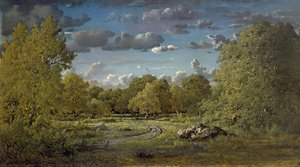
A Symphony of Light and Verdure In the quietude of a spring morning, Théodore Rousseau invites us into a sanctuary of light and shadow through his masterpiece, A Clearing in the Forest of Fontainebleau . This luminous landscape is far more than a mer...
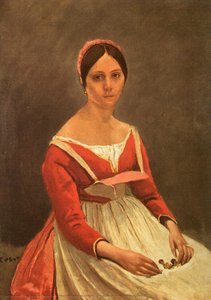
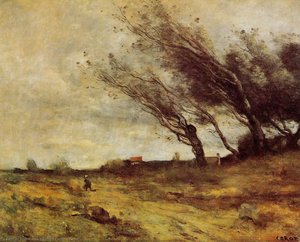
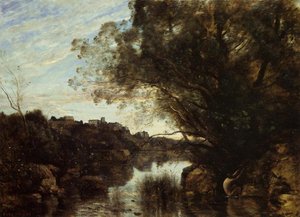
The heart of the Barbizon School beat through the works of its most prominent leaders, each bringing a unique perspective to the natural world. Jean-Baptiste-Camille Corot, perhaps the most celebrated figure, mastered a symphony of light and tranquility. His works, such as his depictions of the Forest of Fontainebleau, transcend mere visual representation; they invite a deep contemplation of the subtle nuances of atmosphere and the ephemeral qualities of light. Alongside him, Théodore Rousseau sought a more profound meditation on the enduring majesty of nature. In masterpieces like A Clearing in the Forest of Fontainebleau, Rousseau invites viewers into a sanctuary of shadow and sun, where the first golden rays pierce through the canopy to bathe ancient oaks in a celestial glow. While Corot brought a poetic, almost literary quality to his landscapes, Rousseau focused on the quiet dignity of the landscape itself, eschewing grand gestures for the profound beauty found in a woodland glade. These artists paved the way for a movement that prioritized truthful observation over stylistic embellishment. For those looking to bring this era into their own homes, our collection offers more than just images; it offers a connection to these masters. Through our Professional Digital Mockup Service, you can visualize how a Corot-inspired landscape might transform your space, allowing for custom color matching to ensure the painting harmonizes perfectly with your interior design.
Technique and Truth: The Advent of Plein Air Painting
 En plein air
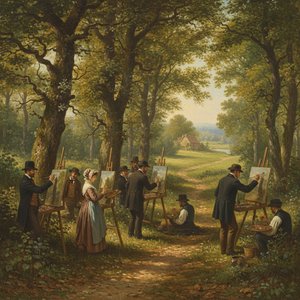
En plein air (pronounced [ɑ̃ plɛ.n‿ɛʁ]; French for 'outdoors'), or plein-air painting, is the act of painting outdoors. This method contrasts with studio painting or academic rules that might create a predetermined look. The theory of 'En plein air' ...
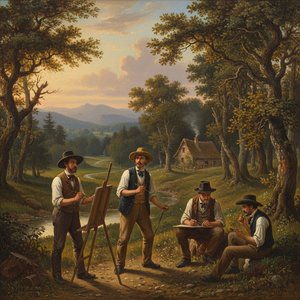
The true revolution of the Barbizon School lay in its technical departure from tradition through the practice of en plein air painting. Moving away from the studio-bound methods of the Academy, these artists took their easels directly into the heart of nature. This method allowed for a direct engagement with the shifting effects of light and weather, enabling them to capture the fleeting, dew-kist moments of a spring morning or the heavy atmosphere of a summer storm. This commitment to realism required a new vocabulary of technique: loose brushwork, a focus on tonal qualities, and a mastery of light and shadow that could convey depth and texture without the need for rigid outlines. This emphasis on the tactile nature of paint is something we hold sacred in our production process. Unlike mass-produced prints that offer a flat, digital appearance, our artists use authentic oil painting techniques, creating visible brushstrokes and a deeper tonal range that mimics the original masters. Every piece undergoes a rigorous six-step process, from the initial hand-painting on canvas to a final protective coating of Damar varnish, ensuring that the luminosity and "breath" of the Barbizon style remain vibrant for generations.
The Enduring Legacy: How Barbizon Paved the Way for Impressionism
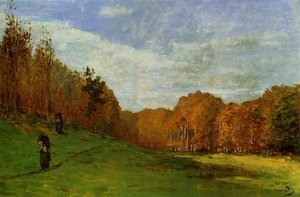 Woodbearers in Fontainebleau Forest
A Glimpse into Early Impressionism: Monet’s *Woodbearers in Fontainebleau Forest* Claude Monet's *Woodbearers in Fontainebleau Forest*, painted in 1864, offers a captivating window into the nascent stages of Impressionism. This isn't yet the shimmeri...
While the Barbizon School was rooted in Realism, its influence acted as the essential bridge to the birth of modern art. The seeds of the Impressionist revolution were sown in the sun-dappled paths of Fontainebleau. One can see the nascent stages of this evolution in the early works of Claude Monet, such as Woodbearers in Fontainebleau Forest. In this piece, we see an artist on the cusp of revolution, utilizing the broken color and expressive brushwork that would later define his global fame, yet still anchored in the Barbion tradition of direct observation. The movement’s focus on light, atmosphere, and the transient moment fundamentally altered the trajectory of art history, moving the world from the structured narratives of the past toward the sensory experiences of the modern era.
Whether you are a student of art history or a dedicated collector, the works of the Barbizon School offer an eternal window into the beauty of our natural world. At ArtsDot.com, we invite you to explore this legacy through our curated selection of canonical masterpieces. From custom "Period Shifts"—where we can transform a modern photograph into a landscape reminiscent of Rousseau—to our large-format architectural murals for grand spaces, we provide the means to inhabit the history of art. We offer free standard shipping worldwide and a 100% satisfaction warranty, ensuring that your journey into the mastery of natural landscape painting is as seamless as it is profound. For expert guidance on selecting the perfect piece for your collection, please visit our Free Art Consultation service at ArtsDot.com.