
The Academic Constraint: Landscape Before the Revolution
 The Barbizon School: A Professional Guide to Naturalism and Landscape Mastery for Interior Designers
The Barbizon Revolution: Transitioning from Academic Idealism to Naturalistic Realism Barbizon School: The Revolution That Brought Nature to Life through the Mastery of Light and Landscape The Dawn of Realism: Breaking from Academic Tradition In the ...
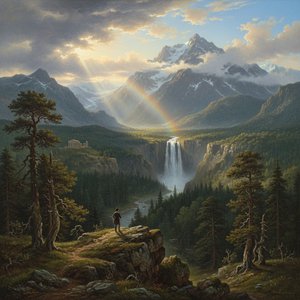
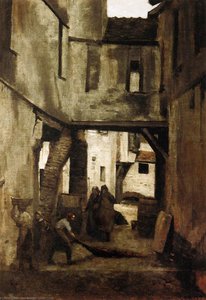
To understand the radical shift brought about by the Barbizon School, one must first contemplate the rigid atmosphere of the early nineteenth-century French art world. For decades, the Académie des Beaux-Arts held an iron grip on aesthetic values, enforcing a strict hierarchy that placed historical, mythological, and religious narratives at the pinnacle of artistic achievement. In this era, landscape painting was often relegated to a secondary status, serving merely as a decorative backdrop for grander human dramas. The landscapes produced under this academic code were rarely true reflections of the earth; instead, they were idealized, constructed within the controlled environment of the studio, and heavily influenced by the classical traditions of Nicolas Poussin and Claude Lorrain.
These earlier masters sought to present a version of nature that was polished, balanced, and intellectually composed—a "perfected" scenery inspired by ancient poetry rather than the raw, unvarnished reality of the French countryside. Artists labored over sketches and memories, striving for a formal linearity that prioritized structure over atmosphere. The natural world was viewed through a lens of classical antiquity, often featuring Mediterranean light and Roman ruins that felt far removed from the damp, verdant forests of France. This era of Academic Idealism created a profound disconnect between the artist's canvas and the lived experience of the landscape, setting the stage for a group of rebels who would soon seek to tear down these studio walls.
The Barbizon Village: A Sanctuary for Naturalism
--- title: The Barbizon School: French Painters of Nature - The Metropolitan Museum of Art author: Dita Amory url: https://www.metmuseum.org/essays/the-barbizon-school-french-painters-of-nature hostname: metmuseum.org description: They shared a recog...
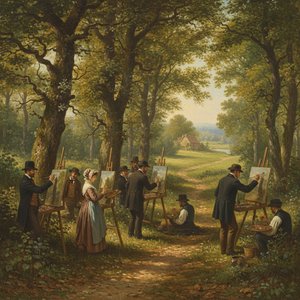
In the heart of this tension emerged a small, quiet village on the edge of the Forest of Fontainebleau known as Barbizon. It was here, roughly between 1830 and 1870, that a collective of painters found more than just a place to reside; they found a shared philosophy. This group, which would become known as the Barbizon School, was united by a mutual recognition of landscape as an independent, worthy subject and a profound, almost spiritual pleasure in nature itself. By gathering in this specific geographic pocket, artists like Théodore Rousseau, Charles-François Daubigny, and Jules Dupré were able to foster a community that prioritized direct observation over the stifling rules of the Paris Salon.
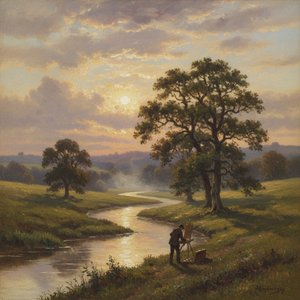
The village served as a sanctuary where the boundaries between life and art began to blur. The artists did not merely paint the forest; they lived within its rhythms, observing the subtle shifts in weather, the movement of herds, and the changing seasons. This proximity allowed for the development of Realism within the context of the Romantic movement. While their contemporaries were still focused on grand historical allegories, the Barbizon painters turned their gaze toward the humble: a grazing cow, a meandering river, or the quiet dignity of a farmworker. Their work was a rebellion against artifice, a determination to exhibit paintings that captured the authentic essence of the French rural experience, effectively elevating the "lowly" landscape to the status of high art.
En Plein Air: The Mastery of Light, Atmosphere, and Texture
 Capturing Ephemeral Light: Plein Air Painting from Impressionism to Today
The Genesis of 'En Plein Air': From Studio Tradition to Landscape Portraiture Wikipedia: En plein air En plein air (pronounced [ɑ̃ plɛ.n‿ɛʁ]; French for 'outdoors'), or plein-air painting, is the act of painting outdoors. This method contrasts with s...
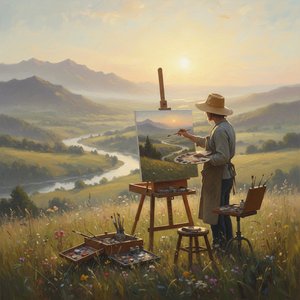
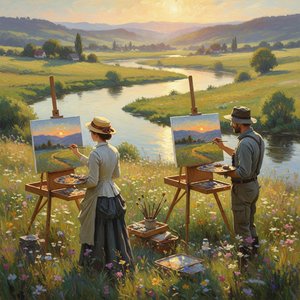
Perhaps the most enduring legacy of the Barbizon movement was the refinement and popularization of en plein air painting—the act of painting outdoors. Before the widespread availability of portable paint tubes, the notion of capturing fleeting nuances of light directly from nature was a logistical Herculean task. However, inspired by the theoretical groundwork laid by figures like Pierre-Henri de Valenciennes, the Barbizon artists embraced the challenge. They moved away from the studio's controlled lighting to confront the unpredictable, ephemeral beauty of the open air, seeking to record the very essence of a place in situ.
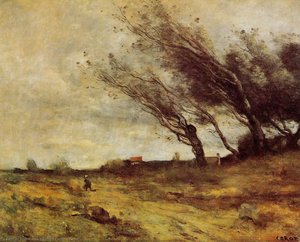
This shift necessitated a revolution in technique. To capture the "soul" of a landscape, these artists moved toward looser brushwork and a more nuanced use of color and tone. They became masters of atmospheric tension, learning to manipulate light and shadow to evoke emotion. In the works of Jules Dupré, one can feel the weight of encroaching storm clouds and the dramatic interplay of brilliant highlights against deep, ominous shadows. The texture of the paint itself became a tool for realism; through the use of impasto, artists could give palpable depth to foliage and earth, creating a sensory experience that went beyond mere visual representation. This commitment to capturing light, shadow, and weather transformed the canvas from a flat surface into a window onto a living, breathing world.
Pioneers of the Forest: Rousseau, Corot, and the Soul of Fontainebleau
 A River Landscape
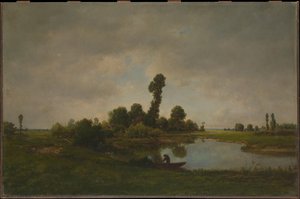
A Celebration of Rural Tranquility: Exploring Théodore Rousseau’s “A River Landscape” Théodore Rousseau stands as an emblem of the Barbizon School, a movement that irrevocably altered the course of French landscape painting and championed an uncompro...
The movement was anchored by titans whose individual styles provided a spectrum of naturalistic expression. Théodore Rousseau stands as an emblem of this era, an artist whose unwavering devotion to the Forest of Fontainebleau was met with initial resistance from authorities but ultimately led him to become one of the most influential figures in landscape history. His work embodies an uncompromising realism, capturing the rugged, untamed character of the woods with a profound sense of truth.
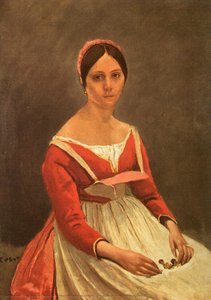
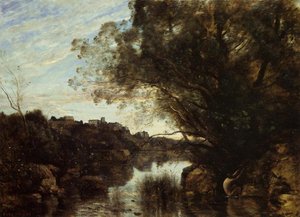
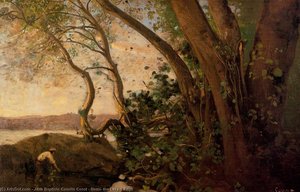
In contrast to Rousseau’s more rugged approach, Jean-Baptiste-Camille Corot brought a poetic and literary quality to the movement. While his early work was deeply rooted in the forest, his later landscapes often possessed a silvery, luminous grace that set him apart from the more dramatic members of the school. His ability to blend direct observation with a certain lyrical softness paved the way for the Impressionists who would follow. Alongside them, artists like Henri-Joseph Harpignies captured the serene tranquility of French valleys, using balanced compositions and soft, diffused light to invite viewers into moments of quiet contemplation. Together, these pioneers redefined the relationship between the artist and the earth, ensuring that the landscape would never again be viewed as a mere backdrop.
From France to America: The Global Legacy of the Barbizon Style
 American Barbizon School
The American Barbizon School was a group of painters and style partly influenced by the French Barbizon school, who were noted for their simple, pastoral scenes painted directly from nature. American Barbizon artists concentrated on painting rural la...
The ripples of the Barbizon revolution extended far beyond the borders of France, crossing the Atlantic to profoundly influence the American Barbizon School. American painters, moved by the simplicity and pastoral beauty of the French masters, began to adopt similar methods, focusing on rural landscapes that featured local peasants and farm animals. The connection was deeply personal; for instance, William Morris Hunt brought the style directly to the United States after training with Jean-François Millet in France. This transatlantic exchange ensured that the principles of naturalism and direct observation became a cornerstone of nineteenth-century American art.
Today, the influence of the Barbizon School remains visible in any art that seeks to honor the authentic beauty of the natural world. Their rejection of academic artifice and their embrace of the ephemeral have left an indelible mark on the trajectory of modern painting. For the contemporary collector or history enthusiast, these works offer more than just aesthetic pleasure; they provide a connection to a pivotal moment in human creativity—a time when artists dared to step out of the shadows of the studio and into the light of the real world. Whether through a museum masterpiece or a meticulously crafted hand-painted oil reproduction, the spirit of Barbizon continues to inspire a profound reverence for the landscapes we inhabit.