The Essence of Reduction: Defining Minimalism and Its Philosophical Roots
 Minimalism (visual arts)
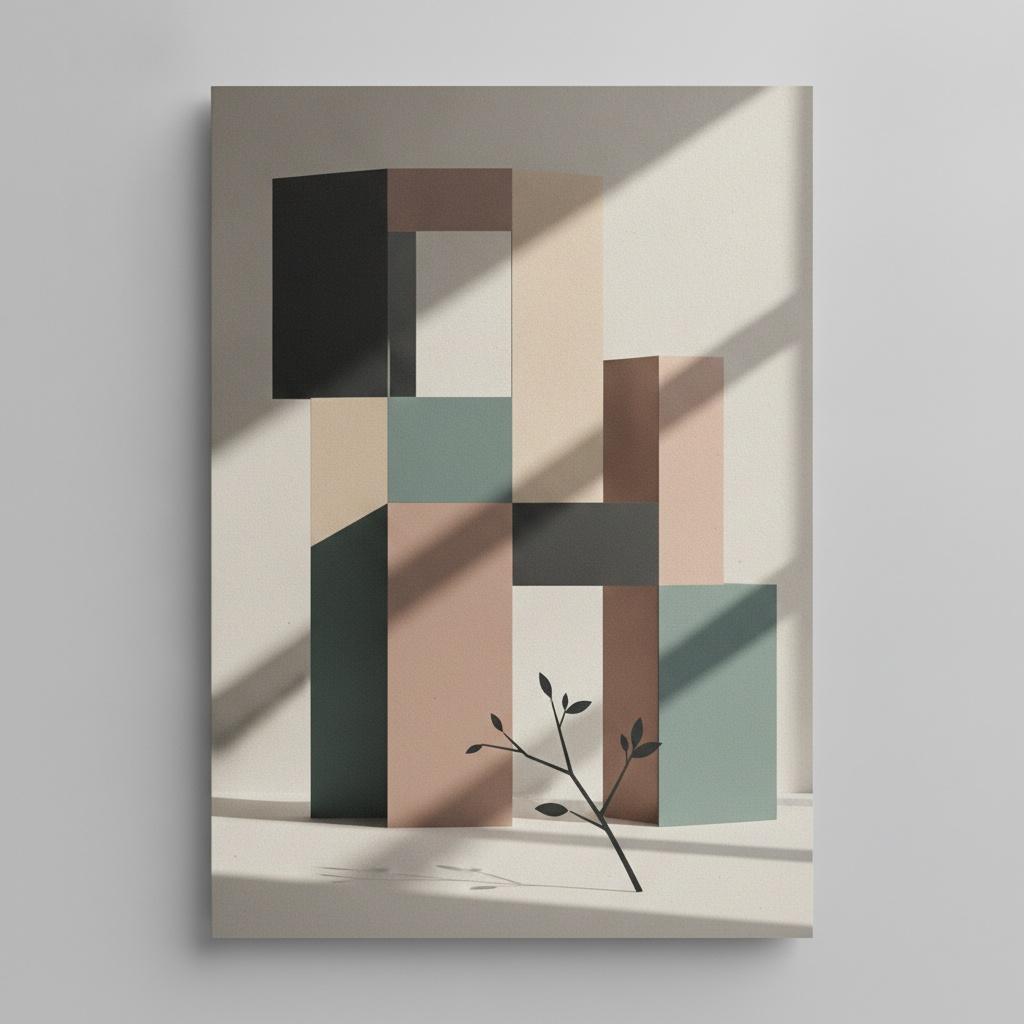
Minimalism describes movements in various forms of art and design, especially visual art and music, where the work is set out to expose the essence, essentials or identity of a subject through eliminating all non-essential forms, features or concepts...
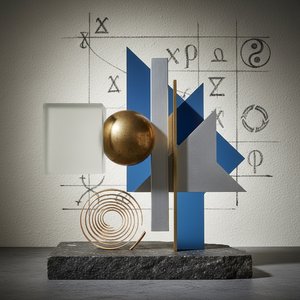
To understand the profound impact of Minimalism, one must first look beyond the surface of what appears to be a mere absence of detail. At its core, Minimalism is not an exercise in emptiness, but rather a rigorous pursuit of essence. It is a movement defined by the deliberate elimination of non-essential forms, features, and concepts, seeking to expose the very identity of a subject through extreme reduction. Emerging most strongly in the post-World War II era, particularly within American visual arts during the 1960s and early 70s, Minimalism served as a radical departure from the emotional turbulence of Abstract Expressionism. Where previous movements sought to pour the artist's psyche onto the canvas through gestural brushwork and chaotic energy, the Minimalists sought a different kind of truth—one found in the clarity of the object itself.
This philosophical shift was grounded in the belief that art should possess its own reality rather than acting as an imitation of something else. By stripping away narrative, metaphor, and representational illusion, artists invited the viewer into a direct encounter with the physical properties of the work: its weight, its texture, its color, and its relationship to the space it occupies. This was a movement of
literalism, where a square was simply a square, and a line was merely a boundary. In this disciplined environment, the viewer is no longer a passive observer of a story, but an active participant in a sensory experience, forced to confront the purity of form and the profound stillness that exists when all distractions are removed.
From Cubism to Pure Form: The Evolution of Geometric Abstraction
 Beyond Form & Color: Geometric Abstraction's Enduring Legacy in Art History
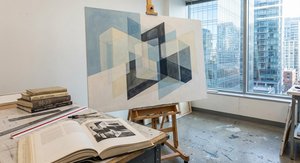
The Genesis of Geometric Abstraction: From Cubism to Early Pioneers Geometric Design in Art: A Historical Survey & Contemporary Appeal for Collectors Explore the enduring legacy of geometric abstraction! Discover key artists, historical movements & i...
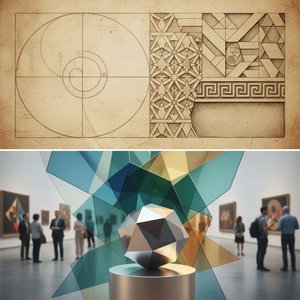
The journey toward the minimalist aesthetic did not begin in a vacuum; it was an evolutionary unfolding from the fertile, experimental ground of the early 20th century. The roots of this movement are deeply embedded in the analytical fractures caused by Cubism, which first dared to dismantle the recognizable world into multifaceted planes. This fragmentation provided the essential vocabulary for what would later become Geometric Abstraction—a visual language rooted in structure and mathematical purity. As the horrors of World War I shattered traditional notions of beauty, a new generation of artists sought a universal order that could transcend the chaos of human conflict.
This era saw the rise of artists who viewed geometry not merely as a decorative tool, and certainly not as a way to represent nature, but as a means to access a deeper, more permanent truth. The movement drew inspiration from advancements in science and mathematics, which revealed hidden, logical patterns within the universe. By utilizing lines, shapes, and colors that resonated with an almost mathematical precision, these pioneers were attempting to create a visual language capable of expressing fundamental forces. This transition from the representational to the non-objective was a profound philosophical undertaking, moving art away from the particularities of human experience toward the eternal principles of harmony and balance.
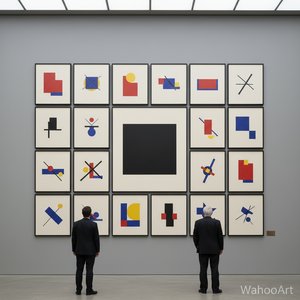
Masters of the Grid: Analyzing Iconic Works by Mondrian and Malevich
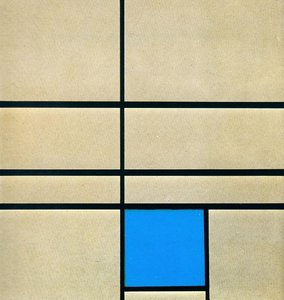 Composition with Blue 1
Exploring the Simplicity of Geometric Harmony This artwork exemplifies the beauty of minimalism through its precise arrangement of geometric forms. Its clean, structured composition invites viewers to appreciate the elegance of basic shapes and the p...
No exploration of geometric precision is complete without acknowledging the titans who defined the movement's most iconic trajectories. Piet Mondrian, a central figure in the De Stijl movement, achieved a level of mastery in what we now recognize as
Composition with Blue 1. His work exemplifies the beauty of minimalist harmony through a precise arrangement of geometric forms and a restrained color palette. By employing a balanced, grid-like pattern of black delineating lines, Mondrian created a sense of absolute order and clarity. The single, vibrant blue square within his compositions serves as a visual anchor, a punctuation mark that draws the eye and sparks an intellectual curiosity regarding the relationship between color and form. His technique—characterized by flat, smooth surfaces—embodies the modernist pursuit of purity.
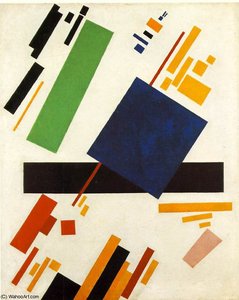
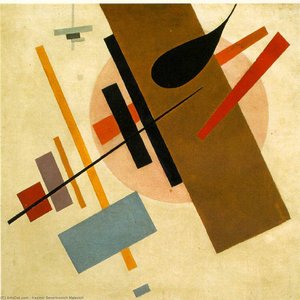
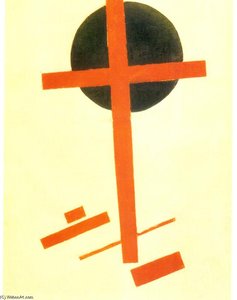
In a parallel but distinct movement, Kazimir Malevich pushed the boundaries of abstraction even further through Suprematism. His quest for "pure feeling" led to works that stripped art down to its most fundamental elements, such as the legendary
Black Square. Malevich’s work was a radical dismantling of tradition, seeking to express the spiritual and emotional intensity of the void through geometric simplicity. While Mondrian sought balance and cosmic order through the grid, Maleable explored the tension and energy of non-objective forms. Together, these masters demonstrated that by reducing the subject to its most basic components—the square, the circle, and the line—an artist could evoke a sense of the infinite, creating works that remain captivatingly modern even a century later.
The Geometry of Emotion: Post-War Developments and the Concrete Art Movement
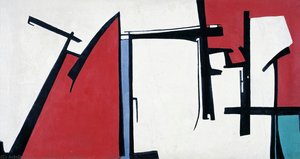 equipo 57
Equipo 57: Pioneers of Geometric Abstraction Equipo 57 emerged from the vibrant artistic landscape of post-war Paris, a collective born in 1957 that swiftly established itself as one of the foremost voices within the concrete art movement. Founded by...
As the 20th century progressed, the language of geometry began to evolve from the rigid structures of early abstraction into more nuanced explorations of emotion and movement. In post-war Europe, collectives such as
Equipo 57 emerged in Paris, bringing a renewed focus to "Concrete Art." This group, composed of architects, sculptors, and painters, prioritized clarity and precision, rejecting the subjective expressionism of Surrealism in favor of a rigorously rational approach. They believed that geometric elements—squares, rectangles, and circles—functioned as the fundamental building blocks of a new, modern reality, conveying meaning through their spatial relationships rather than through symbolic representation.
This era also saw artists like Paolo Cotani exploring what might be termed the "geometry of emotion." Cotani’s work demonstrates how meticulously crafted geometric compositions can be used to convey complex inner states. By juxtaposing contrasting hues and utilizing precise arrangements, he generated a dynamic visual tension that speaks directly to the viewer's subconscious. Similarly, the influence of movement can be seen in works like Marcel Duchamp’s
Rotoreliefs, where concentric circles and layered forms create a mesmerizing visual rhythm. These developments proved that minimalism and geometric abstraction were not cold or clinical; rather, they were sophisticated tools capable of exploring perception, focus, and the very cycles of human experience through the lens of disciplined abstraction.
Minimalism in Modern Context: From Visual Arts to Architectural Dialogue
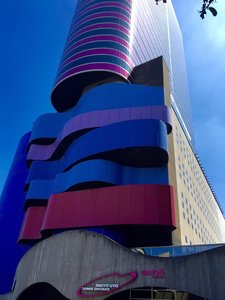 Instituto Tomie Ohtake
A Sanctuary of Light and Form: The Essence of Instituto Tomie Ohtake In the heart of the urban landscape, where the pulse of modernity meets the stillness of contemplation, stands the Instituto Tomie Ohtake —a luminous beacon for contemporary creativ...
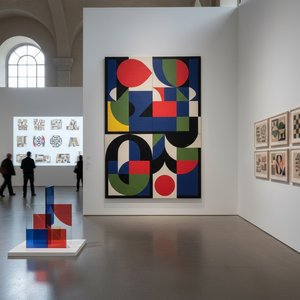
Today, the legacy of Minimalism extends far beyond the confines of a gallery wall, permeating the very fabric of our modern architectural and design landscapes. The movement’s emphasis on
essentialism—the removal of the superfluous to reveal the core—has become a cornerstone of contemporary aesthetics. We see this in the sweeping, clean lines of modern museums, such as the
Instituto Tomie Ohtake, where the architecture itself becomes a physical manifestation of abstract language, utilizing curves and bold structures to create a dialogue between space and form.
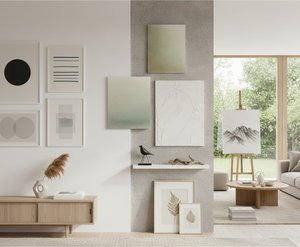
In the realm of photography and interior design, minimalist principles continue to offer a sanctuary from the sensory overload of the digital age. Minimalist photography, characterized by austere simplicity and careful composition, utilizes monochromatic elements and textures to evoke a sense of calm and contemplation. This enduring influence reminds us that the power of "less" lies in its ability to create space—not just physical space within a room, but mental space for the observer to breathe, reflect, and find meaning. As we continue to navigate an increasingly complex world, the clarity, balance, and profound simplicity offered by the minimalist tradition remain as vital and revolutionary as ever.
At ArtsDot.com, we celebrate the enduring legacy of these masters. Whether you are a student seeking to study the precise brushwork of Mondrian or a collector looking to bring the structural elegance of geometric abstraction into your home, our collection offers museum-quality oil reproductions. Our artists specialize in capturing the authentic texture and tonal depth of historical masterpieces, ensuring that the soul of the original work is preserved on every canvas. Explore our curated selection of canonical works and bring the power of simplicity into your personal space.