The Dawn of the Floating World: Historical Context of Edo-Period Japan
Edo periodThe Edo period, also known as the Tokugawa period, is the period between 1600 or 1603 and 1868 in the history of Japan, when the country was under the rule of the Tokugawa shogunate and some 300 regional daimyo, or feudal lords. Emerging from the cha...
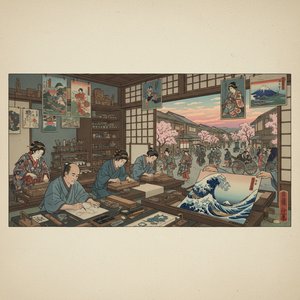
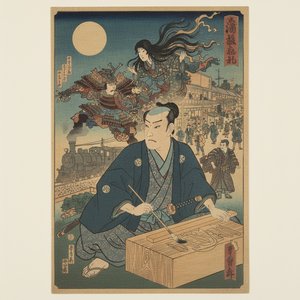
To understand the soul of Ukiyo-e, one must first step into the structured yet vibrant atmosphere of the Edo period. Following the chaos of the Sengoku era, the establishment of the Tokugawa shogunate in 1603 ushered in an unprecedented epoch of prolonged peace and stability across the Japanese archipelago. This was a time of rigid social stratification, where the hierarchy from samurai to merchant was strictly enforced; yet, beneath this veneer of discipline, a new, hedonistic energy began to pulse through the urban centers. As cities like Edo—modern-day Tokyo—expanded, a burgeoning class of merchants and craftsmen, known as the
chōnin, amassed significant wealth. Though they occupied the lower rungs of the official social order, their economic power allowed them to patronize a culture centered on pleasure, theater, and the ephemeral joys of urban life.
This era gave rise to the concept of the "Floating World," or
ukiyo. Originally a Buddhist term reflecting the transient and sorrowful nature of human existence, the meaning underwent a profound cultural transformation. In the vibrant streets of Edo, the floating world became a celebration of the present moment—a pursuit of beauty in the fleeting, the fashionable, and the sensory. It was a world of Kabuki performances, the elegance of geisha, and the excitement of sumo wrestling. Ukiyo-e, literally meaning "pictures of the floating world," emerged as the visual heartbeat of this movement, capturing the very essence of a society captivated by the beauty of things that do not last.
Mastery of the Carved Line: The Intricate Craft of Woodblock Printing
 The Soul of the Carved Line: Discovering the Timeless Magic of Japanese Woodblock Prints
The Whispering Grain: Understanding the Intricate Craft of Woodblock Carving To hold a woodblock print is to touch the very pulse of the artisan’s hand, a tactile connection to a moment where wood, steel, and pigment converged in perfect harmony. Unl...
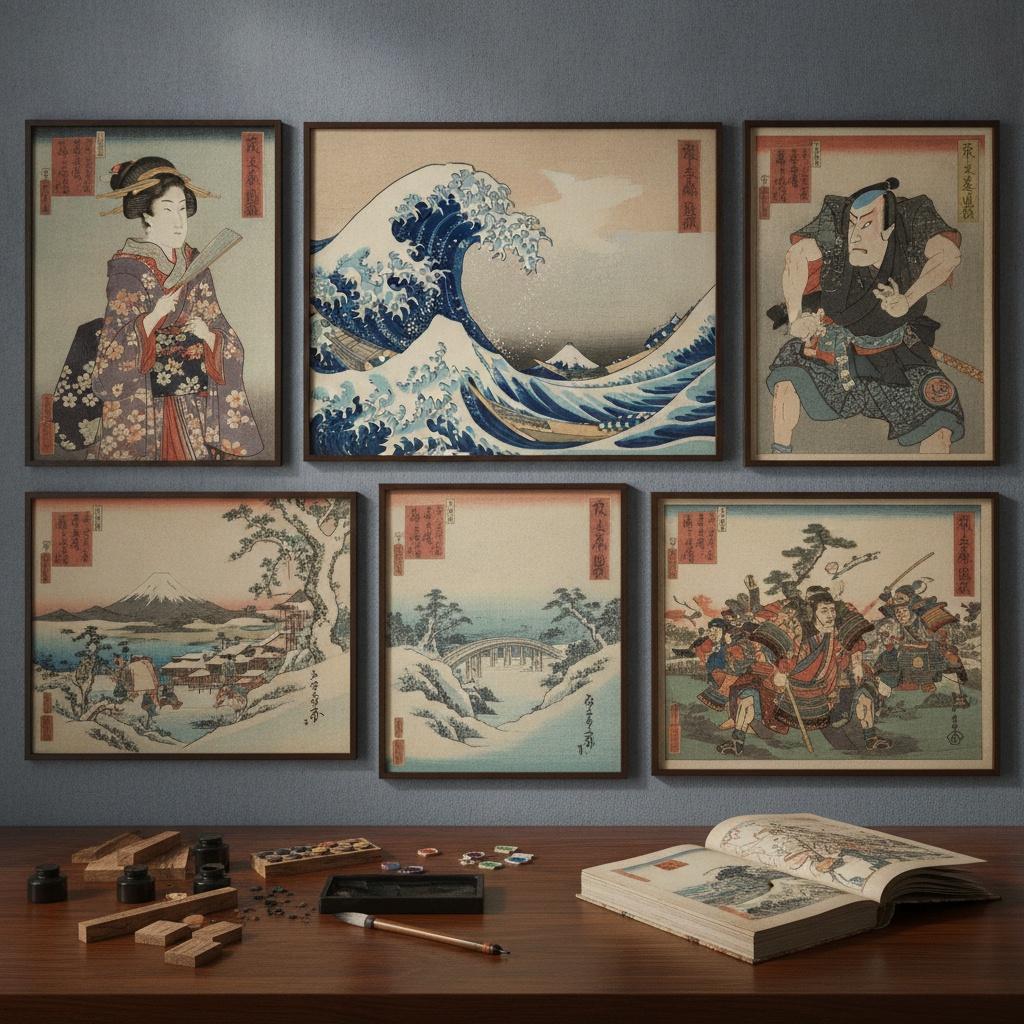
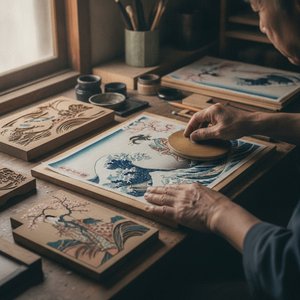
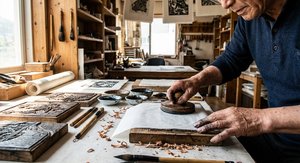
The creation of an Ukiyo-e masterpiece was far from a solitary act of spontaneous inspiration; it was a disciplined, collaborative triumph of technology and artistry. Unlike the fluid, singular brushstrokes found in Western oil paintings, the beauty of a woodblock print resides in the deliberate, rhythmic resistance of the grain. The process began with the artist’s initial drawing, which was then handed to a master carver. This artisan worked with surgical precision, using specialized steel tools to translate delicate ink lines into the hard surface of cherrywood blocks. Every curve of a petal and every sharp edge of a cresting wave required a profound dialogue between the carver and the wood, where the slightest error could compromise the entire edition.
Once the blocks were carved, the printing process introduced a third essential element: color. Unlike Western woodcuts that often relied on oil-based inks, the Japanese
mokuhanga technique utilized water-based pigments. This allowed for a luminous, translucent quality that could achieve subtle gradations of hue, known as
bokashi. A single print might require dozens of separate blocks—one for each color layer—and a highly skilled printer to apply the pigment and pressure with absolute consistency. To hold such a print is to touch the pulse of the artisan’s hand, feeling the tactile connection to a moment where wood, steel, and water converged in perfect harmony to disseminate beauty to the masses.
Iconic Visionaries: From Hokusai’s Waves to Utagawa’s Chronicles
 Hokusai's Masterpieces: 25 Iconic Prints & Paintings for Art Lovers | ArtsDot
Introduction To embark on a journey through the 25 most celebrated artworks of Katsushika Hokusai is to enter a world where ink blossoms into waves, mountains breathe with life, and everyday scenes resonate with profound beauty. These pieces aren’t m...
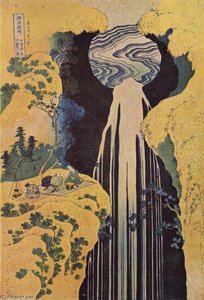
Within this rigorous technical framework, certain names rose to legendary status, transcending their era to become universal symbols of Japanese identity. Katsushika Hokusai stands as perhaps the most formidable innovator of the movement. His work was a relentless pursuit of the essence of life, characterized by an ability to make mountains breathe and ink blossom into turbulent seas. In his iconic series, such as the
Thirty-six Views of Mount Fuji, Hokusai experimented with perspective and composition in ways that would later shock and inspire the Western world. His vision was not merely representational; it was a gateway to the imagination, where the power of nature and the dignity of the ordinary could be seen in a single, breathtaking frame.
As the era progressed, other masters expanded the boundaries of the genre. The Utagawa school produced artists like Utagawa Sadahide, a versatile chronicler who utilized various pseudonyms to capture the changing landscape of late Edo. Similarly, during the more turbulent Meiji and Taisho eras, artists such as Nakamura Shūkō and Shōgetsu Toshu began to weave themes of modernization and even war into the woodblock tradition. Their
senso-e (war prints) offered a potent visual narrative of Japan’s shifting role on the global stage. These artists ensured that Ukiyo-e remained a living, breathing medium, capable of reflecting both the serene beauty of a landscape and the dramatic shifts of political history.
Themes of the Transient: Landscapes, Kabuki, and Everyday Life
 Ukiyo-e's Greatest Hits: 10 Masterpieces That Shaped a Movement | ArtsDot
Introduction Imagine a world captured not in grand historical narratives or regal portraits, but in fleeting moments of everyday life – a Kabuki actor frozen mid-performance, the delicate beauty of a courtesan, a surging wave threatening to engulf al...
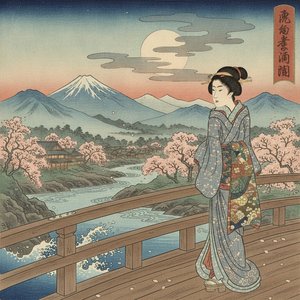
The subject matter of Ukiyo-e was as diverse as the lives of the people who inhabited the floating world. One of the most enduring genres was
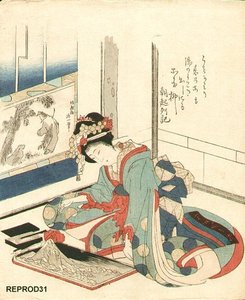
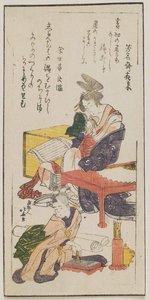
bijin-ga, or pictures of beautiful women, which celebrated the refined aesthetics of courtesans and the elegance of fashion. These prints were not merely portraits; they were cultural documents that captured the intricate details of kimono patterns, hairstyles, and the subtle grace of movement. Alongside these were the
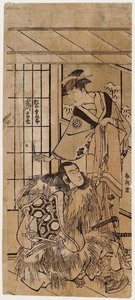
yakusha-e, dramatic depictions of Kabuki actors frozen mid-performance. For the fans of the theater, these prints served as both memorabilia and advertisements, capturing the intense emotion and stylized poses that defined the stage.
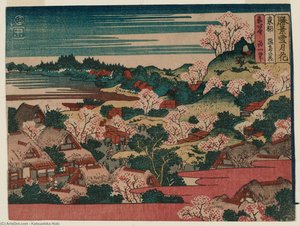
Beyond the human figure, the landscape emerged as a profound subject of contemplation. These works often depicted the great highways of Japan, such as the Tōkaidō, illustrating the rhythms of travel, trade, and the peaceful coexistence of humanity and nature. Even more intimate subjects were captured—the simple act of a woman washing her face or the quiet activity of boats floating on calm waters. Whether depicting the haunting drama of a folklore legend or the serene majesty of a distant mountain, Ukiyo-e excelled at finding the profound within the mundane, inviting viewers to find beauty in the transient textures of daily existence.
The Global Echo: Ukiyo-e's Influence on Western Impressionism and Beyond
 The Enduring Legacy of Woodblock Printmaking: Technique, History & Artistic Expression
Origins & Evolution: From Ancient China to Global Art Form Wikipedia: Woodblock printing Woodblock printing or block printing is a technique for printing text, images or patterns used widely throughout East Asia and originating in China in antiquity ...
The influence of Ukiyo-e reached far beyond the shores of Japan, sparking a revolution in Western art known as Japonisme. When Japan opened its borders in the mid-19th century, these woodblock prints flooded into Europe, arriving in the studios of artists like Monet, Degas, and Van Gogh. The radical compositions—characterized by flat areas of color, bold outlines, and asymmetrical perspectives—offered a profound alternative to the traditional Western emphasis on chiaroscuro and linear perspective. To the Impressionists, the Ukiyo-e approach to capturing light and fleeting moments felt like a kindred spirit, providing the technical vocabulary needed to break free from academic constraints.
Today, the legacy of the floating world continues to resonate in our modern visual landscape. The principles of Ukiyo-e—the economy of line, the power of color, and the celebration of the ephemeral—can be seen in everything from graphic design to contemporary illustration. For the modern collector or history enthusiast, these works remain a vital connection to a vanished world. At
ArtsDot.com, we honor this enduring legacy by offering museum-quality reproductions that allow you to bring the profound beauty of these Japanese masterpieces into your own space. Whether through a meticulously hand-painted oil reproduction on cotton canvas or a high-fidelity Giclée print, our mission is to ensure that the exquisite artistry of the Ukiyo-e masters remains accessible to all, preserving the soul of the floating world for generations to come.