Introduction
To step into a gallery dedicated to the theme of study is to witness the quiet, sacred intimacy of the human intellect in motion. It is an invitation to look past the grand, sweeping narratives of war and myth, and instead, to focus on the soft flicker of candlelight over a parchment, the furrowed brow of a scholar, and the profound stillness of a mind attempting to grasp the infinite. In these works, we do not merely observe a subject; we observe the very process of discovery.
Throughout art history, the concept of study has served as both a technical necessity and a deeply philosophical pursuit. From the Renaissance masters using bozzetti and preparatory sketches to resolve complex anatomical truths, to the 17th-century Dutch painters capturing the somber, light-drenched solitude of a scholar’s desk, the act of studying has been immortalized as a bridge between curiosity and understanding. These paintings reflect a cultural era where the pursuit of knowledge—be it theological, scientific, or artistic—was viewed as a transformative spiritual journey.
In our modern, hyper-accelerated world, these masterpieces remain profoundly resonant. They offer us a much-needed sanctuary of slow observation, reminding us that true insight requires patience, repetition, and the courage to sit with uncertainty. They celebrate the beauty found in the unfinished, the rehearsal, and the quiet discipline of the seeker.
As we journey through this curated selection, we will encounter ten extraordinary works that capture this essence. We shall move from the rigorous anatomical explorations of the Old Masters to the more atmospheric, psychological portraits of contemplative solitude. Whether you are a student of history or an admirer of fine technique, these paintings invite you to pause, reflect, and perhaps rediscover the quiet joy of learning within yourself.
Philosopher in Meditation - Rembrandt van Rijn
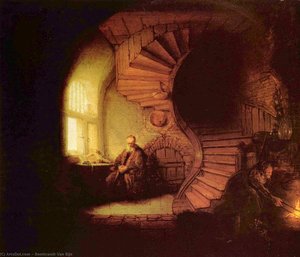 Philosopher in Meditation - Rembrandt van Rijn
In Rembrandt van Rijn’s 1632 masterpiece, Philosopher in Meditation , the act of study transcends mere reading; it becomes a profound spiritual journey. Within this intimate, dimly lit chamber, Rembrandt utilizes his legendary chiaroscuro to pull the viewer into a quiet moment of introspection. The dramatic interplay of light and shadow illuminates a seated figure lost in thought, surrounded by the heavy textures of books and the architectural mystery of a rising spiral staircase—a potent symbol of the ascent toward enlightenment.
While scholars debate whether this scene depicts a philosopher or a biblical moment from the Book of Tobit, the emotional resonance remains unchanged. The warmth of the hearth and the presence of secondary figures create a sense of domesticity intertwined with intellectual pursuit. To possess a hand-painted oil reproduction of this work is to invite this very atmosphere of contemplation into your own home. It is not merely decor; it is an invitation to transform your space into a gallery of the soul, where the weight of history and the beauty of deep thought can reside permanently on your walls.
The Eternal Woman - Paul Cézanne
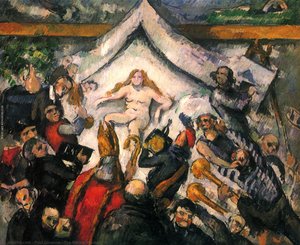 The Eternal Woman - Paul Cézanne
In Paul Cézanne’s 1877 masterpiece, The Eternal Woman , the lines of the composition aren’t merely drawn; they are choreographed . This is not a simple portrait, but a dance frozen in time , where the central, reclining figure serves as the gravitational anchor for a gathering of musicians and observers. As one of the most profound examples of an artistic study of form, the work captures Cézanne’s transition from the fleeting light of Impressionism toward the structured, geometric foundations of Cubism.
The atmosphere is thick with reverence; notice how the triangular canopy acts as a secular halo, casting a glow over the fragmented figures. Through heavy, rhythmic brushstrokes, Cézanne transforms a group of admirers into a sea of color and movement. It is a meditation on beauty that makes chaos feel like harmony. What if your living room could hold that same balance? What if your walls could breathe rhythm ? For those seeking to bring this era of Post-Impressionist innovation into their homes, our museum-quality oil reproductions capture every tactile, impasto stroke of this revolutionary vision.
Fray Hortensio Félix Paravicino - El Greco
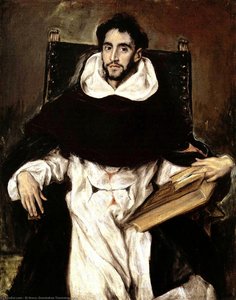 Fray Hortensio Félix Paravicino - El Greco
Acquiring Fray Hortensio Félix Paravicino by El Greco is more than a mere purchase; it is an investment in a profound legacy of Spanish Mannerism and refined taste for the discerning collector. As one of the premier artworks exploring the theme of 'study,' this 1609 masterpiece captures the very essence of intellectual devotion. Through El Greco’s signature elongated forms and a somber, atmospheric palette of ochre and deep umber, we witness the Trinitarian friar lost in the quiet gravity of his text. The painting transcends simple portraiture, serving as a psychological study of concentration and spiritual inquiry.
The historical influence of this work is unparalleled, anchoring its position among the top 10 most significant depictions of scholarly contemplation. Its market prestige is matched only by its visual power, where light dances across the heavy textures of the friar's habit, inviting a sense of timelessness. For those curating modern luxury interiors, a high-quality handmade oil reproduction of this piece brings an unmatched aesthetic authority and a sense of museum-grade status to any private library or study, echoing the dignity of the Renaissance in a contemporary setting.
Garment study for a seated figure - Leonardo da Vinci
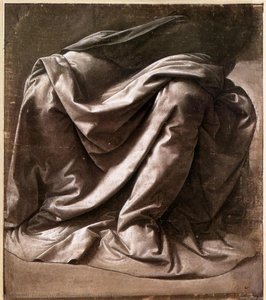 Garment study for a seated figure - Leonardo da Vinci
To gaze upon Leonardo da Vinci’s Garment Study for a Seated Figure is to witness the very moment scientific inquiry meets artistic grace. Created around 1470, this work transcends the definition of a mere preparatory sketch; it is a profound meditation on how light interacts with the weight and texture of fabric. Within its intricate folds and subtle shadows, we find the genesis of Leonardo's legendary sfumato technique—a mastery of soft transitions that would later define the Mona Lisa .
This piece earns its place in our Top 10 because it redefines the 'study' not as a rehearsal, but as a fundamental exploration of reality itself. Leonardo does not just paint cloth; he dissects the physics of drapery to understand the soul of form. At ArtsDot.com, we believe such intellectual depth should not be confined to the Louvre. By offering meticulous, hand-painted oil reproductions, we bring this Renaissance rigor into your private sanctuary, allowing the quiet, disciplined beauty of Da Vinci’s process to serve as a sophisticated cornerstone for your collection.
St Jerome (detail) - Caravaggio
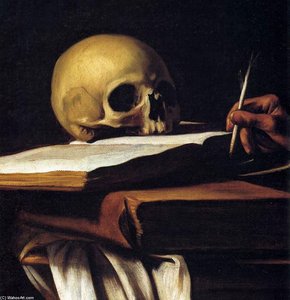 St Jerome (detail) - Caravaggio
In the heavy, velvet shadows of Caravaggio’s 1606 masterpiece, St Jerome (detail) , we are not merely observers of a scholar; we are witnesses to a soul in profound communion with mortality. The scene is defined by tenebrism , that revolutionary Baroque technique where a singular, divine light pierces the darkness to illuminate the tactile textures of aged parchment, a weathered skull, and the delicate quill poised mid-thought. This is the very essence of study: not just the accumulation of facts, but a visceral, spiritual wrestling with existence.
The stark contrast between the pale, sinewy hand and the deep, obsidian background creates an atmosphere of intense, quiet focus. As a memento mori , the work serves as a powerful meditation on the fleeting nature of time and the permanence of wisdom. Bringing such a commanding piece into a modern study or library does more than decorate a wall; it introduces a sense of historical gravity and contemplative stillness, inviting anyone who enters the room to pause, reflect, and find depth in the pursuit of knowledge.
Old Man with a Black Hat and Gorget - Rembrandt van Rijn
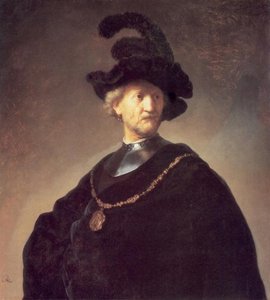 Old Man with a Black Hat and Gorget - Rembrandt van Rijn
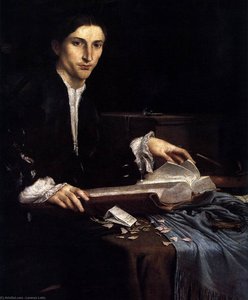
In Old Man with a Black Hat and Gorget by Rembrandt van Rijn, there is a gaze that follows you—not with judgment, but with understanding . This 1631 masterpiece serves as more than a mere portrait; it is a mirror reflecting the profound weight of a life spent in contemplation. As one of the top artworks exploring the theme of study, it captures a moment where intellectual pursuit meets the inevitable passage of time. The presence of clocks and an open book suggests a soul deeply engaged in the study of existence, while the dramatic chiaroscuro sculpts the subject's weathered features from the surrounding shadows.
Rembrandt uses light to illuminate the textures of the gorget and the wisdom etched into the man's face, making the invisible layers of character visible. Now, imagine that gaze in your own space. Not watching you, but reminding you : you are seen. You are part of this eternal story. For those seeking to bring this Dutch Golden Age intensity into their homes, our museum-quality, hand-painted oil reproductions capture every meticulous brushstroke and emotional depth of Rembrandt's original.
Old Rabbi - Rembrandt van Rijn
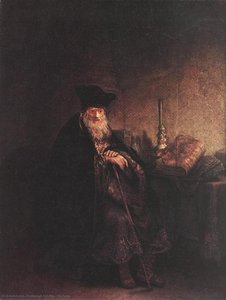 Old Rabbi - Rembrandt van Rijn
To encounter Old Rabbi by Rembrandt van Rijn is to step into a sanctuary of profound quietude, where the very air seems heavy with the weight of accumulated wisdom. As one of the most evocative entries in our exploration of artworks centered on the theme of study, this 1645 masterpiece transcends mere portraiture; it captures the sacred intimacy of intellectual devotion. Rembrandt utilizes his legendary chiaroscuro technique to pull the elderly scholar from the shadows, illuminating a face etched with the deep lines of time and eyes fixed intently upon the holy text.
The painting serves as a breathtaking testament to the Dutch Golden Age, reflecting an era of intense religious inquiry and humanistic realism. The interplay of light across the man's traditional robes and the tactile presence of the books on his table create a sensory experience that remains unparalleled. For the discerning collector, such a work brings a sense of historical gravity and timeless elegance to a refined interior. At ArtsDot.com, we honor this legacy through meticulous, handmade oil reproductions, capturing every visible brushstroke and tonal depth to ensure this spirit of scholarly devotion lives on in your private gallery.
St Ildefonso - El Greco
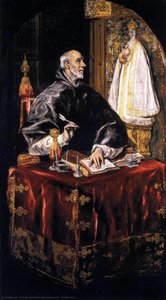 St Ildefonso - El Greco
To stand before El Greco’s St. Ildefonso is to step into a sanctuary of profound quietude. One can almost hear the scratch of a quill against parchment and the heavy silence of a scholar’s cell. In this 1603 masterpiece, the Archbishop of Toledo is captured not in a moment of public ritual, but in the intimate, solitary act of intellectual and spiritual devotion. The desk, cluttered with books and scattered papers, serves as the altar of his study, where the pursuit of knowledge meets the hunger for the divine.
This work earns its place among the top artworks exploring the theme of study through its ability to transform mere reading into a transcendent experience. El Greco utilizes his signature elongated forms and a somber, luminous palette to suggest that true learning is an upward movement of the soul. By bringing such a piece into a modern home, one invites this same sense of contemplative depth and academic reverence into a daily environment, turning a quiet corner of a room into a space for timeless reflection.
Patrocles - Jacques-Louis David
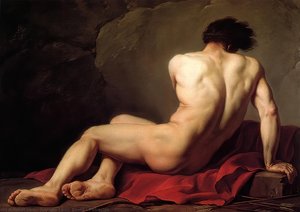 Patrocles - Jacques-Louis David
In Jacques-Louis David’s Patrocles , a somber palette of earthy ochre, deep umber, and stony gray dominates the canvas, establishing a mood of profound, stoic introspection. This restrained color scheme is central to why this work stands among the top 10 artworks that explore the theme of study ; it reflects an artist moving away from Rococo frivolity toward a rigorous, academic devotion to classical antiquity. David’s mastery lies in using these muted tones to direct the eye toward the dramatic chiaroscuro, where light carves muscle from shadow with sculptural precision.
For the modern collector, integrating a high-quality oil reproduction of this piece can transform a study or library into a sanctuary of intellectual gravity. The painting’s atmospheric use of light and shadow provides an ideal foundation for curating a sophisticated interior, offering a sense of timelessness and strength. Whether displayed as a large-format canvas or a multi-panel set, the work’s classical austerity brings a curated, museum-grade elegance to any contemporary architectural space.
Napoleon Bonaparte in his Study at the Tuileries - Jacques-Louis David
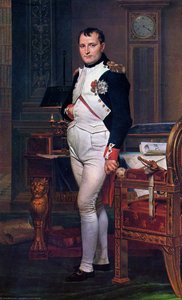 Napoleon Bonaparte in his Study at the Tuileries - Jacques-Louis David
Acquiring Napoleon Bonaparte in his Study at the Tuileries by Jacques-Louis David is more than a mere purchase; it is an investment in a profound historical legacy and an uncompromising standard of taste for the discerning collector. As a cornerstone of the Neoclassical movement, this 1812 masterpiece transcends simple portraiture to explore the very essence of intellectual labor. David masterfully replaces the frivolous ornamentation of the Rococo era with a somber, disciplined composition, where the soft light illuminating Napoleon’s desk highlights the weight of governance through scattered papers and scholarly books.
The painting's position among the top artworks exploring the theme of 'study' is cemented by its ability to transform a private moment of strategic contemplation into a monumental symbol of statecraft. The visual tension between his military uniform and the quietude of the Tuileries study offers an unparalleled depth of narrative. For those curating modern luxury interiors, a high-quality, hand-painted oil reproduction of this work brings a sense of academic authority and timeless prestige to any space, commanding the room with the same gravity as the Emperor himself.
Conclusion
As the light fades on our exploration of these quiet moments of contemplation, we find that the theme of study is far more than a mere depiction of books, ink, or candlelight. It is an invitation to pause. These masterpieces serve as enduring mirrors to our own intellectual and spiritual journeys, reminding us that the pursuit of knowledge is a deeply human, often solitary, yet profoundly beautiful endeavor. They capture that sacred stillness where the world falls away, leaving only the flicker of curiosity and the weight of thought.
These works are not merely relics preserved behind museum glass; they are living presences capable of transforming the atmosphere of a modern home. When we bring a reproduction of such a scene into our personal spaces, we invite that same sense of focus and tranquility into our daily lives. They bridge the gap between the centuries, allowing the heavy textures of an oil brushstroke and the soft glow of a Renaissance lamp to echo within our contemporary architecture, turning a simple room into a sanctuary for reflection.
Whether through the disciplined lines of a classical portrait or the emotive shadows of a more modern interpretation, these paintings continue to shape our culture by celebrating the quiet dignity of the mind. We invite you to continue this journey of discovery and find a piece that resonates with your own story within our full collection . In every canvas, there remains an eternal dialogue between the artist’s vision and our own enduring wonder.