Early Life & Academic Foundations: Amsterdam Roots and Influences
Paul Joseph Constantin Gabriël or Paul Gabriël (5 July 1828 – 23 August 1903) was a painter, draftsman, watercolorist, and etcher who belonged to the Hague School. == Biography == Gabriël was born in Amsterdam, the son of the sculptor and painter,...
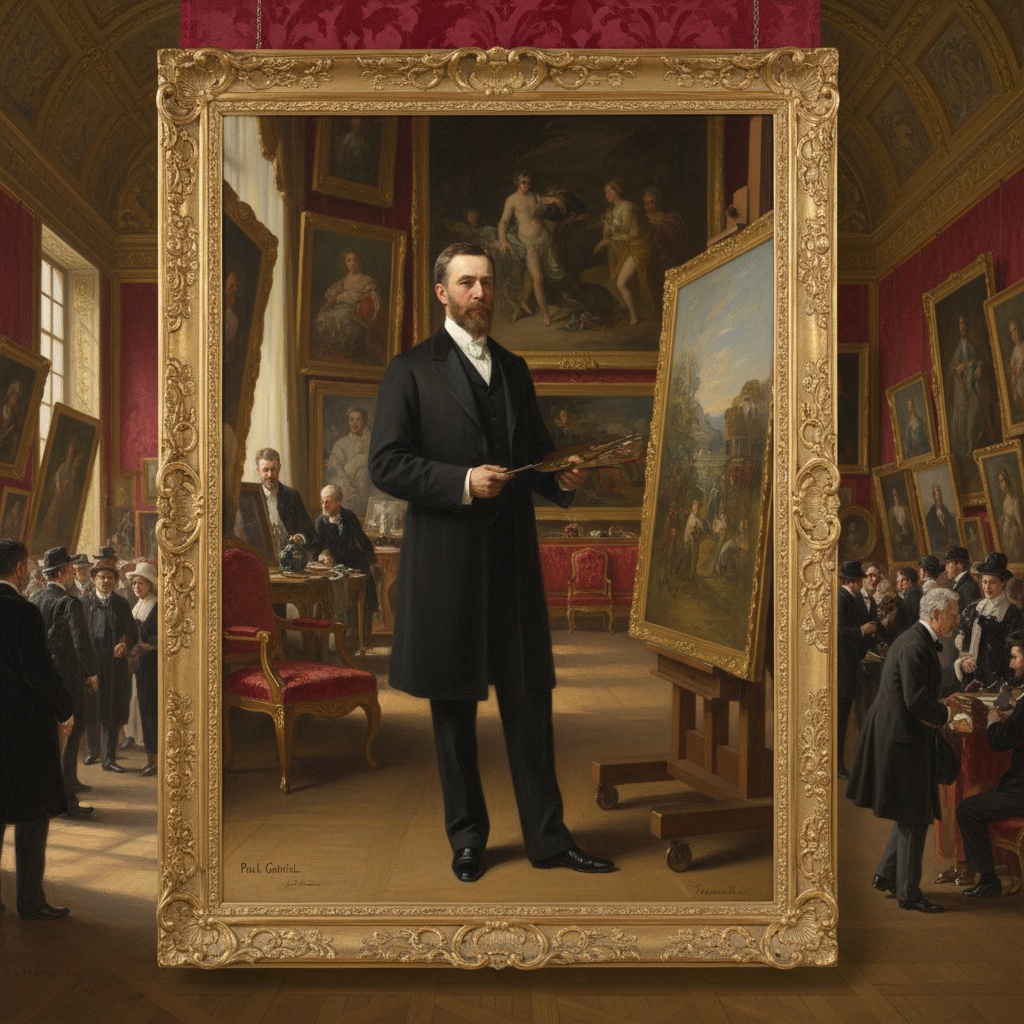
Paul Joseph Constantin Gabriël, born in Amsterdam in 1828, inherited an artistic lineage from his father, the sculptor and painter Paul Joseph Gabriel. This familial connection naturally steered the young Gabriël towards a life immersed in creative pursuits. His formal training began at the State Academy of Fine Arts in Amsterdam in 1840, where he studied under Louis Zocher, absorbing the foundational principles of artistic technique and composition. However, it was his subsequent apprenticeship with Barend Cornelis Koekkoek in Cleves, Germany, that proved formative—though ultimately unsuccessful. Koekkoek’s rigorous approach didn't quite suit Gabriël’s burgeoning style, yet it instilled a discipline crucial to his later development. A return to the Netherlands saw him studying under Cornelis Lieste in Haarlem, where a pivotal encounter with Anton Mauve would shape his artistic trajectory. This early period laid the groundwork for Gabriël’s distinctive voice, blending academic precision with an emerging sensitivity to the nuances of light and atmosphere.
The Hague School Embrace: Landscape, Color, and Tonalism
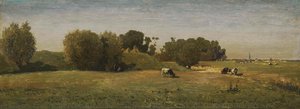 Landscape near Abcoude, Paul Joseph Constantin Gabriël, 1860 - 1870
Admire 'Landscape near Abcoude' by Paul Joseph Constantin Gabriël (1870). A serene Dutch landscape painting featuring cows, horses & a church tower. Hand-painted reproduction available.
By 1853, Gabriël had gravitated towards Oosterbeek, a village affectionately known as the ‘Dutch Barbizon.’ This artistic haven, cultivated by landscape painter Johannes Warnardus Bilders, attracted a cohort of young artists seeking to capture the essence of the Dutch countryside. It was here that Gabriël truly found his calling: landscape painting. He became deeply embedded within the burgeoning Hague School movement, characterized by its realistic depictions of everyday life and natural scenes. Unlike many of his contemporaries who favored muted tones, Gabriël distinguished himself with a remarkable use of color—a quality often described as ‘colorful, juicy, fat,’ even in overcast weather. This commitment to vibrant hues set him apart, infusing his landscapes with an immediacy and warmth that resonated deeply with viewers. He wasn’t merely recording atmosphere; he was interpreting the inherent beauty within it.
Brussels Interlude: Roelofs’ Mentorship and Barbizon Inspirations
Academic art, academicism, or academism, is a style of painting and sculpture produced under the influence of European academies of art. This method extended its influence throughout the Western world over several centuries, from its origins in Italy...
A move to Brussels in 1858 marked a significant turning point in Gabriël's career. There, he forged a close friendship with Willem Roelofs, who became an invaluable mentor. Roelofs not only provided social access within the Brussels art world but also introduced him to the works of the Barbizon School—a group of French landscape painters renowned for their naturalistic approach and plein air painting techniques. The influence of artists like Théodore Rousseau and Charles-François Daubigny is palpable in Gabriël’s evolving style, particularly his emphasis on direct observation and the depiction of rural life. Roelofs encouraged Gabriël to explore the Dutch countryside with fresh eyes, leading to collaborative painting tours that opened his perspective to the serene beauty of lakes, peatlands, and polder landscapes.
Pursuit of Parisian Recognition: Salon Submissions and Critical Reception
Throughout his career, Gabriël harbored a strong desire for recognition on the international stage—specifically, acceptance into the prestigious Paris Salon. This ambition drove him to refine his technique and create works that would appeal to French tastes. While details surrounding specific submissions remain somewhat elusive, it’s clear that he actively sought validation from this influential institution. The Salon represented not just artistic acclaim but also commercial success and a wider audience for his work. Although consistent acceptance proved challenging, the pursuit itself shaped his artistic development, pushing him to experiment with composition, color palettes, and subject matter. His paintings, such as ‘Landscape near Abcoude’ (1860-1870), exemplify this dedication—serene depictions of Dutch rural life rendered with meticulous detail and a captivating sense of light.
Gabriël's Legacy: Influence on Dutch Painting & Lasting Appeal
Paul Gabriël died in Scheveningen in 1903, leaving behind a rich body of work that continues to captivate art enthusiasts today. His influence on Dutch painting is undeniable, particularly his contribution to the Hague School’s emphasis on realistic landscape depictions and vibrant color palettes. He mentored several promising artists, including Willem Bastiaan Tholen, passing on his knowledge and passion for capturing the beauty of the natural world. His paintings are now held in numerous museums across the Netherlands—a testament to their enduring quality and historical significance. Gabriël’s ability to imbue everyday scenes with a sense of tranquility and warmth ensures his place as a beloved figure in Dutch art history, offering viewers a glimpse into the idyllic landscapes of the Belle Époque. ArtsDot.com offers high-quality reproductions of Gabriël's masterpieces, allowing you to experience the beauty of his work firsthand.