


The Rise of Realism: A Focus on the Tangible World
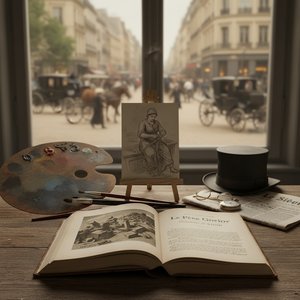 The Enduring Legacy of 19th-Century Realism: A Reflection of Society & Artistic Innovation
Explore the captivating world of 19th-century Realism! Discover key artists, masterpieces & the social commentary behind this influential art movement. Expert insights at .
The mid-19th century witnessed a seismic shift in artistic priorities, a turning away from the idealized forms and romantic narratives that had dominated for generations. This wasn’t merely a stylistic change; it was a philosophical realignment, born from the tumultuous realities of revolution, industrialization, and burgeoning social consciousness. Realism, as this movement came to be known, didn't seek to depict an imagined world but rather the one directly observed – its grit, its beauty, its often-uncomfortable truths. Artists began to focus on everyday life, portraying laborers, peasants, and scenes of contemporary existence with a previously unseen level of honesty. This wasn’t simply about accuracy; it was a deliberate rejection of academic conventions that prioritized historical or mythological subjects over the present moment. The very act of elevating the ordinary to the status of fine art was a radical statement, challenging established hierarchies and prompting viewers to confront the world around them with fresh eyes.
The impulse behind Realism wasn’t solely aesthetic; it was deeply intertwined with political and social critique. Artists like Gustave Courbet, often considered the movement's leading figure, deliberately chose subjects that challenged bourgeois sensibilities. His monumental painting, Burial at Ornans (1849-51), for example, eschewed idealized depictions of death in favor of a starkly realistic portrayal of a provincial funeral – a scene populated by ordinary people, rendered with unflinching detail. This wasn’t intended as a sentimental elegy but rather a powerful statement about the dignity of labor and the importance of acknowledging all members of society. The scale typically reserved for grand historical paintings was applied to this commonplace event, forcing viewers to confront the realities of rural life and question their own preconceived notions of artistic worth.
Degas and the Ballet: Capturing Fleeting Moments in Detail
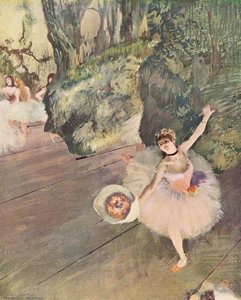
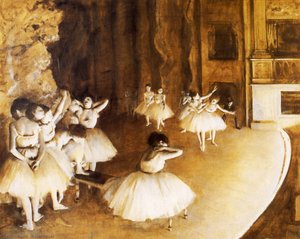 The Ballet Rehearsal on Stage
Delve into Edgar Degas's masterful depiction of ballet rehearsal—a vibrant Impressionist tableau capturing movement and atmosphere at the Musée d’Orsay. Explore its composition, technique & significance.
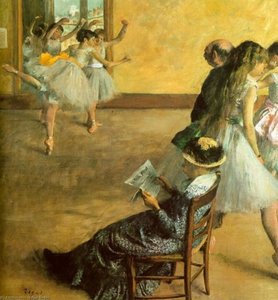
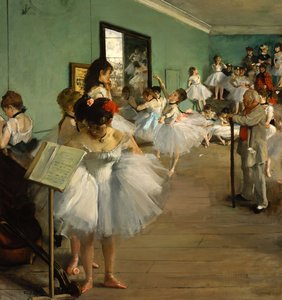
While Courbet focused on the lives of laborers, Edgar Degas found his subject matter within the seemingly glamorous world of the Parisian ballet. However, to portray it as simply a realm of beauty would be a profound misrepresentation. Degas’s fascination lay not with the spectacle itself but with the rigorous discipline, the exhaustion, and the often-precarious lives of the dancers. His numerous paintings, pastels, and sculptures depicting rehearsals and backstage scenes offer an intimate glimpse into this hidden world. What sets Degas apart is his masterful ability to capture movement – the fleeting grace of a pirouette, the tension in a dancer’s muscles, the subtle shifts in posture that reveal years of training.
The Ballet Rehearsal on Stage, exemplifies this focus. It isn't a romanticized vision; it is a study in light and shadow, capturing the dancers in moments of practice, their expressions often focused or strained. Degas’s use of asymmetrical composition and unconventional cropping further enhances the sense of immediacy, as if we are observing these scenes from a hidden vantage point. He wasn’t interested in portraying idealized beauty but rather the raw physicality and dedication required to achieve it. The details – the worn floorboards, the dust motes dancing in the light, the expressions on the faces of the musicians – all contribute to a sense of authenticity that is both captivating and unsettling.
Visual Narrative & the Power of Specificity
A visual narrative (also visual storytelling) is a story told primarily through the use of visual media. This can be images in the mind, digital, and traditional media. The story may be told using still photography, illustration, or film, and can be ...
At its core, Realism championed the power of visual narrative. Artists weren’t simply depicting scenes; they were telling stories through carefully chosen details. Every element within a composition – the clothing, the setting, the gestures of the figures – contributed to a larger meaning. This emphasis on specificity wasn't accidental; it was a deliberate attempt to engage viewers on an intellectual and emotional level. By presenting a world that felt tangible and recognizable, Realist artists invited us to interpret their work, to draw our own conclusions about the social and political forces at play.
Consider how Daumier’s lithograph, Rue Transnonain (1834), functions as a powerful visual indictment of government brutality. The scene depicts the aftermath of a massacre in a working-class neighborhood, focusing on the bodies of innocent civilians. The details – the disarrayed furniture, the expressions of grief and despair, the stark contrast between light and shadow – all contribute to a sense of horror and outrage. This isn’t simply a depiction of violence; it is a carefully constructed narrative that challenges viewers to question authority and confront the injustices of their time. The power lies in its unflinching realism, forcing us to acknowledge the human cost of political conflict.
Naïve Realism vs. Academic Precision: Contrasting Approaches to Representation
 Wikipedia: Naïve realism
In philosophy of perception and epistemology, naïve realism (also known as direct realism, manifest realism or perceptual realism) is the idea that the senses provide us with direct awareness of objects as they really are. When referred to as direct ...
It’s important to distinguish Realism from naïve realism, a philosophical concept that posits our senses provide direct awareness of objects as they truly are. While both approaches value accuracy, their underlying motivations differ significantly. Naïve realism assumes an unmediated connection between perception and reality, whereas Realist artists actively sought to interpret and represent the world through their own subjective lens. Academic precision, on the other hand, prioritized technical skill and adherence to established conventions – often at the expense of emotional truth.
Realism rejected the idealized forms and polished surfaces favored by academic painters in favor of a more direct and unvarnished approach. Artists embraced visible brushstrokes, earthy palettes, and unconventional compositions, prioritizing authenticity over refinement. This wasn’t simply about technical rebellion; it was a deliberate attempt to break free from the constraints of tradition and create a new visual language that could better capture the complexities of modern life. The focus shifted from replicating reality perfectly to conveying its essence – its atmosphere, its emotions, its underlying social dynamics.
The Social Commentary Embedded Within Detailed Observation
Ultimately, the enduring legacy of Realism lies in its ability to seamlessly blend artistic technique with social commentary. The movement’s emphasis on detailed observation wasn't merely a stylistic choice; it was a powerful tool for challenging established norms and prompting viewers to confront uncomfortable truths. By portraying the lives of ordinary people, artists like Courbet and Degas elevated the margins of society to the status of fine art, forcing us to acknowledge their dignity and humanity.
The impact of Realism extends far beyond the 19th century. Its influence can be seen in subsequent movements – from Impressionism’s focus on capturing fleeting moments to Social Realism’s explicit political engagement. Today, as we navigate an increasingly complex world, the lessons of Realism remain profoundly relevant. The ability to observe carefully, to interpret critically, and to tell stories that challenge our preconceived notions is more important than ever. At ArtsDot.com, we are committed to making these masterpieces accessible to all, allowing you to experience the power of detail firsthand and engage with the rich history of art.