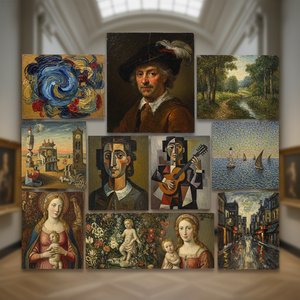
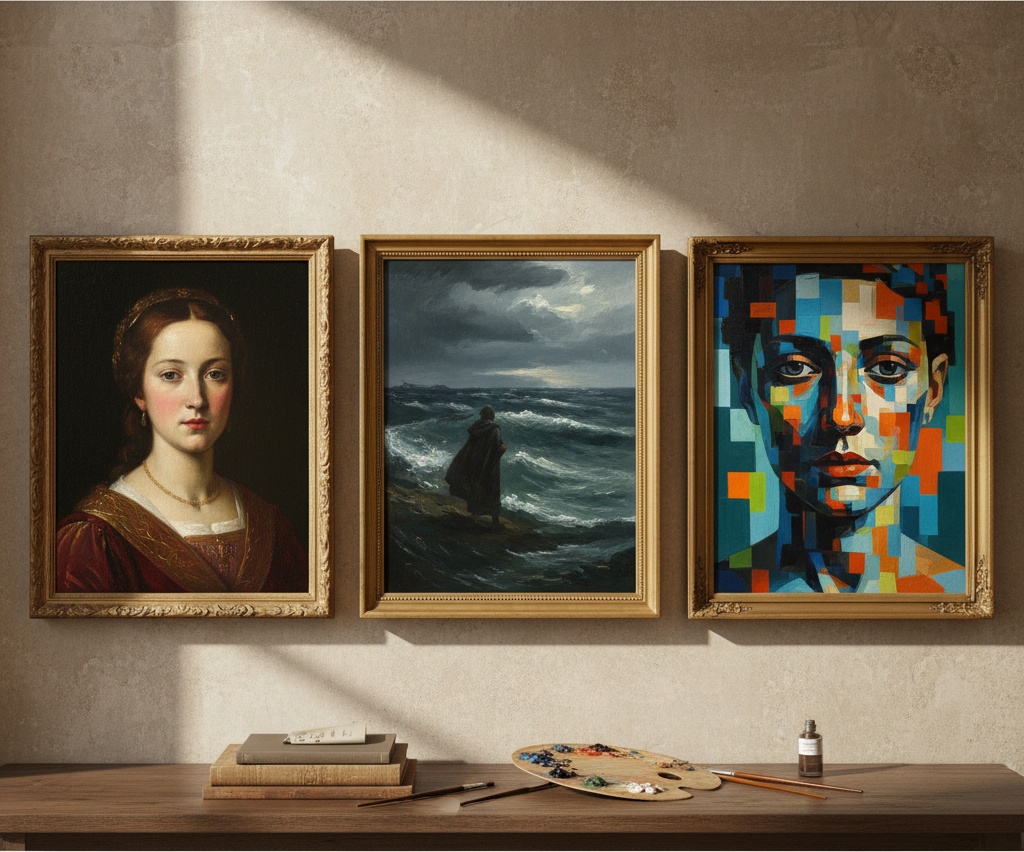
The Roots of Representation: From Prehistoric Caves to Classical Ideals
The impulse to depict the human form, and the world around us, is arguably as old as consciousness itself. Long before written language, humanity found expression in the ochre-stained walls of caves like those at Lascaux and Chauvet, where powerful images of animals – bison, horses, deer – testified not only to hunting prowess but also a profound connection with the natural world. These weren’t merely records; they were imbued with ritualistic significance, perhaps attempts to influence the hunt or commune with ancestral spirits. The rudimentary yet evocative forms hint at an early understanding of shape and perspective, a nascent desire to capture essence rather than photographic detail. This primal urge evolved over millennia, finding increasingly sophisticated expression in the civilizations of Egypt and Mesopotamia. Egyptian tomb paintings, while highly stylized and governed by strict conventions, served as powerful narratives of the afterlife, meticulously documenting the journey of the deceased into eternity. Mesopotamian reliefs, often carved in stone, celebrated kings and gods with a similar focus on symbolic representation – figures were not portraits in our modern sense but embodiments of power and divine authority.
The Greeks, however, revolutionized figurative art by introducing a new emphasis on realism and idealism. Sculptors like Myron, whose Discobolus captures the athlete at the peak of his physical exertion, sought to represent the human form with anatomical precision and poetic grace. This wasn’t simply about replicating appearance; it was about achieving *kalos kagathos* – a harmonious blend of beauty and goodness. The Romans, inheriting Greek artistic traditions, further refined portraiture, imbuing their sculptures with psychological depth and capturing individual character. The Fayum mummy portraits, painted during the Roman period in Egypt, offer particularly striking examples of this realism, providing glimpses into the faces of individuals who lived centuries ago.
Renaissance Humanism & the Flourishing of Figurative Art
The Renaissance witnessed a rebirth – not merely of classical art but of classical thought. Humanism, with its emphasis on human potential and earthly experience, profoundly influenced artistic production. Artists like Leonardo da Vinci, Michelangelo, and Raphael sought to reconcile classical ideals with Christian beliefs, creating works that celebrated both divine beauty and human intellect. Da Vinci’s Mona Lisa remains an enigma, captivating viewers with her subtle smile and the masterful use of *sfumato*, a technique that creates soft transitions between light and shadow. Michelangelo’s David, carved from a single block of marble, epitomized Renaissance ideals of physical perfection and heroic virtue. The rediscovery of linear perspective allowed artists to create increasingly realistic depictions of space, drawing the viewer into the world of the painting.
This period also saw significant advancements in oil painting techniques, pioneered by artists like Jan van Eyck. The ability to render textures with astonishing detail – fur, fabric, glass – opened up new possibilities for realism and symbolism. Van Eyck’s Arnolfini Portrait is a masterpiece of meticulous observation, filled with hidden meanings and subtle details that continue to fascinate art historians today. The patronage of wealthy families like the Medici played a crucial role in fostering artistic innovation, commissioning works that celebrated their power and status.
Challenging Tradition: Realism, Impressionism, and the Dawn of Modernity
By the 19th century, artists began to question traditional academic conventions. The rise of Realism, led by Gustave Courbet and Édouard Manet, challenged idealized representations in favor of depicting everyday life with unflinching honesty. Manet’s Olympia scandalized Salon audiences with its unapologetically modern nude, confronting established norms and challenging the very definition of beauty. This rejection of academic standards paved the way for Impressionism, a movement that sought to capture fleeting moments of light and color.
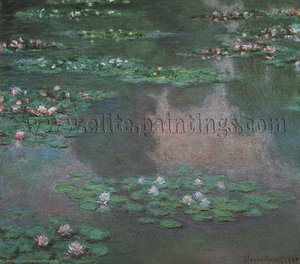
Artists like Claude Monet, Edgar Degas, and Pierre-Auguste Renoir abandoned traditional studio practices in favor of painting *en plein air* – outdoors – capturing the ephemeral effects of sunlight on landscapes and cityscapes. Impressionism wasn’t about precise representation; it was about conveying the subjective experience of seeing. The brushstrokes became visible, textures were loose, and color took precedence over form. This radical departure from tradition marked a turning point in art history, paving the way for even more experimental movements.
Abstract Expressionism & Beyond: The Continued Dialogue with Figuration
The 20th century witnessed an explosion of artistic experimentation. Abstract Expressionism, led by artists like Jackson Pollock and Mark Rothko, rejected representational imagery altogether in favor of pure abstraction. However, even within this movement, the human form continued to exert a subtle influence – Pollock’s drip paintings can be seen as embodying primal energy and emotional intensity, while Rothko’s color fields evoke a sense of spiritual transcendence. The dialogue between figuration and abstraction became increasingly complex throughout the century.
Artists like Francis Bacon distorted the human form to express existential angst and psychological turmoil, while Lucian Freud explored the raw physicality of his subjects with unflinching honesty. Pop Art, led by Andy Warhol and Roy Lichtenstein, appropriated imagery from popular culture, blurring the boundaries between high art and low art. These movements challenged traditional notions of beauty, originality, and artistic skill.
Contemporary Figurative Painting: Diverse Voices and New Perspectives
Today, figurative painting is more diverse than ever before. Artists like Lisa Yuskavage explore sensuality and eroticism with a blend of classical technique and pop culture references, challenging conventional notions of the female nude. Amy Sillman’s vibrant paintings combine abstract and figurative elements in innovative ways, exploring themes of art history and contemporary life. Jaume Mateu Lagrange brings a unique energy to his evocative figures, informed by his background as an actor.
Contemporary artists are also engaging with social and political issues through their work, using figuration to address questions of identity, race, gender, and power. Beatrice Kreloff’s paintings explore tension and balance with bold colors and geometric shapes, creating surreal atmospheres that invite contemplation. The resurgence of figurative painting in recent years suggests a renewed interest in the human form as a vehicle for expression and storytelling.
The Enduring Power of the Human Form: Why Figurative Art Still Matters Today
Despite centuries of experimentation with abstraction and other forms, figurative art continues to resonate with audiences today. Perhaps this is because it taps into something fundamental about the human experience – our innate desire to see ourselves reflected in art, to connect with others through shared emotions and stories. The human form, whether rendered realistically or distorted, abstracted, or stylized, remains a powerful symbol of vulnerability, strength, beauty, and mortality.
At ArtsDot.com, we believe that everyone should have access to the world’s great art. We offer high-quality reproductions of masterpieces from throughout history, allowing you to bring the power and beauty of figurative painting into your home. Explore our collection today and discover the enduring legacy of this timeless art form. From custom oil paintings based on your favorite artists to museum-quality prints, we provide a gateway to experiencing art in its most authentic form. We also offer free art consultations to help you find the perfect piece for your space – visit our consultation page to learn more.