![Scrovegni - Last Judgment (detail) [03] — Giotto Di Bondone](/media/artworks/images-thumb/7d/a9/7da93e3737abc9f37453cee26f9f9796.jpg)
![Scrovegni - Last Judgment (detail) [04] — Giotto Di Bondone](/media/artworks/images-thumb/2c/cc/2cccbf5d66de604df5c3cc5658637344.jpg)

The Twilight of the Medieval: Understanding the Trecento Context
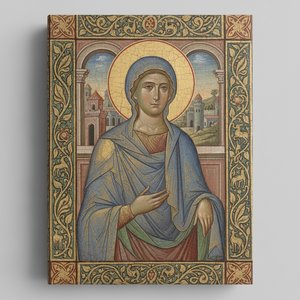
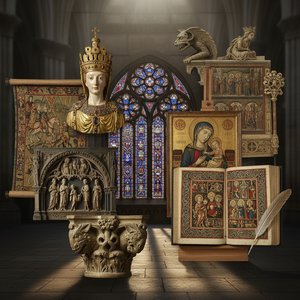
To understand the profound seismic shift that occurred during the Proto-Renaissance, one must first contemplate the heavy, gilded atmosphere of the centuries that preceded it. For much of the Middle Ages, European art was dominated by the Byzantine tradition—a style characterized by its ethereal, two-dimensional flatness and a profound sense of spiritual abstraction. In these works, figures were often suspended in a vacuum of gold leaf, disconnected from the earthly realm, serving as icons rather than inhabitants of a tangible world. The focus was not on the physical reality of the human form, but on the symbolic weight of divine truth.
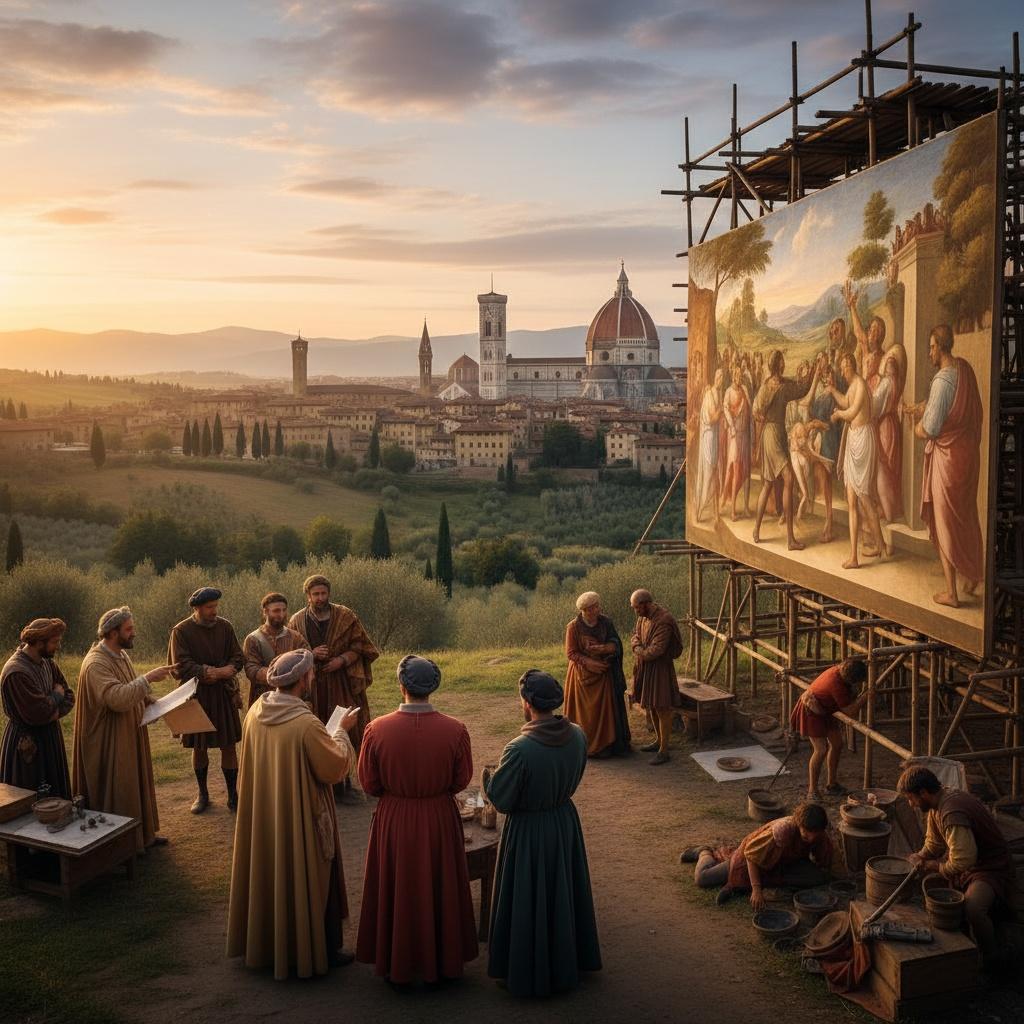
As we enter the Trecento, the fourteenth century in Italy, a subtle yet unstoppable transformation began to stir within the social and economic fabric of the peninsula. The rise of prosperous merchant classes and the burgeoning urban centers of Florence, Siena, and Padua created a new kind of patronage. This era was not merely a prelude to the Renaissance; it was a vital period of transition where the rigid hierarchies of Medieval thought began to grapple with a newfound curiosity about the natural world. It was a time when the boundaries between the celestial and the terrestrial started to blur, setting the stage for an artistic revolution that would forever alter the trajectory of Western civilization.
This era of change provided the fertile soil necessary for a new vision to take root. The transition was not an overnight conquest but a gradual awakening, as artists began to look past the golden icons of the past toward the textures, shadows, and emotions that define our shared human experience.
Giotto di Bondone: The Architect of Emotional Realism
At the heart of this artistic metamorphosis stands a singular, towering figure: Giotto di Bondone. If the Byzantine masters were the poets of the divine, Giotto was the chronicler of the human soul. He possessed an almost miraculous ability to breathe life into pigment and plaster, moving away from the static, symbolic gestures of his predecessors toward a profound emotional realism. In his hands, the sacred figures of Christian iconography were no longer distant, unapproachable deities; they became palpable beings capable of grief, tenderness, and even agony.
Giotto’s genius lay in his mastery of weight and volume. He understood that for a figure to evoke empathy, it must possess a sense of physical presence—a gravitas that suggests the body occupies real space. Through the subtle manipulation of light and shadow, he endowed his subjects with a sculptural quality, making them appear as if they were carved from the very air around them. When one observes his depictions of the Virgin Mary or the Apostles, there is an undeniable sense of anatomical truth, a departure from the weightless silhouettes of the Gothic era that invites the viewer to witness their suffering and their sanctity as if standing in the same room.
Beyond mere technique, Giotto introduced a psychological depth that was unprecedented. He captured the silent language of the eyes, the slumped shoulders of despair, and the interlocked hands of mourning. By anchoring divine narratives in human emotion, he bridged the gap between the viewer and the sacred, creating a visual language that remains as potent today as it was in the fourteenth century.
Breaking the Byzantine Mold: Innovations in Space and Form
The departure from the Byzantine tradition required more than just emotional depth; it demanded a fundamental reimagining of the pictorial plane. The greatest challenge for Proto-Renaissance artists was the conquest of space. In the preceding era, depth was an illusion often ignored in favor of symbolic hierarchy. However, Giotto and his contemporaries began to experiment with the concept of spatial depth, attempting to create a "window" into another world rather than a flat surface decorated with icons.
This innovation involved the rudimentary use of perspective and the introduction of architectural elements that suggested a receding landscape. While not yet the mathematically precise linear perspective perfected by Brunelleschi in the following century, these early attempts at foreshortening and spatial layering were revolutionary. Artists began to place figures within recognizable settings—rocky outcrops, simple dwellings, or draped cloths—that provided a sense of scale and orientation. This nascent understanding of three-dimensional space allowed for a more complex narrative structure, where characters could interact across different planes of depth.
Furthermore, the treatment of light became a tool for defining form rather than just a decorative element. By observing how light falls upon a curved surface or creates soft shadows in a fold of drapery, these artists began to simulate the physical properties of the natural world. This movement toward naturalism broke the Byzantine mold, replacing the static and the symbolic with a dynamic and the tangible, paving the way for the breathtaking realism of the High Renaissance.
The Scrovegni Chapel: A Masterclass in Narrative Fresco
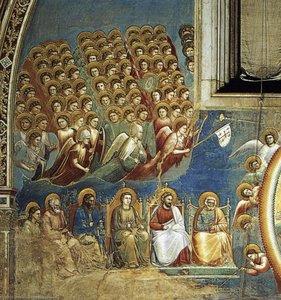
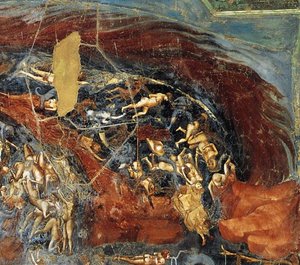
Nowhere is the brilliance of this era more tangibly felt than within the walls of the Scrovegni Chapel in Padua. Commissioned by the wealthy, albeit disgraced, banker Enrico Scrovegni, this cycle of frescoes represents the pinnacle of Giotto’s achievement and serves as a definitive manifesto of the Proto-Renaissance. The chapel is not merely a collection of religious scenes; it is a continuous, immersive narrative that guides the viewer through the profound drama of the life of Christ.
In masterpieces such as The Lamentation (The Mourning of Christ) and Christ Before Caiaphas, we see the full realization of Giotto’s vision. In the Lamentation, the composition is masterfully orchestrated to direct the eye toward the face of the deceased Christ. The surrounding figures—angels in the sky, mourners on the ground—are arranged in a way that creates a sense of cascading grief. The use of color, the heavy folds of the garments, and the raw, unshielded expressions of sorrow create a visceral experience that transcends the medium of fresco.
The Scrovegni Chapel functions as a cohesive universe where every figure contributes to the overarching emotional arc. The innovation lies in how Giotto uses the architecture of the chapel itself to frame his stories, making the viewer an active participant in the sacred drama. It remains one of the most significant sites in art history, a place where the seeds of modern painting were first sown through the medium of monumental storytelling.
Legacy of the Proto-Renaissance: Shaping the High Renaissance
The ripples of the Proto-Renaissance extended far beyond the fourteenth century, acting as the foundational bedrock upon which the entire edifice of the Renaissance was built. The innovations pioneered by Giotto—the emphasis on human emotion, the exploration of spatial depth, and the pursuit of naturalism—became the essential vocabulary for the masters who followed. Without the groundwork laid in the Trecento, the works of Masaccio, Leonardo da Vinci, and Michelangelo would lack their fundamental connection to the physical and emotional reality of the human condition.
The movement established a new standard for what art could achieve: it was no longer just a tool for religious instruction, but a medium for profound intellectual and sensory exploration. The transition from the symbolic to the representational changed the very nature of sight, teaching humanity to look at the world with a renewed sense of wonder and analytical precision. This era taught us that by observing the minute details of life—the way light hits a tear or how a shadow falls across a stone—we can touch upon the universal truths of existence.
As we reflect on this dawn of a new era, we see a legacy of courage. It was the courage to break from tradition, to experiment with the unknown, and to find the divine within the human. The Proto-Renaissance remains a testament to the enduring power of artistic evolution, reminding us that every great revolution begins with a single, transformative vision.
At ArtsDot.com, we are dedicated to preserving and celebrating this magnificent history. Our mission is to bring the profound beauty of the Old Masters into the modern home through exquisite, hand-painted reproductions and museum-quality prints. Whether you seek a meticulously layered oil painting that captures the tactile brushstrokes of Giotto or a high-definition Giclée print for your collection, our artists use academic excellence to ensure every piece retains the soul of the original masterpiece. We invite you to explore our vast library and bring the timeless elegance of art history into your personal space.