The Shimmering Prelude: Beyond the Spontaneity of Impressionism
 The Science of Light: How Seurat and Signac Invented Optical Mixing
The Dissatisfaction with Spontaneity: Moving Beyond Impressionism Chromatic Islands: Exploring the Theory & Legacy of Pointillism in 19th-Century Art The Dawn of Division: Impressionism’s Dissatisfaction & Seurat’s Vision The late 19th century Parisi...
To step into the world of late nineteenth-century Paris is to enter a crucible of profound transformation, where the very air seemed to vibrate with new possibilities. For those of us who have spent decades wandering through the hallowed halls of museums, captivated by the soft, sun-drenched landscapes of Monet or the tender, fleeting moments captured by Renoir, there exists a familiar, breathless beauty in Impressionism. It was an art of the immediate—a beautiful, almost desperate attempt to freeze the transient essence of a passing cloud or the way a single sunbeam dances upon the ripples of a river. Yet, as the decades progressed, a quiet discontent began to stir beneath these luminous surfaces.
While the Impressionists had brilliantly dismantled the rigid hierarchies of academic tradition, replacing somued studio tones with a subjective celebration of light, a younger generation of thinkers felt a growing hunger for something more permanent. They looked upon the spontaneous, almost arbitrary application of pigment used by their predecessors and saw, perhaps, a lack of underlying structure. For these emerging artists, the ephemeral beauty of the moment was not enough; they sought to ground the fleeting sensation in a cohesive, intellectual foundation. This was not a rejection of the Impressionist spirit, but rather a sophisticated evolution—a transition from the subjective impression toward a structured, almost mathematical exploration of visual reality.
The Science of Sight: Decoding Optical Mixing and Chromoluminarism
 Divisionism
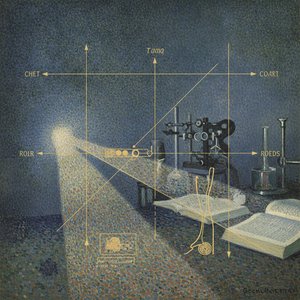
Divisionism, also called chromoluminarism, is the characteristic style in Neo-Impressionist painting defined by the separation of colors into individual dots or patches that interact optically. By requiring the viewer to combine the colors optically ...
As we delve deeper into this era, we encounter a fascinating intersection where the romanticism of art met the rigorous precision of science. This was the dawn of Neo-Impressionism, a movement that replaced random spontaneity with a measured technique grounded in the study of optics. The pioneers of this movement were not merely painters; they were explorers of the physics of vision. They turned their gaze toward the contemporary scientific treatises of figures like Michel Eugène Chevreul and Ogden Rood, finding in them the keys to unlocking a new kind of luminosity.
The core of this revolution lay in the concept of mélange optique, or optical mixture. Rather than physically blending pigments on a palette—a process that can often lead to a muddying of tones—these artists applied small, distinct dots or patches of pure color directly onto the canvas. They believed that by placing contrasting colors in close proximity, the colors would interact within the viewer's own eye and brain. This method, often referred to as Divisionism or chromoluminarism, aimed to achieve a maximum vibrancy and a pulsating shimmer of light that traditional blending simply could not replicate. It was an attempt to systematize beauty, turning the canvas into a laboratory of light where every dot served a calculated purpose in the creation of a luminous whole.
Georges Seurat: The Architect of Light and Structure
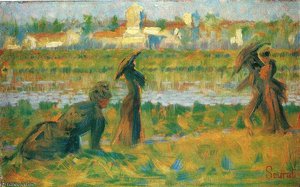
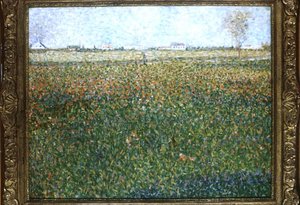 The Poppy Field, 1884
Introduction to the Painting and its Artist Georges Pierre Seurat , a French Post-Impressionist artist, is renowned for his innovative technique known as Pointillism. This method involves applying small dots of pure color onto the canvas, which blend...
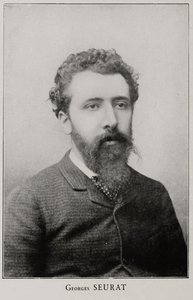
At the heart of this scientific revolution stood Georges Seurat, a figure whose brief but meteoric career fundamentally altered the course of modern art. If Impressionism was a poem written in haste, Seurat’s work was an epic composed with architectural precision. He possessed a singular vision to move beyond the momentary and toward the monumental. His approach was characterized by a disciplined ambition, seeking to capture the essence of light through a rigorous, almost mathematical arrangement of color.
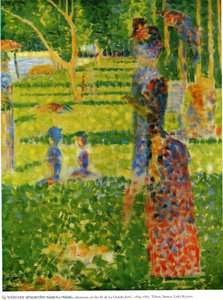
When one stands before his masterpieces, such as the iconic A Sunday on La Grande Jatte or the serene The Poppy Field, the effect is nothing short of hypnotic. In The Poppy Field, created in 1884, we see Seurat’s mastery at its peak; a tranquil pathway lined with vibrant red poppies leads the eye into a dreamlike distance, constructed through a meticulous application of color. There is a profound sense of stillness and permanence in his work, a structural integrity that provides a weight to the light itself. Through his use of simultaneous contrast, Seurat created a landscape that feels both mathematically structured and vibrantly alive, inviting the viewer to lose themselves in a world where every point of light is a deliberate stroke of genius.
Paul Signac: The Visionary Explorer of Color Harmony
 Paul Signac
The Harmonious Vision of Paul Signac Paul Victor Jules Signac, born in Paris in 1863, emerged as a pivotal figure in the evolution of modern art, inextricably linked to the birth and development of Neo-Impressionism. Initially drawn to architecture, ...
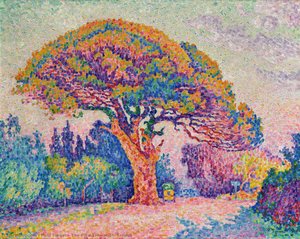
While Seurat provided the structural foundation, Paul Signac emerged as the movement's great explorer and its most dedicated communicator. Initially drawn to the world of architecture, Signac’s encounter with the works of Monet ignited a passion that would eventually lead him to redefine color theory through a more expansive, harmonious lens. If Seurat was the architect, Signac was the poet of color harmony, pushing the boundaries of Divisionism toward even greater brilliance.
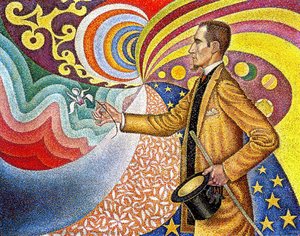
Signac’s partnership with Seurat in the mid-1880s was transformative, as they worked together to translate scientific principles into a revolutionary aesthetic. His works, such as Boulevard de Clichy, showcase a commitment to capturing the vibrancy of modern life through a scientific lens, using larger, more mosaic-like strokes that allowed color to breathe and dance across the canvas. Signac believed that by separating elements, they could be reconstituted into brilliantly colored lights. His dedication to the pursuit of light and his ability to find harmony in the separation of pigment ensured that Neo-Impressionism would not remain a mere technical experiment, but would become a profound way of seeing the world.
The Legacy of the Dot: How Neo-Impressionism Reshaped Modern Vision
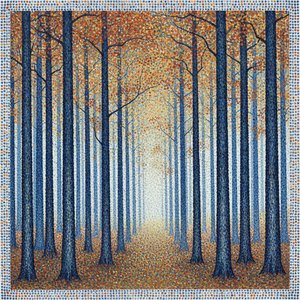 Élise Schmitt
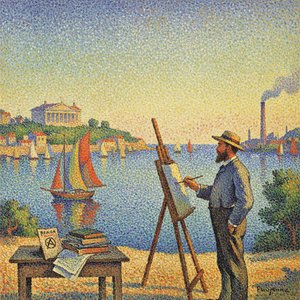
A Modern Legacy of Pointillism Born in 1974 and currently based in the vibrant cultural landscape of Lyon, Élise Schmitt has dedicated her entire creative practice to a rigorous revival of the Neo-Impressionist tradition. Her work serves as a profoun...
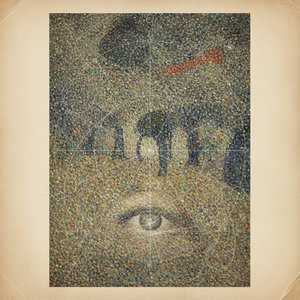
The ripples of the Pointillist revolution extend far beyond the late nineteenth century, touching the very soul of modern art. The movement’s emphasis on the autonomy of color and the importance of optical perception paved the way for the abstraction and structural experimentation of the twentieth century. We see its echoes in the works of artists like Henri Edmond Cross, whose life was a journey through light and color, and even in the contemporary reinterpretations by digital masters who use the meticulous arrangement of dots to breathe new life into the Neo-Impressionist tradition.
Today, when we gaze upon these works, we are not just looking at paint on canvas; we are participating in a historical dialogue between science and emotion. The legacy of Seurat and Signac reminds us that beauty can be found in the most disciplined of structures and that light, when understood through the lens of precision, can achieve a transcendence that defies time. It is a testament to the enduring power of art to evolve, to challenge our perceptions, and to forever change the way we witness the shimmering world around us.
At ArtsDot.com, we hold a profound reverence for this era of artistic brilliance. Our collection is curated exclusively for those who share a lifelong passion for the masters of light—from the soft textures of Monet to the structured luminosity of Seurat. We specialize in providing museum-quality, hand-painted oil reproductions that capture the true soul, texture, and visible brushstrokes of these legendary works. Whether you are looking to adorn your home with a breathtaking piece of history or seeking a custom commission that reimagines a personal memory in the style of the masters, we invite you to explore our dedicated world of Impressionist and Post-Impressionist excellence.