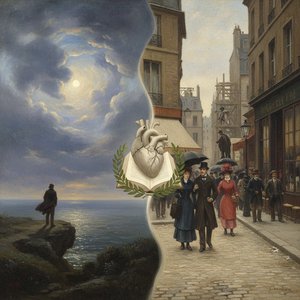
The Poetic Truth: Defining the Duality of Romantic Realism
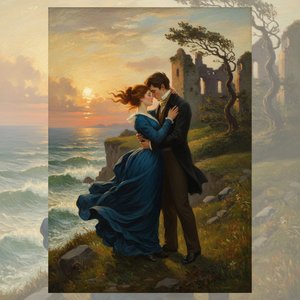 The Evocative Embrace of Reality: Exploring Romantic Realism in 19th-Century Painting
Introduction: Beyond Idealization – The Rise of Romantic Realism The Poetic Truth of Observation: Exploring 19th-Century Realism in Painting Explore the captivating world of 19th-century Realism! Discover key artists like Courbet & Millet, masterpiec...
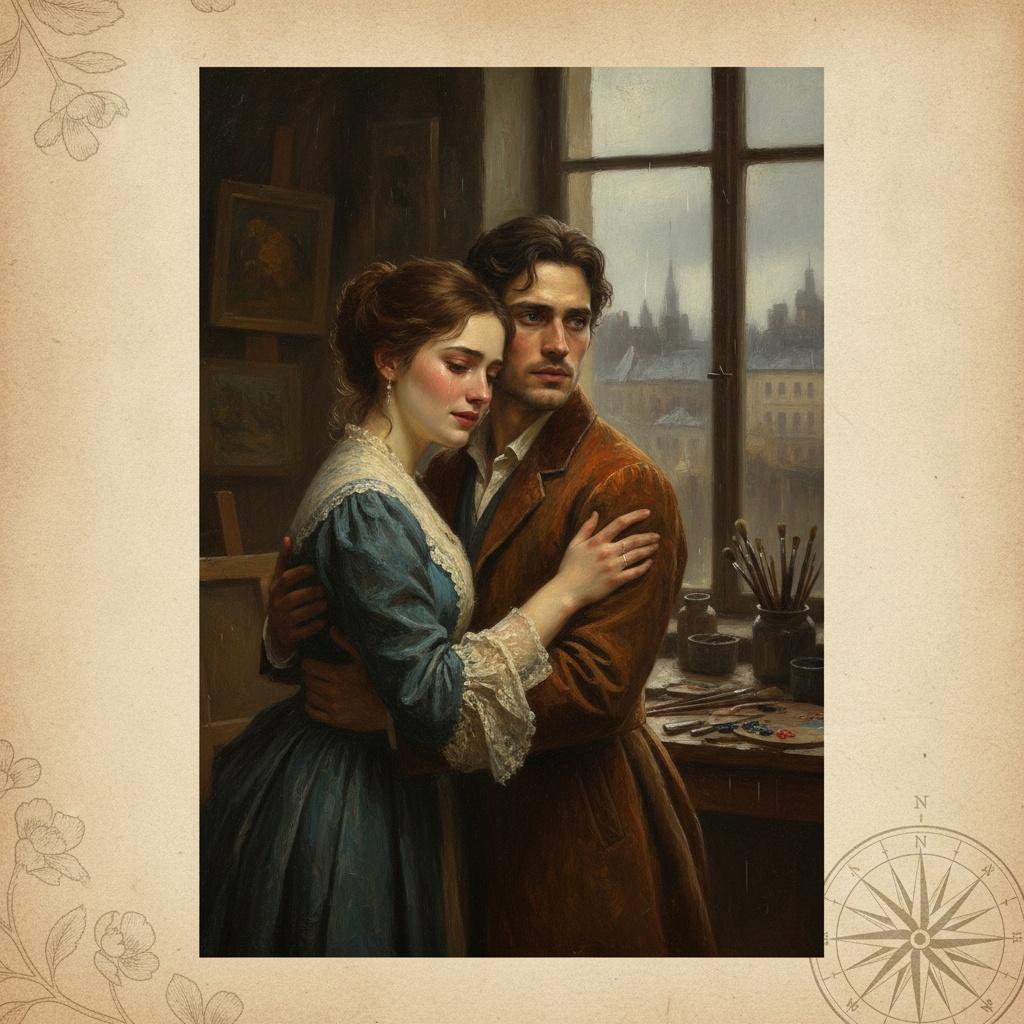
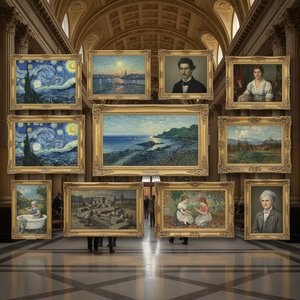
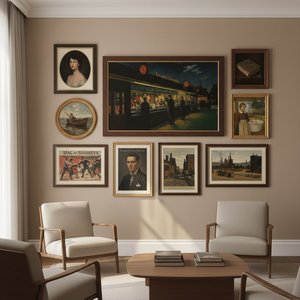
To step into the world of Romantic Realism is to enter a space suspended between the tangible and the transcendent, where the boundaries of dream and reality softly dissolve. For those of us who have spent decades wandering through the hallowed halls of museums, we recognize that this movement was never merely a stylistic choice; it was a profound philosophical reconciliation. Emerging in the mid-19th century, Romantic Realism arose as a delicate bridge between two seemingly opposing forces: the raw, unvarnished truth of the Realist movement and the evocative, subjective passion of Romanticism. While the strict Realists sought to document the world with an almost scientific accuracy—rejecting the exotic and the supernatural in favor of the contemporary and the mundane—the Romantic Realists refused to let the soul be lost in the pursuit of fact.
This movement sought a middle ground, a poetic truth that acknowledged the external world as it truly appeared while simultaneously honoring the internal landscape of the human spirit. It was a reaction against both the rigid, idealized forms of Neoclassicism and the cold, industrializing pulse of a rapidly changing Europe. In the works of this era, we find a beautiful tension; there is a meticulous observation of texture, light, and form, yet every brushstroke is infused with an unmistakable emotional charge. It was not enough to simply paint a tree or a face; the artist felt compelled to convey the weight of the atmosphere surrounding them, the quiet anxiety of a passing shadow, or the silent grace found in a moment of solitude.
Beyond the Surface: The Emotional Landscape of 19th-Century Mastery
 Romantic Realism's Finest: 10 Masterpieces for Your Home | ArtsDot
Introduction To gaze upon these ten masterpieces is to step into a world suspended between dream and reality, where the raw power of human emotion collides with meticulous observation. The Romantic Realism movement, though relatively short-lived, lef...
When we gaze upon the masterpieces of this period, we are not merely looking at depictions of life; we are witnessing an exploration of the individual psyche. The true brilliance of Romantic Realism lies in its ability to use the physical world as a vessel for profound psychological depth. Artists did not shy away from the complexities of human existence—the fears, the hopes, and the quiet, often heartbreaking, moments of grace that define our mortality. There is a palpable sense of intimacy in these works, as if the viewer has been granted access to a private thought or a whispered secret.
Consider the way certain masters approached the concept of memory and loss. In the hauntingly beautiful landscapes or the tender portraits of the era, one can sense an underlying awareness of the passage of time. The movement flourished amidst political unrest and social upheaval, and this turbulence is reflected in the canvases through a heightened sensitivity to mood. It was a period where the artist’s role shifted from that of a mere recorder to that of an interpreter, translating the visible world into a language of feeling. This era left an indelible mark on art history because it dared to suggest that the most profound truths are often found not in grand historical narratives, but in the subtle, emotional resonances of our everyday experiences.
Light and Shadow: Capturing Atmosphere through Meticulous Observation
 Autumn impassability of roads
Kuindzhi’s "Autumn Impassability of Roads" – a haunting 1872 oil painting depicting winter's bleak beauty. Romantic realism & dramatic light. Explore this iconic Russian landscape artwork.
The technical mastery required to achieve such emotional depth is nothing short of extraordinary. The hallmark of a true Romantic Realist is the ability to employ meticulous observation to serve an atmospheric purpose. This is perhaps most evident in the treatment of light—a technique that often draws comparisons to the legendary
Rembrandt lighting, where a single, purposeful light source creates a dramatic interplay of illumination and deep, velvety shadow. By sculpting forms with light, artists could direct the viewer's eye not just to the subject, but to the very mood they intended to evoke.
In the works of landscape painters like Arkhip Kuindzhi, we see this mastery of light used to create a sense of the sublime. His ability to capture the dramatic, almost supernatural glow of a setting sun or the bleak, heavy beauty of an autumn road demonstrates how light can transform a literal scene into an emotional experience. Similarly, the use of rich, impasto textures—where the paint itself rises from the canvas in visible, tactile layers—adds a physical dimension to the atmosphere. This texture allows the light to catch on the ridges of the brushwork, creating a sense of movement and life that a flat surface could never achieve. It is through this careful manipulation of the medium that the artist achieves a sense of presence, making the painted world feel as though it is breathing alongside the viewer.
The Human Condition: Dignity and Pathological Grace in Everyday Life
 Old People
A Moment Frozen in Time: Exploring Carl Heinrich Bloch’s ‘Old People’ Carl Heinrich Bloch's 'Old People,' completed in 1874, transcends mere depiction; it embodies the profound sorrow and unwavering devotion inherent in confronting mortality. Painted...
Perhaps the most moving aspect of Romantic Realism is its profound respect for the dignity of the ordinary. While earlier traditions often reserved "high art" for kings, gods, and heroes, the artists of this movement turned their gaze toward the laboring classes, the rural poor, and the quiet corners of urban existence. There is no attempt to idealize these subjects; instead, they are presented with a startling honesty that elevates their struggles and their simple joys to the level of the monumental.
In the works of Carl Heinrich Bloch, for instance, we encounter scenes of profound sorrow and unwavering devotion. His ability to capture the quiet dignity found within the face of grief or the tenderness of familial bonds serves as a testament to the movement's core belief: that there is beauty to be found in the mundane and power in vulnerability. Even in more somber depictions, such as Paul Gustave Doré’s explorations of confinement and suffering, the artist uses meticulous detail to ensure that the human element remains at the forefront. The subjects are not mere symbols of social commentary; they are individuals with palpable histories and enduring spirits. This focus on the "unidealized" subject allowed for a new kind of empathy, inviting the viewer to recognize their own humanity within the faces of those long gone.
A Legacy of Feeling: How Romantic Realism Influenced Modern Sensibilities
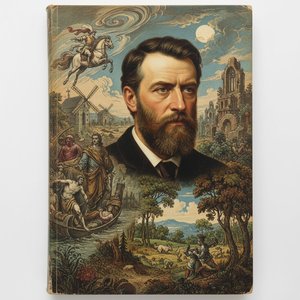 Paul Gustave Doré: A Master of Romantic Realism & the Illustrated Imagination
Early Life & Artistic Formation: The Prodigy from Strasbourg Wikipedia: Illustration An illustration is a decoration, interpretation, or visual explanation of a text, concept, or process, designed for integration in print and digitally published medi...
As we reflect on the journey through Romantic Realism, we realize that its influence extends far beyond the 19th century. The movement’s insistence on the validity of subjective experience, paired with a commitment to technical excellence, laid the essential groundwork for much of modern art. It taught us that the artist's eye is not just a tool for imitation, but a lens for interpretation. This duality—the marriage of the seen and the felt—continues to resonate in how we perceive beauty and truth in the contemporary world.
Today, when we find ourselves moved by a photograph that captures a fleeting moment of light, or a portrait that seems to stare directly into our souls, we are experiencing the enduring legacy of this era. The movement reminds us that even in an age of rapid technological change and digital perfection, there is an irreplaceable value in the "imperfect" truth of human emotion. It encourages us to look closer at the world around us, to find the extraordinary within the ordinary, and to cherish the profound beauty that exists in the delicate balance between what we see and what we feel.
At
ArtsDot.com, we share this lifelong passion for the masters. Our mission is to bring the soul of these incredible eras into your home through authentic, hand-painted reproductions. Whether you seek a custom portrait that captures a personal milestone or wish to "remix" history by having a modern photo reimagined in the luminous style of the great Impressionists, our master artists are dedicated to preserving the tactile depth and emotional resonance of every brushstroke. We invite you to explore our collection and find a piece that speaks to your own journey through art.