
The Baroque Earthquake: Embracing Drama, Light, and Divine Grandeur
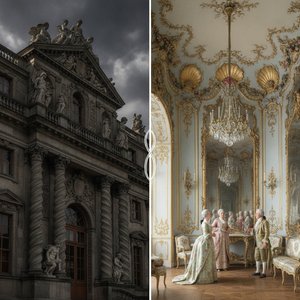 Baroque vs. Rococo: A Definitive Guide to the Drama of Grandeur and the Elegance of Grace
The Baroque Era: A Symphony of Drama, Light, and Divine Grandeur Baroque Masterpieces: 10 Paintings That Defined an Era | Introduction To gaze upon the masterpieces of the Baroque is to step into a world ablaze with drama, emotion, and an almost over...
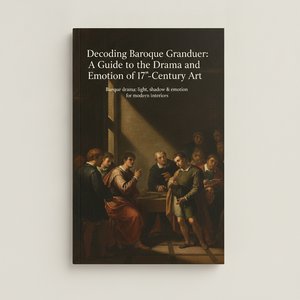
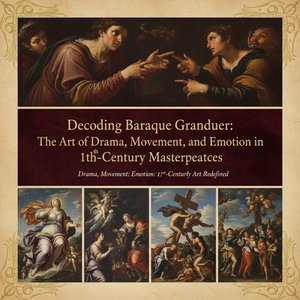
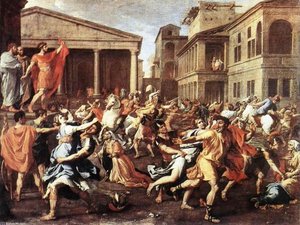
To step into the world of the Baroque is to surrender oneself to a sensory whirlwind, a profound departure from the tranquil, balanced harmonies that defined the Renaissance. Emerging at the dawn of the 17th century, this movement was far more than a mere stylistic shift; it was a seismic cultural earthquake that reshaped the very fabric of European consciousness. Born amidst the religious fervor of the Counter-Reformation, the Baroque served as a visual instrument for the Catholic Church, designed to reassert divine authority through overwhelming spectacle and emotional intensity. It was an era where art did not merely sit upon a wall; it reached out to touch the viewer, demanding engagement through movement, complexity, and a profound sense of awe.
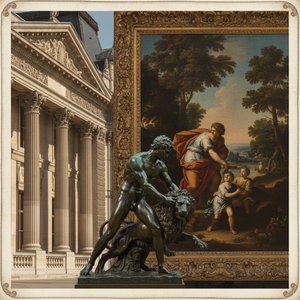
This period embraced the monumental and the magnificent, moving away from static perfection toward a style brimming with dynamism. Whether through the soaring, asymmetrical towers of church façades or the sweeping narratives of grand altarpieces, the Baroque sought to capture the heartbeat of a changing world. It was a time of intense spiritual tension and political upheaval, where the arts—from music and dance to architecture and painting—conspired to create a sense of eternal transition. In every brushstroke and sculpted curve, there lies an unapologetic embrace of grandeur, intended to leave the observer breathless in the face of the divine.
Chiaroscuro and Emotion: The Masterful Shadows of the 17th Century
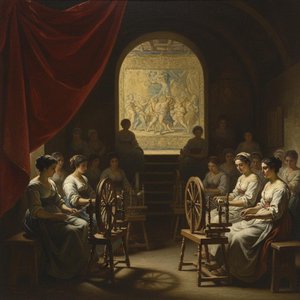
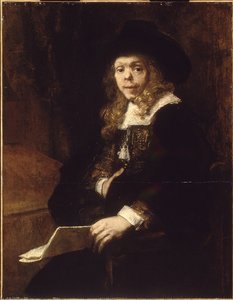 gérard de lairesse
Gérard de Lairesse: A Leading Figure of Belgian Baroque Art Gérard de Lairesse (1640-1711) was a prominent Belgian painter who significantly contributed to the development and flourishing of Baroque art during the 17th century. Born in Liège, Belgium...
The true heartbeat of Baroque artistry lies in its mastery of chiaroscuro—the dramatic, almost cinematic interplay between deep, impenetrable shadows and piercing, brilliant light. This technique allowed masters to sculpt figures out of darkness, imbuing every scene with a visceral immediacy that felt raw and real. We see this profound use of light in the works of legends like Caravaggio, whose revolutionary naturalism used light as a divine protagonist, highlighting the muscularity of saints and the stark reality of human suffering. This was not an art of idealized beauty, but one of psychological depth and physical presence.
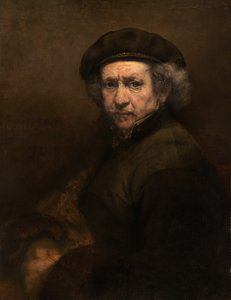
This mastery extended through the decades, influencing artists such as Gérard de Lairesse, whose Belgian Baroque compositions utilized light and shadow to create volume and heightened drama. Even in the more decorative traditions, the tension between light and dark remained central. The influence of Rembrandt’s psychological depth and the intense energy of the Italian masters ensured that every canvas became a stage for human emotion. In this era, light was never merely a way to illuminate a subject; it was a tool used to evoke the very essence of the soul, creating a sense of movement even in the most solemn religious subjects.
From Majesty to Playfulness: The Delicate Transition into Rococo
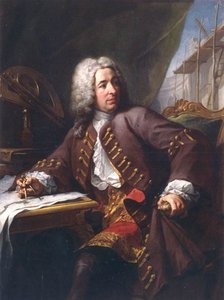 gabriel-germain boffrand
Gabriel Germain Boffrand: Bridging Baroque and Rococo’s Legacy Gabriel Germain Boffrand (1667-1754) stands as a pivotal figure in French art history, marking the transition between the grandeur of Baroque architecture and the playful exuberance of Ro...
As the 18th century dawned, the heavy, dramatic weight of the Baroque began to soften, giving way to a new aesthetic that favored grace over grandeur. This transition was not a sudden break but an evolution, moving from the intense, often turbulent energy of the late 17th century toward something more intimate and light-filled. The rigid, formal structures of the Louis XIV style began to feel restrictive, prompting a desire for an art form that celebrated leisure, beauty, and the delicate nuances of aristocratic life. It was a shift from the theatricality of power to the elegance of pleasure.
This period of transition saw figures like Gabriel Germain Boffrand bridging the gap between two worlds. Having trained under the masters of Baroque architecture, Boffrand inherited an emphasis on monumental scale and ornamentation, yet he simultaneously embraced the innovations that would define a new era: delicate curves, pastel palettes, and an obsession with illusionistic decoration. This era marked the beginning of a movement that would trade the heavy shadows of the previous century for a world bathed in soft, luminous light, where the focus shifted from the divine and the monumental to the personal and the delightful.
Rocaille and Radiance: Exploring the Intimacy of the Rococo Aesthetic
 Rococo
Rococo, less commonly Roccoco ( rə-KOH-koh, US also ROH-kə-KOH; French: [ʁɔkɔko] , also [ʁokoko]), is a Western style of architecture, art, and decoration that emerged in France in the 1730s as a reaction against the Louis XIV style. It is characteri...
The Rococo era, flourishing primarily in France during the 1730s, represents the pinnacle of artistic delight. Characterized by extensive ornamentation and fluid, asymmetrical curves, it abandoned the symmetry of its predecessor in favor of a more flexible and visually engaging style. The very name "Rococo" finds its roots in rocaille—the shell- and pebble-like motifs that adorned the decorative arts. This was an era of asymmetry, lightness, and charm, where the heavy gilding of the Baroque was replaced by soft pastels, whites, and shimmering golds.
In Rococo art, we find a celebration of beauty for its own sake. The themes shifted toward aristocratic leisure, mythological romance, and the playful whimsy of nature. Unlike the Baroque, which sought to overwhelm with scale, the Rococo sought to enchant through intimacy. Through the use of trompe-l'œil frescoes and intricate stucco work—such as the breathtaking designs by Johann Baptist Zimmermann—spaces were transformed into immersive environments of beauty and contemplation. It was a world of light, air, and delicate movement, designed to foster a sense of joy and aesthetic pleasure.
A Legacy of Ornamentation: How Baroque and Rococo Shaped European Interiors
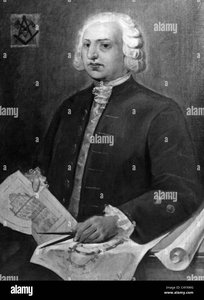 dominikus zimmermann
Early Life and Artistic Roots Dominikus Zimmermann, born in the humble village of Gaispoint near Wessobrunn, Bavaria, in 1685, emerged from a family deeply entrenched in the artistic traditions of Southern Germany. The Zimmermanns were part of the re...
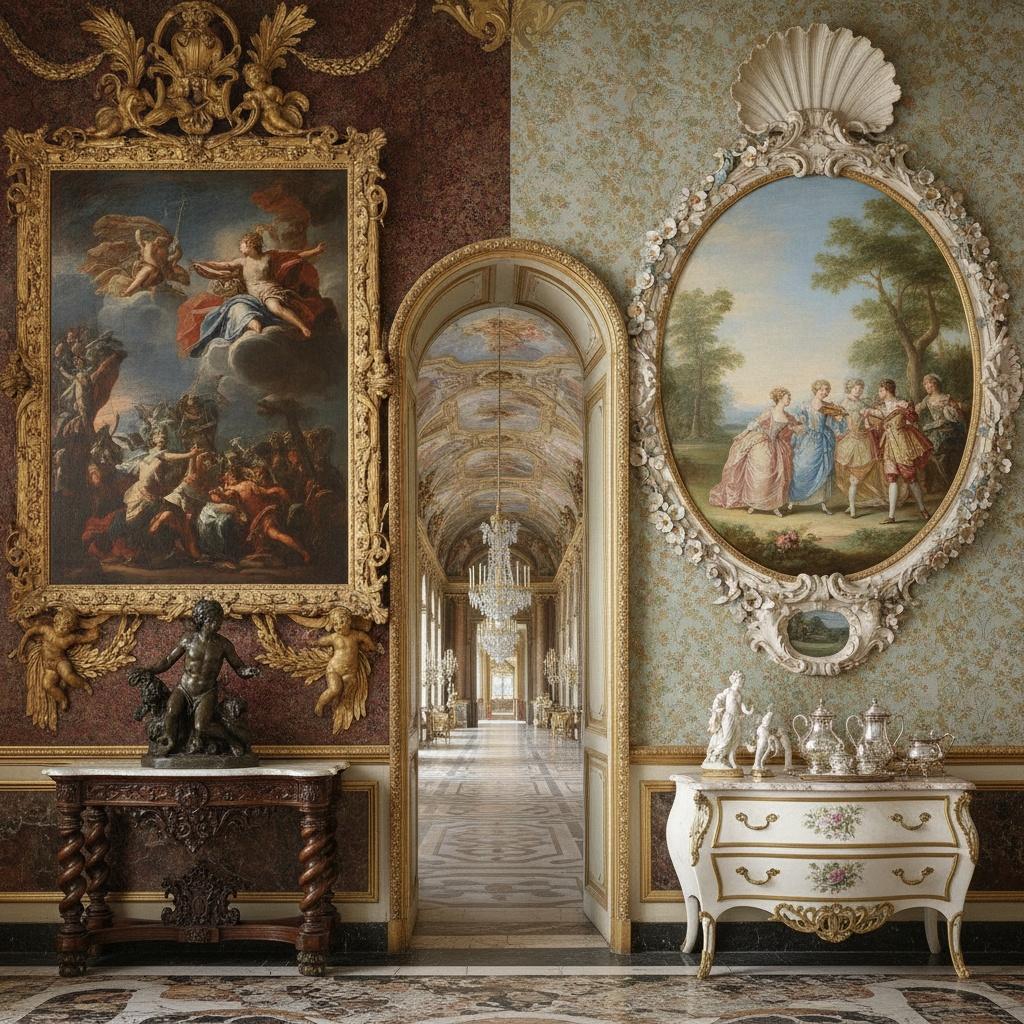
The architectural and decorative legacies of these two eras continue to haunt the most beautiful spaces in Europe. From the breathtaking grandeur of the New Schleißheim Palace near Munich to the beautifully preserved Baroque gems found in Bavarian churches like the Former Augustinian Church in Weyarn, the influence of these styles is unmistakable. These structures were designed as total works of art, where architecture, sculpture, and painting merged into a single, cohesive experience of splendor.
- The Use of Stucco and Relief: The intricate work of the Wessobrunner School, including masters like Dominikus Zimmermann, brought a sculptural dimension to walls and ceilings.
- The Integration of Light: The use of large-scale windows and mirrors to amplify the natural light essential for both Baroque drama and Rococo radiance.
- Ornamental Motifs: The enduring popularity of cartouches, trophies, and floral garlands that add texture and historical depth to a room.
Timeless Splendor: Bringing the Drama of the Old Masters into the Modern Home
 Rococo's Radiant Legacy: 10 Masterpieces for Your Home |
Introduction Imagine stepping into a world bathed in soft light, where delicate curves replace rigid lines and playful scenes of love, leisure, and mythology unfold before your eyes. This is the essence of Rococo – an artistic revolution that swept a...
While centuries have passed since the height of the Baroque and Rococo, their emotional resonance remains undiminished. For the modern collector or lover of art, these styles offer a way to infuse a contemporary space with history, soul, and character. Whether it is the commanding presence of a large-scale oil reproduction capturing the chiaroscuro of the 17th century or the light, airy charm of a Rococo-inspired landscape, these works serve as windows into an era of unparalleled craftsmanship.
At ArtsDot.com, we believe that such profound beauty should be accessible to all. We specialize in creating museum-quality, hand-painted oil reproductions that honor the techniques of the masters. Our artists, holding degrees from prestigious academies, meticulously recreate the visible brushstrokes and deep tonal ranges that define these eras—ensuring that the drama of the Baroque and the delight of the Rococo can live on within your own home. Whether you seek a custom "remix" of a classic or a faithful reproduction of a beloved masterpiece, we invite you to bring the grandeur of history into your modern sanctuary.