The Genesis of a New Aesthetic: A Rebellion Against Industrial Rigidity
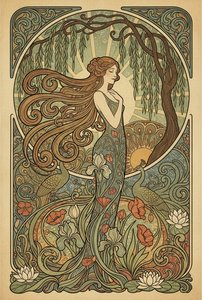 The Flowing Line & Flourishing Form: Exploring Art Nouveau's Aesthetic Legacy
The Genesis of a New Aesthetic: Art Nouveau's Rejection of Tradition The late 19th century was a period of profound upheaval, a time when the rigid structures of Victorian society and academic art were beginning to feel stifling. A yearning for authe...
To understand the soul of Art Nouveau, one must first listen to the quiet discontent that echoed through the late 19th century. It was a period of profound upheaval, where the relentless march of the industrial age began to cast long, soot-stained shadows over the European landscape. As factories rose and mass production threatened to strip the world of its unique character, a group of visionary artists felt a deep, spiritual yearning for authenticity. They looked upon the rigid, stifling structures of Victorian society and the repetitive academicism of the era's art with a sense of profound exhaustion. This was not merely a desire for a new style, but a philosophical rebellion—a search for a visual language that could reconnect the human spirit with the rhythms of the living world.
This movement, often referred to as New Art, sought to break free from the heavy chains of historical imitation. For decades, artists had been bound by Neoclassicism and the Gothic Revival, constantly looking backward to find inspiration in the ruins of the past. Art Nouveau, however, turned its gaze toward the present and the eternal cycles of nature. Drawing strength from the Arts and Crafts movement’s reverence for skilled labor and the delicate, dreamlike explorations of Symbolism, this new aesthetic emerged as a rejection of the dehumanizing effects of mechanization. It was an invitation to embrace originality and dynamism, creating a world where every object, no matter how small, could be a vessel for beauty and meaning.
Nature's Sinuous Grace: Exploring the Whiplash Line and Organic Motifs
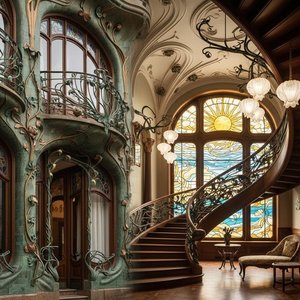 Art Nouveau: The Elegant Fusion of Nature and Design – A Journey Through Organic Sophistication
The Essence of Art Nouveau: A Symphony of Organic Lines and Natural Forms To step into the world of Art Nouveau is to enter a realm where the rigid boundaries between the man-made and the natural dissolve into a singular, flowing grace. Emerging at t...
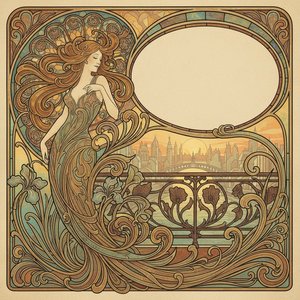
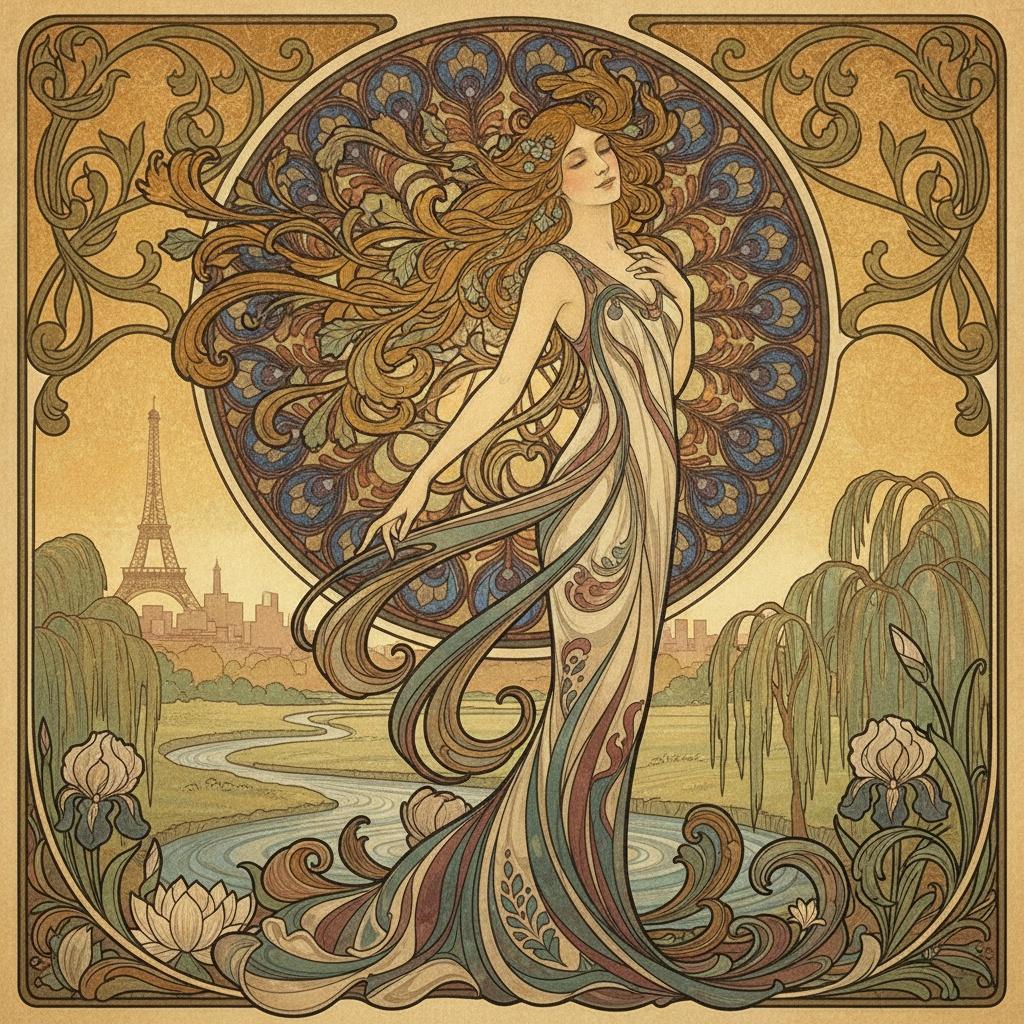
At the very heart of this movement lies a fascination with the undulating, rhythmic curves found in the natural world. If one were to trace the essence of Art Nouveau, one would find it in the whiplash line—a sudden, energetic curve that mimics the movement of a vine or a breaking wave. This sinuous grace allowed artists to dissolve the hard boundaries between the man-made and the organic. In this realm, the distinction between a structural pillar and a growing stem begins to blur, creating a sense of continuous, flowing life that breathes within the very architecture of our surroundings.
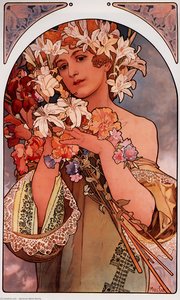
The motifs of this era are a symphony of botanical elegance. One might encounter the delicate petals of lilies, the twisting tendrils of ivy, or the intricate patterns of dragonflies, all rendered with a sense of movement and vitality. These were not merely decorative flourishes; they were symbolic language. The use of asymmetry and organic forms provided a sense of dynamism that straight lines simply could to offer. By embracing the irregular, beautiful shapes of plants and flowers, Art Nouveau artists captured a sense of growth and rebirth, ensuring that even in an age of iron and glass, the soft, pulsing heartbeat of nature remained ever-present.
The Belle Époque Spirit: Art Nouveau as the Soul of an Era
 Belle Époque
The Belle Époque (French pronunciation: [bɛlepɔk]) or La Belle Époque (French for 'The Beautiful Era') was a period of French and European history that began after the end of the Franco-Prussian War in 1871 and continued until the outbreak of World W...
To speak of Art Nouveau is to evoke the shimmering atmosphere of the Belle Époque—the "Beautiful Era." This was a time of unprecedented optimism, economic prosperity, and cultural flowering that spanned from the late 1800s until the tragic onset of the First World War. In cities like Paris, the air seemed charged with a new sense of possibility. It was an era of light and luxury, where the invention of the Métro and the grandeur of the Universal Expositions brought a sense of modern magic to the streets. Art Nouveau became the visual heartbeat of this period, capturing the opulent spirit of a society that dared to dream of a more harmonious existence.
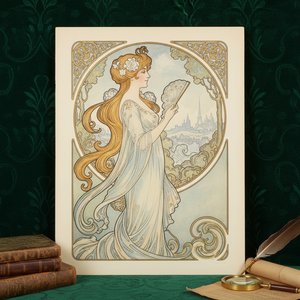
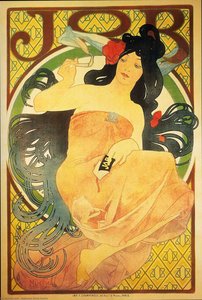
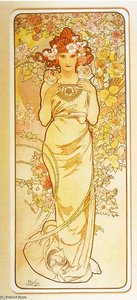
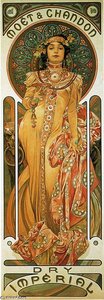
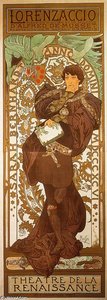
This era was characterized by a profound belief in progress, yet it remained deeply rooted in romantic ideals. The art of the time reflected a world of refined luxury and exquisite craftsmanship, where even an advertisement for champagne could be transformed into a masterpiece of fine art. Through the works of masters like Alphonse Mucha, we see the Belle Époque through a lens of idealized beauty—women adorned with floral crowns, draped in fabrics that echo the curves of the natural world, embodying a sense of serenity and grace. It was a period where art was not confined to galleries but was integrated into the very fabric of daily life, turning urban landscapes into havens of aesthetic delight.
Mastering the Decorative Arts: From Alphonse Mucha to Architectural Marvels
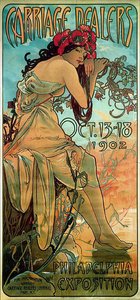 Carraige Dealers
Admire Alphonse Mucha's 'Carriage Dealers'! This Art Nouveau masterpiece showcases flowing lines, floral motifs, and a captivating female figure – a timeless symbol of beauty & prosperity. Own a piece of art history!
The true genius of Art Nouveau lay in its pursuit of the Gesamtkunstwerk, or the "total work of art." The movement sought to erase the traditional hierarchy that placed painting and sculpture above the decorative arts. In this unified vision, a chair, a lamp, a piece of jewelry, and a building were all equally worthy of artistic mastery. This holistic approach transformed everyday objects into treasures of design. We see this beautifully realized in the works of Alphonso Mucha, whose posters for Moët & Chandon or Bieres de la Meuse brought high art to the masses, utilizing rich palettes and flowing lines to celebrate both commerce and beauty.
Architecture, too, became a canvas for this organic experimentation. From the groundbreaking designs of Victor Horta in Brussels, whose Hôtel Tassel introduced the revolutionary use of iron and glass to create fluid, open spaces, to the iconic Paris Métro entrances by Hector Guimard, the built environment was reimagined. Even in Spain, the Casa Lis in Salamanca stands as a jewel of this era, with its stunning stained glass and intricate detailing. Whether it is the delicate porcelain dolls found in museum collections or the massive, sweeping curves of a structural staircase, the mastery of the decorative arts during this period remains a testament to a time when craftsmanship was a sacred pursuit.
Timeless Elegance in the Modern Home: Bringing Art Nouveau into Contemporary Spaces
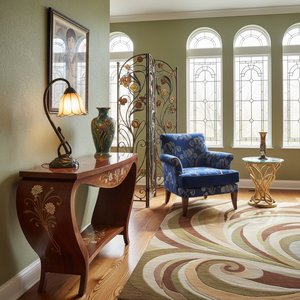 Art Nouveau's Golden Age: 10 Masterpieces for Your Home |
Introduction Imagine a world blossoming with organic forms, where flowing lines mimic nature’s grace and intricate details whisper stories of craftsmanship. This is the essence of Art Nouveau – a revolutionary art movement that swept across Europe an...
Though the golden age of Art Nouveau eventually gave way to the more geometric rigors of Art Deco, its legacy continues to resonate with the modern collector. In an age where we once again face the challenges of rapid technological change and digital detachment, the movement’s emphasis on organic connection and handmade beauty feels more relevant than ever. Bringing elements of this era into a contemporary home is not about mere imitation; it is about inviting a sense of tranquility, fluidity, and historical depth into our personal sanctuaries.
Integrating Art Nouveau into modern interiors can be achieved through the thoughtful selection of focal pieces. A high-quality reproduction of a Mucha poster, with its warm tones and graceful figures, can serve as a window into a more romantic era. Similarly, incorporating botanical motifs through textiles or glasswork allows the soothing rhythms of nature to permeate a room. For those seeking to create a truly immersive experience, larger-scale works—such as custom murals or multi-panel compositions—can transform a wall into a flowing landscape of art. By embracing these timeless forms, we do more than decorate; we honor a legacy of beauty that celebrates the enduring, elegant dance between humanity and the natural world.
At ArtsDot.com, we are dedicated to preserving this exquisite heritage. Our mission is to make the masterpieces of history accessible to all, offering hand-painted oil reproductions that capture the very soul of the brushstroke. Whether you seek to transform a personal memory through our custom portrait services or wish to adorn your home with the flowing grace of an Art Nouveau classic, our master artists work with unparalleled passion to ensure every canvas is a testament to timeless elegance.