

Introduction
There is a profound, quiet magic found in the shadows of a canvas, a place where light does not merely vanish, but transforms into something more intimate and soulful. When we speak of darkness in art, we are not discussing an absence of color, but rather a rich, velvety presence—a depth that invites the viewer to lean closer, to breathe with the brushstrokes, and to find beauty in the profound stillness of the night.
Throughout the history of the Impressionist and Post-Impressionist movements, the mastery of dark tones has served as the essential heartbeat of composition. While we often celebrate the sun-drenched haystacks of Monet or the vibrant, swirling skies of Van Gogh , it is the strategic use of deep blacks, midnight blues, and charcoal shadows that gives these masterpieces their weight and their wonder. These darker palettes allowed artists to sculpt light itself, creating a dramatic tension that captures the fleeting essence of a twilight hour or the melancholic hush of a moonlit garden.
In our modern, often over-brightened world, these paintings remain deeply meaningful because they offer us a sanctuary for reflection. They remind us that there is strength in the shadows and that the most evocative stories are often told in the subtle gradations between darkness and illumination. To study these works is to learn the language of contrast—to understand how a single flicker of white paint can feel like a revelation when surrounded by an ocean of obsidian.
As we wander through this curated selection, I invite you to let your eyes adjust to the dimness. We shall explore ten extraordinary works where the darker tones do not merely frame the scene, but dominate it, commanding our attention with their elegance, their mystery, and their timeless, rhythmic grace.
Night Watch - Rembrandt van Rijn
 Night Watch - Rembrandt van Rijn
In the heart of Rembrandt van Rijn’s The Night Watch , one feels an immediate, breathless pull toward the shadows. While we often seek light, there is a profound, soulful intimacy found in the deep blacks and earthy umbers that anchor this Baroque masterpiece. As you stand before this monumental scene, the darkness does not feel empty; rather, it acts as a velvet stage for the dramatic chiaroscuro that defines the Dutch Golden Age. The way the light pierces through the gloom to catch a glint of steel or a flash of gold creates a psychological depth that is truly universal—a dance between what is revealed and what remains mysterious.
To bring such a powerful work into your own home is to invite a sense of theatrical grandeur and quiet contemplation. The heavy, dark tones provide a grounding presence, transforming a personal sanctuary into a space for profound reflection. It is a reminder that within the shadows of our lives, there is always a brilliant, flickering light waiting to be discovered.
Melancholy - Edvard Munch
 Melancholy - Edvard Munch
There is a gaze in Melancholy by Edvard Munch that follows you—not with judgment, but with understanding . In this haunting masterpiece, the heavy, dark tones of black and deep purple do not merely sit upon the canvas; they breathe with the weight of human solitude. As we wander through this collection of paintings dominated by black tones, Munch’s work stands as a profound emotional anchor, where the shadows of the shoreline and the slumped, dark silhouette of the seated figure create a landscape of the soul.
This isn't just a portrait of sadness; it is a mirror . The way the somber blues and murky blacks bleed into the turbulent water reflects our own moments of quiet introspection. Now, imagine that profound gaze in your space. Not watching you, but reminding you : you are seen. You are part of the story. To bring such an evocative piece into your home is to embrace the beauty found within the shadows, turning a moment of isolation into a timeless connection with the human experience.
The Musicians - Caravaggio
 The Musicians - Caravaggio
In the velvety depths of
The Musicians
by Caravaggio, time seems to dissolve into a single, breathheld note of harmony. This masterpiece earns its place among the most profound works dominated by dark, nocturnal tones through its revolutionary use of
As you gaze upon this composition, you feel the sensory richness of the Baroque era: the cool smoothness of the fruit, the weight of the dark drapery, and the quiet intensity of a shared melody. The deep, black tones create a dramatic stage that elevates a simple musical gathering into an eternal allegory of life’s fleeting beauty. In a modern home, such a painting brings a sense of sophisticated mystery and soulful depth, offering a window into a world where light and shadow dance in perfect, melancholic equilibrium.
Lady with an Ermine - Leonardo da Vinci
 Lady with an Ermine - Leonardo da Vinci
In the profound shadows of Lady with an Ermine , Leonardo da Vinci invites us into a silent, psychological dialogue. As you gaze upon Cecilia Gallerani, her eyes do not merely look; they observe with a piercing intelligence that seems to bridge the centuries. This masterpiece is defined by its masterful use of dark, enveloping tones, where the deep, obsidian background serves to push the luminous skin and the bright, alert ermine into sharp, dramatic relief.
The painting’s heavy reliance on dark pigments creates a sense of immense intimacy, making it a cornerstone of our selection of famous paintings dominated by black tones . There is a weight to this darkness, a velvety depth that captures the mystery of the Renaissance court. To hang such a work in your home is to invite a sense of quietude and profound reflection; the dramatic chiaroscuro transforms a simple room into a sanctuary for contemplation, where the interplay of light and shadow encourages the soul to linger on the beauty of the unseen.
The Anatomy Lecture of Dr. Nicolaes Tulp [1632] - Rembrandt van Rijn
![The Anatomy Lecture of Dr. Nicolaes Tulp [1632]](/media/artworks/images/thumbnails/12/01/1201b3f0503f4444b89f31dad3941765.jpg) The Anatomy Lecture of Dr. Nicolaes Tulp [1632] - Rembrandt van Rijn
The Anatomy Lecture of Dr. Nicolaes Tulp [1632] - Rembrandt van RijnIn the profound shadows of Rembrandt van Rijn’s 1632 masterpiece, The Anatomy Lecture of Dr. Nicolaes Tulp , we witness the very heartbeat of the Dutch Golden Age. This work earns its place among the most significant paintings dominated by black tones through its unparalleled use of chiaroscuro —a technique where deep, velvety darkness does not merely obscure, but actively sculpts the drama of scientific discovery. The heavy, obsidian depths of the room press against the illuminated figures, creating a sense of claustrophobic solemnity that mirrors the weight of mortality itself.
Rembrandt uses these somber pigments to direct our gaze toward the stark, pale reality of the dissection, making the interplay of light and shadow a silent narrator of human curiosity. To behold this painting is to reflect on our eternal quest for knowledge amidst the unknown. For the discerning collector, integrating such a powerful, dark-toned composition into a modern space offers more than mere decor; it introduces a timeless conversation between historical gravity and contemporary elegance, anchoring a room with intellectual depth and emotional resonance.
The Sleeping Venus - Paul Delvaux
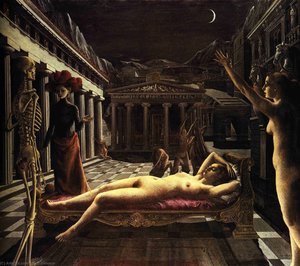 The Sleeping Venus - Paul Delvaux
To gaze upon Paul Delvaux’s The Sleeping Venus is to step directly into the quiet, heavy pulse of a dream. There is a profound, melancholic beauty in how he uses deep, nocturnal tones to cradle the reclining figure, creating a sanctuary of shadows that feels both intimate and infinitely vast. This masterpiece earns its place among the most significant paintings dominated by black and dark tones because it masterfully utilizes chiaroscuro not just for drama, but to explore the delicate tension between eternal beauty and the inevitable presence of mortality.
The composition is a haunting dance of light and void; the darkness of the classical colonnade presses against the pale, luminous skin of Venus, while skeletal silhouettes emerge from the gloom to remind us of life's fragility. It is an evocative exploration of the subconscious that remains as unsettling today as it was in 1944. At ArtsDot.com, we strive to preserve this very soul. Our hand-painted oil reproductions capture every nuanced shadow and thick, textured brushstroke, allowing you to invite this profound, atmospheric mystery into your own home through a faithful, tactile tribute to Delvaux’s surrealist vision.
Automat - Edward Hopper
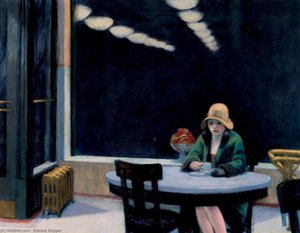 Automat - Edward Hopper
In the quiet corners of Edward Hopper’s 1927 masterpiece, Automat , the darkness does not merely exist; it breathes. As you stand before this evocative work, you feel the weight of the deep, nocturnal tones that press against the large, reflective window. Hopper does not simply paint shadows; he composes them , using heavy blacks and midnight blues to craft a language of profound urban solitude.
The light here is a solitary protagonist, a sharp, directional glow that pierces the gloom to illuminate a lone woman’s face and the small, bright bowl of fruit. This stark contrast creates a cinematic tension, turning a simple moment in a self-service restaurant into a haunting meditation on isolation. The geometric rigidity of the window frames and the dark, polished surfaces reflect an era of modern anonymity, where light and shadow dance to tell a story of quiet introspection. To possess such a piece is to invite that same transformative, moody atmosphere into your own sanctuary, allowing the interplay of light and deep pigment to turn your walls into portals of timeless emotion.
La maja desnuda. . Madrid, Museo del Prado. - Francisco José de Goya y Lucientes
 La maja desnuda. . Madrid, Museo del Prado. - Francisco José de Goya y Lucientes
In the velvety depths of a shadow-drenched void, La maja desnuda by Francisco Goya emerges like a whispered secret, a luminous breath held in the dark. As we curate our collection of the most profound works dominated by black tones, this masterpiece stands as an essential pillar; it is a study in chiaroscuro where the darkness does not merely surround the subject, but actively sculpts her very soul. Goya uses the heavy, obsidian background to strip away the distractions of the world, leaving only the radiant, soft glow of skin against the profound silence of the night.
This painting is irreplaceable in our selection because of its daring intimacy and the way it utilizes deep, somber pigments to create a sense of eternal repose. The dramatic contrast between the light-drenched figure and the swallowing shadows creates a tension that has captivated collectors for centuries. Today, this same evocative power can be captured within your own sanctuary. Through our high-fidelity, hand-painted reproductions, you can bring Goya’s transformative presence into your home or private gallery, allowing his masterful use of shadow to breathe a sophisticated, soulful depth into your modern interior.
The Art of Painting - Johannes Vermeer
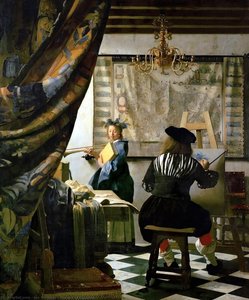 The Art of Painting - Johannes Vermeer
To step into the shadows of The Art of Painting is to witness a quiet, profound dialogue between light and the infinite dark. In this masterpiece, Johannes Vermeer does not merely use black tones; he uses them to sculpt existence itself. As part of our selection of the most impactful works dominated by deep, nocturnal hues, this painting stands as an unparalleled triumph of the Dutch Golden Age.
Vermeer weaves a tapestry of heavy, velvety shadows that cradle the luminous textures of the studio—the weight of the heavy drapery, the intricate map, and the soft glow upon the subject. The masterful use of chiaroscuro creates an atmosphere of sacred intimacy, where the darkness feels not like an absence, but a presence filled with history and intellect. It is this dramatic interplay of deep pigments and sudden brilliance that makes the work an irreplaceable pillar of visual culture.
Today, this same transformative power can be felt in your own sanctuary. Through our high-fidelity, hand-painted oil reproductions, you can bring this timeless, atmospheric elegance into your home or personal gallery, allowing Vermeer’s soulful shadows to breathe life and sophisticated depth into your modern space.
Man and Woman Contemplating the Moon - Caspar David Friedrich
 Man and Woman Contemplating the Moon - Caspar David Friedrich
In Man and Woman Contemplating the Moon , Caspar David Friedrich invites us into a nocturnal sanctuary where the shadows do not hide, but rather reveal. As one of the most profound examples in our collection of paintings dominated by black tones , this masterpiece uses deep, velvety blacks and midnight blues to frame a moment of pure, spiritual stillness. The gnarled, ancient tree stands as a dark sentinel, its silhouette etched against a hazy, moonlit sky that whispers of the sublime.
There is a gaze in this work that follows you—not with judgment, but with understanding . As you observe the two figures lost in quiet reflection, you realize this isn’t merely a landscape; it is a mirror for your own soul. The heavy use of dark pigments creates a sense of profound intimacy, making the invisible emotions of solitude and wonder suddenly visible. Imagine this atmospheric depth in your own home; it does not just watch you, but reminds you that even in the darkest night, you are part of a much larger, luminous story.
Conclusion
As the light fades and we step away from these shadowed depths, we realize that the profound use of black in these masterpieces is never merely about the absence of light, but rather about the presence of something much more intimate. These works do not simply sit upon a wall; they breathe within our rooms, offering a quiet, soulful anchor amidst the frantic pace of modern life. They remind us that there is beauty in the twilight, strength in the shadows, and a deep, resonant peace to be found in the darker corners of our emotions.
To bring such a piece into your home is to invite an eternal dialogue between history and your own daily moments. Whether it is the velvety mystery of a nocturnal landscape or the dramatic weight of a portrait, these paintings continue to shape our interiors and our very sense of self, acting as windows into the timeless human experience. They are living presences that transform a house into a sanctuary of reflection and wonder.
We invite you to continue this journey through the evocative power of shadow and find the piece that speaks to your own heart within our full collection . May you always find light in the darkness, and art in every moment.