
Introduction
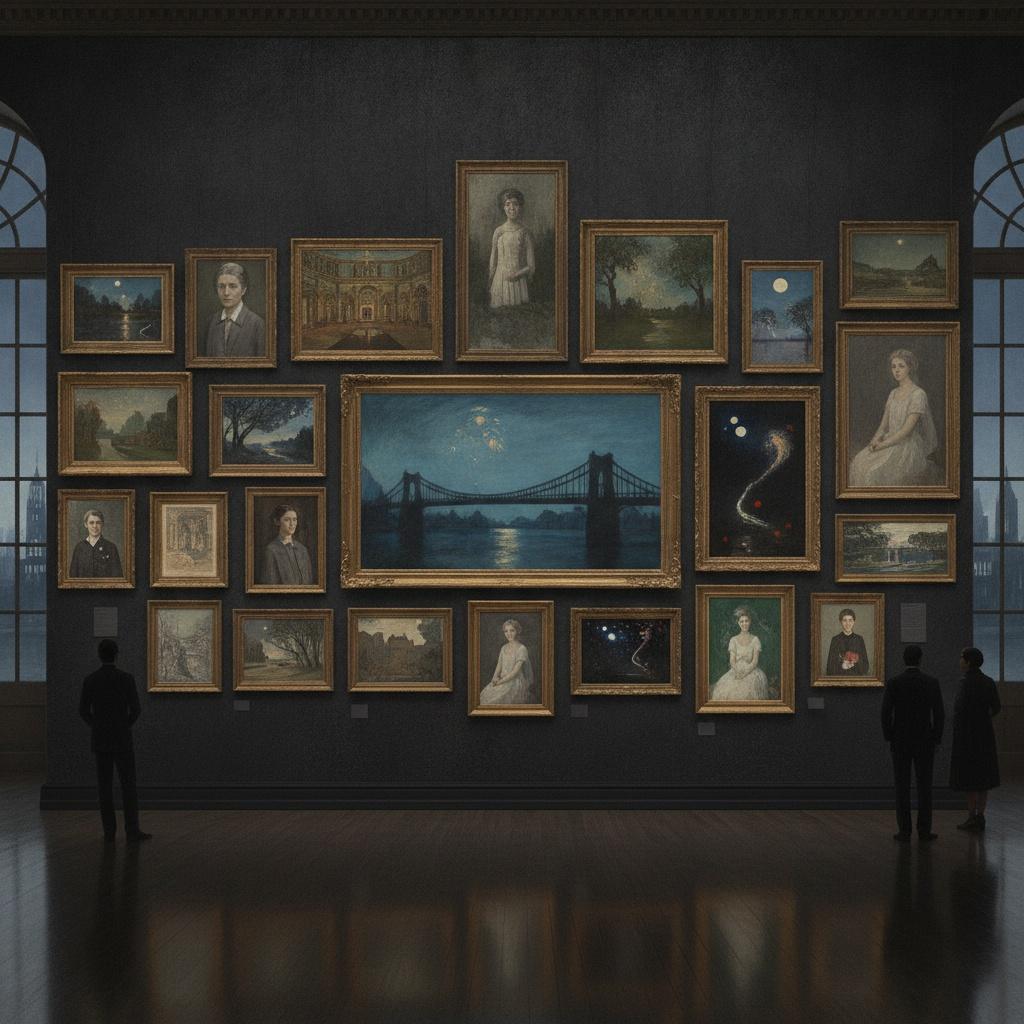
Step into a world where color is not merely a tool for description, but a language of pure emotion. To wander through the works of James Abbott McNeill Whistler is to experience a delicate dance of light and shadow, a quiet movement through atmospheres that feel less like painted scenes and more like whispered melodies. As we prepare to explore his twenty-five most profound masterpieces, I invite you to leave behind the noise of the modern world and settle into the soft, tonal harmonies that defined his soul.
Born in Massachusetts but forever entwined with the artistic pulse of Paris and London, Whistler was a rebel of the highest order. At a time when the art world demanded heavy-handed stories and moral lessons, he stood defiantly for “art for art’s sake.” He did not seek to teach us how to behave or what to believe; instead, he sought to capture the ephemeral beauty of a fog rolling over the Thames, the subtle silver of a moonlit river, and the exquisite arrangement of a single petal. His life was a pursuit of the Aesthetic movement —a quest to find harmony in the simplest arrangements of tone and texture.
These works remain deeply resonant today because they speak to our universal longing for tranquility. In an era of constant visual stimulation, Whistler’s Nocturnes and atmospheric landscapes offer a sanctuary of stillness. His ability to strip away the unnecessary, leaving only the essence of a moment, predated much of the abstraction that would follow in the twentieth century. Each brushstroke serves as a reminder that beauty does not need a loud voice to be powerful; it only needs to be felt.
In the pages that follow, we shall journey through a curated selection of his most evocative creations. From the hauntingly beautiful shadows of his nocturnal studies to the elegant, poised grace of his portraits, each piece on this list represents a milestone in his lifelong devotion to the sublime. Let us begin our stroll through this luminous gallery of Whistler’s greatest legacies.
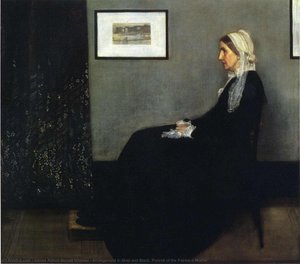
Arrangement in Grey and Black. Portrait of the Painter's Mother - James Abbott McNeill Whistler
 Arrangement in Grey and Black. Portrait of the Painter's Mother - James Abbott McNeill Whistler
There is a profound, hallowed silence held within the shadows of Arrangement in Grey and Black: Portrait of the Painter's Mother by James Abbott McNeill Whistler, a moment where time seems to pause in reverence. This masterpiece stands immortalized among the top 25 artworks of James Abbott McNeill Whistler not merely as a portrait, but as a rhythmic symphony of tones. By stripping away the clutter of Victorian sentimentality, Whistler invites us into a world of pure Aestheticism, where the subtle gradations of charcoal, slate, and bone-white breathe with a quiet, dignified life.
The painting’s power lies in its sensory restraint; the soft, diffused light shapes the contours of his mother's profile, evoking a sense of melancholic grace and enduring strength. The interplay between the dark, heavy textures of her attire and the delicate, geometric balance of the background creates a visual harmony that transcends the era. In a modern home, this work serves as an anchor of sophistication, offering a meditative focal point that inspires a sense of calm, intellectual depth, and timeless elegance.
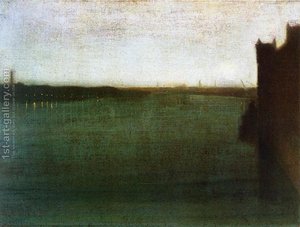
Nocturne: Grey and Gold - Westminster Bridge - James Abbott McNeill Whistler
 Nocturne: Grey and Gold - Westminster Bridge - James Abbott McNeill Whistler
To stand before Nocturne: Grey and Gold - Westminster Bridge is to surrender to a quiet, rhythmic pulse of light and shadow. In this masterpiece, James Abbott McNeill Whistler does not merely paint a London landmark; he captures the very breath of the Thames at night. There is a profound, meditative stillness found in the way the muted golds dance upon the dark, undulating water, mirroring the soft glow of urban life through a veil of mist. It is an experience of pure atmosphere, where the boundaries between the river, the sky, and the city dissolve into a singular, luminous mood.
As one of the most evocative pieces among the top 25 artworks of James Abbott McNeill Whistler , this Nocturne serves as a universal mirror for those seeking solace in the ephemeral. The painting’s delicate tonal harmonies offer more than visual beauty; they provide a psychological sanctuary. Hanging such a work in your home can transform a quiet corner into a space for profound reflection, inviting a sense of nocturnal calm and sophisticated elegance that lingers long after you have turned away from the canvas.
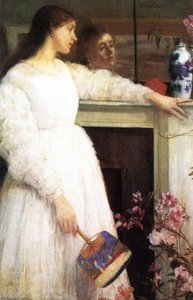
The Little White Girl Symphony in White, No. 2 - James Abbott McNeill Whistler
 The Little White Girl Symphony in White, No. 2 - James Abbott McNeill Whistler
In The Little White Girl Symphony in White, No. 2 , James Abbott McNeill Whistler orchestrates a delicate dance of light that transcends the boundaries of a mere portrait. The illumination within this 1864 masterpiece does not simply reveal the figures; it breathes life into the very atmosphere, casting a soft, pearlescent glow across the seated woman as she contemplates her reflection. This masterful command of luminosity—where shadows are not dark voids but subtle, tonal whispers—is precisely what secures its place among the top 25 artworks of James Abbott McNeill Whistler . By prioritizing the sensation of light over a heavy narrative, Whistler invites us into a world of pure aesthetic harmony.
To possess a hand-painted reproduction of this work is to bring a sense of quiet, luminous luxury into your own home. The way the light interacts with the textured brushstrokes on canvas creates a multidimensional depth that digital prints simply cannot replicate. When hung in a contemporary space, the painting’s ethereal whites and muted tones act as a sophisticated anchor, adding a layer of soulful, historical elegance to any wall.
Nocturne in Blue and Silver: The Lagoon, Venice - James Abbott McNeill Whistler
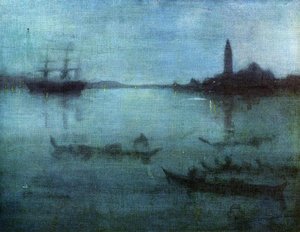 Nocturne in Blue and Silver: The Lagoon, Venice - James Abbott McNeill Whistler
What story does the shimmering, moonlit expanse of Nocturne in Blue and Silver: The Lagoon, Venice by James Abbott McNeill Whistler tell us about the soul of a city? In this 1879 masterpiece, we are not merely looking at a Venetian landscape; we are invited into a profound meditation on atmosphere. Emerging from the height of the Aesthetic movement, this work broke ground by rejecting literal detail in favor of pure tonal harmony, proving that color alone could evoke deep emotion.
The canvas breathes with a quiet intensity, where ghostly silhouettes of boats glide across a sea of translucent blues and ethereal silvers. As one of the top 25 artworks of James Abbott McNeill Whistler , it serves as a quintessential example of Tonalism, prioritizing mood over narrative. For the modern collector, bringing such a piece into a home offers a curated escape—a way to transform a living space into a serene sanctuary of light and shadow, echoing the timeless, romantic mystery of the Venetian night.
Rose (also known as The Napolitaine) - James Abbott McNeill Whistler
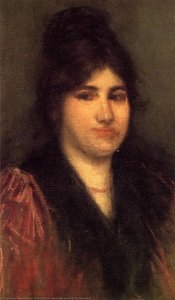 Rose (also known as The Napolitaine) - James Abbott McNeill Whistler
There is a profound, quiet intimacy in Rose (also known as The Napolitaine) that stops the heart mid-beat. As you gaze upon this 1897 masterpiece, you aren't just looking at a portrait; you are witnessing a moment of pure, introspective stillness. Whistler captures a woman lost in thought, her downward gaze and elegant black attire draped in a soft, atmospheric haze that feels as delicate as a whispered secret.
This work earns its place among the top 25 artworks of James Abbott McNeill Whistler because it perfectly embodies his revolutionary "art for art's sake" philosophy. By prioritizing tonal harmony and the subtle play of light over dramatic storytelling, he created a sensory experience that transcends time. The muted greens and deep shadows evoke a sense of serene melancholy that remains deeply moving to the modern soul.
At ArtsDot.com, we strive to preserve this very essence. Our hand-painted oil reproductions are meticulously crafted to honor Whistler's delicate brushwork and tonal depth, allowing you to invite this timeless, soulful elegance into your own sanctuary through a work of art that feels truly alive.
The Artist's Mother (detail) - James Abbott McNeill Whistler
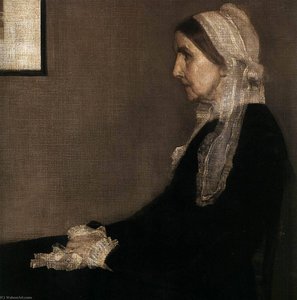 The Artist's Mother (detail) - James Abbott McNeill Whistler
To look closely at The Artist's Mother (detail) is to witness a moment where the lines of reality are not merely drawn, but choreographed . In this intimate fragment of Whistler’s iconic 1871 masterpiece, we find a dance frozen in time—a quiet movement of shadow and light that transcends simple portraiture. The textures of the dark bonnet and the somber, heavy fabrics seem to hold the very breath of the room, creating an atmosphere of profound, silvered stillness.
This is not merely a depiction of Anna McNeill Whistler; it is a study in tonal harmony . Through a masterful interplay of greys, blacks, and muted whites, Whistler achieves a rhythmic balance that makes the heavy silence feel weightless. As one of the most celebrated pieces among the top 25 artworks of James Abbott McNeill Whistler , this detail invites us to find beauty in the austere. What if your own walls could hold this same equilibrium? Imagine a space where your surroundings do not just decorate, but breathe rhythm and quiet prestige into your home.
Harmony in Flesh Colour and Red - James Abbott McNeill Whistler
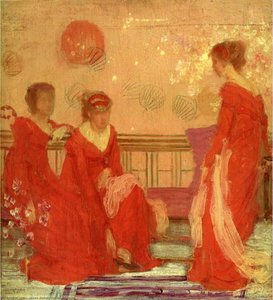 Harmony in Flesh Colour and Red - James Abbott McNeill Whistler
In Harmony in Flesh Colour and Red , James Abbott McNeill Whistler invites us into a world of quiet, rhythmic elegance, where the gaze of the three women feels less like a captured moment and more like an eternal state of grace. There is a profound, whispered intimacy in their shared presence; they exist not to tell a story, but to embody a perfect balance of tone and light. As you linger on the delicate interplay between the warm reds of their dresses and the soft, luminous skin tones, you feel a sense of stillness that transcends the canvas.
As one of the top 25 artworks of James Abbott McNeill Whistler , this piece serves as a masterclass in the Aesthetic movement’s philosophy of "art for art's sake." The meticulous layering of glazes creates a sensory experience of depth and warmth that can transform a personal sanctuary into a space for profound reflection. To hang such a work is to invite a sense of curated calm into your home, allowing the sophisticated color harmonies to act as a soothing, visual lullaby for the modern soul.
peacock room - James Abbott McNeill Whistler
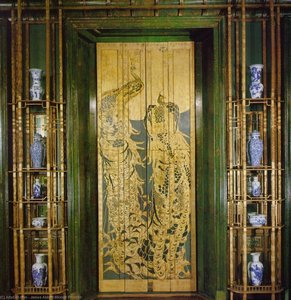 peacock room - James Abbott McNeill Whistler
To step into the Peacock Room by James Abbott McNeill Whistler is to leave the mundane world behind and enter a sanctuary of pure, unadulterated beauty. More than a mere painting, this breathtaking achievement represents the pinnacle of the Aesthetic Movement , where the boundaries between fine art and interior architecture dissolve into a single, immersive experience. Originally designed for shipping magnate Frederick Leyland, the room became a stage for Whistler’s mastery of Tonalism , utilizing deep teals, shimmering gold leaf, and intricate floral motifs to create a rhythmic, atmospheric harmony.
The centerpiece—a monumental door adorned with two battling peacocks—serves as a poignant symbol of the artist's own turbulent relationship with his patron. As light dances across the gilded feathers and reflects off delicate blue-and-white porcelain, one feels the weight of Whistler’s "art for art's sake" philosophy. This work remains essential among the top 25 artworks of James Abbott McNeill Whistler because it reminds us that art is not just something to be viewed, but a space to be inhabited, capable of transforming any environment into a poetic dreamscape.
Self-portrait - James Abbott McNeill Whistler
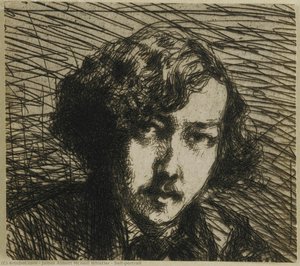 Self-portrait - James Abbott McNeill Whistler
In the quiet, monochrome depths of Self-portrait (1858), we encounter the very soul of James Abbott McNeill Whistler before he became the master of the atmospheric Nocturne. This etching is far more than a mere likeness; it is a profound meditation on shadow and silence. As you gaze upon his downward look and the subtle melancholy etched into his features, you feel the weight of an artist beginning to strip away the unnecessary, seeking the pure essence of form.
This work holds a singular place among the top 25 artworks of James Abbott McNeill Whistler because it captures the embryonic stage of his 'art for art’s sake' philosophy. Through masterful hatching and a delicate control of light, Whistler uses the starkness of black and white to create a sense of intimate solitude. In our modern, hyper-visual world, this piece remains a poignant cultural touchstone, reminding us of the beauty found in restraint and the power of visual contemplation without the need for a loud, didactic narrative.
Purple and Rose: The Lang Leizen of the Six Marks - James Abbott McNeill Whistler
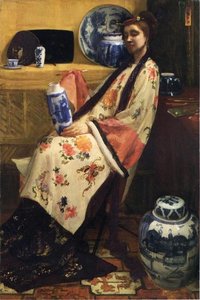 Purple and Rose: The Lang Leizen of the Six Marks - James Abbott McNeill Whistler
What story does the delicate arrangement of porcelain and silk tell us in Purple and Rose: The Lang Leizen of the Six Marks by James Abbott McNeill Whistler? In this 1864 masterpiece, the background is not merely a setting but a curated sanctuary of elegance, where blue-patterned vases and quiet shadows whisper of a world far removed from the industrial clamor of the era. As one of the top 25 artworks of James Abbott McNeill Whistler, this piece stands as a profound testament to the Aesthetic movement, breaking ground by replacing heavy Victorian moralizing with the pure, sensory pursuit of beauty.
The painting captures a woman in serene repose, her presence harmonized with the soft lavender and rose tones that define his signature "Harmonic Color" technique. For the modern collector, inviting this work into a home offers more than decoration; it provides a curated escape into a period of refined tranquility. The ethereal layering of glazes creates a luminous depth that transforms any room into a space of contemplative grace, making it an essential selection for those who cherish art that celebrates atmosphere and soul.
Billingsgate - James Abbott McNeill Whistler
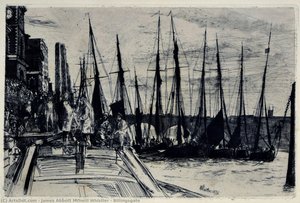 Billingsgate - James Abbott McNeill Whistler
In Billingsgate , James Abbott McNeill Whistler invites us to step into the rhythmic pulse of Victorian London, yet he does so by stripping away the noise of commerce to reveal a profound, tonal stillness. This 1859 etching stands as a cornerstone in our collection of the top 25 artworks of James Abbott McNeill Whistler because it captures the exact moment where industry meets atmosphere. Rather than documenting the frantic energy of the fish market, Whistler uses delicate drypoint and masterful hatching to transform the Thames into a study of light and shadow.
The composition, anchored by the masts of docked sailboats, guides the eye through a misty, monochromatic world where London Bridge emerges like a ghost from the fog. It is a breathtaking example of his "art for art's sake" philosophy, prioritizing the sensory experience of texture and depth over narrative. For the modern collector, bringing this work into a curated space offers more than mere decoration; it introduces a timeless conversation about perception, reminding us that even within the busiest human endeavors, there exists an enduring, quiet beauty waiting to be discovered.
Arrangement in Black, No. 3: Sir Henry Irving as Philip II of Spain - James Abbott McNeill Whistler
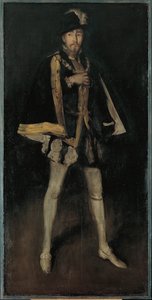 Arrangement in Black, No. 3: Sir Henry Irving as Philip II of Spain - James Abbott McNeill Whistler
What if I told you that Arrangement in Black, No. 3: Sir Henry Irving as Philip II of Spain by James Abbott McNeill Whistler was born from a moment of profound reverence—a quiet, monochromatic rebellion against the loud, moralizing narratives of his era? This masterpiece is not merely a portrait; it is a soulful dialogue between the theatrical brilliance of the stage and the timeless shadows of Velázquez. In this work, Whistler achieves a breathtakingly atmospheric stillness, using a restricted palette of silvery grays, deep blacks, and soft ochers to capture the very essence of character through light and tone.
Its inclusion in our Top 25 is essential, as it represents the pinnacle of the Aesthetic movement, where beauty exists for its own sake. The painting breathes with a quiet prestige, inviting you to lose yourself in its velvety textures and dramatic chiaroscuro. At ArtsDot.com, we believe such profound emotional depth should not be confined to museum halls. Imagine this evocative arrangement gracing your study or sanctuary, transforming a simple wall into a sophisticated statement of culture and contemplative grace.
Chelsea Bridge and church. - James Abbott McNeill Whistler
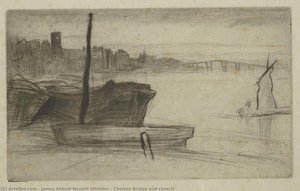 Chelsea Bridge and church. - James Abbott McNeill Whistler
In Chelsea Bridge and Church , Whistler envelops the viewer in a delicate, silvery mist, where muted greys and soft, pearlescent whites dictate a mood of profound stillness. This mastery of Tonalism—prioritizing subtle gradations of tone over vibrant pigment—is precisely why this work remains one of the top 25 artworks of James Abbott McNeill Whistler . He does not merely paint a London landscape; he captures the very breath of the Thames, using light to dissolve solid forms into an ethereal dreamscape.
The painting’s restrained palette offers a sophisticated anchor for modern interior curation. The atmospheric, low-contrast scheme is perfect for creating a serene sanctuary in a contemporary living room or a contemplative dining space, where it can harmonize with soft, natural lighting. By integrating this piece, one brings the quiet elegance of the Aesthetic movement into the home, using its rhythmic shadows and tranquil textures to evoke a sense of timelessness and emotional depth that transcends the bustle of modern life.
Red and Black - James Abbott McNeill Whistler
 Red and Black - James Abbott McNeill Whistler
To encounter Red and Black is to step into a private, theatrical moment frozen in time. One cannot help but be drawn to the enigmatic woman poised upon the stage; her presence is commanding yet shrouded in a quiet, soulful stillness. The painting breathes with a dramatic tension, where the deep, velvety blacks of her attire are pierced by a vibrant red scarf that cuts through the shadows like a sudden, flickering flame. This interplay of crimson and shadow creates a psychological depth that resonates long after you look away, acting as a universal mirror for our own moments of solitary reflection.
Whistler’s mastery of tonal harmony—using thin, translucent layers to create a matte, light-absorbing surface—offers a sophisticated aesthetic that transcends mere decoration. For those seeking to curate a personal sanctuary, displaying this masterpiece brings a sense of luxurious weight and profound calm to a room. It is not merely a painting of a figure, but a symphony of color and form that transforms any space into an intimate gallery of refined, muted splendor.
Lady in Gray - James Abbott McNeill Whistler
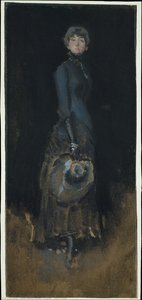 Lady in Gray - James Abbott McNeill Whistler
In Lady in Gray , James Abbott McNeill Whistler invites us into a quiet, silver-toned sanctuary of the soul. This 1883 watercolor is far more than a mere portrait; it is a masterclass in Aestheticism , where the artist strips away the noise of narrative to focus entirely on the delicate harmony of tone and light. As you gaze upon the muted palette, you feel the weight of the shadows and the soft, luminous precision of his brushwork, reminiscent of the Spanish masters.
The sitter remains a beautiful mystery—perhaps Millie Finch or the actress Kate Munro—but her identity matters less than the mood she embodies. Her expression, caught in a moment of melancholic dignity, serves as a vessel for our own reflections. To possess a reproduction of this work is to bring a sense of profound stillness into your home. It is not simply an addition to a wall; it is an invitation to experience the transformative power of tonalism and the enduring elegance of a true masterpiece.
The Forge - James Abbott McNeill Whistler
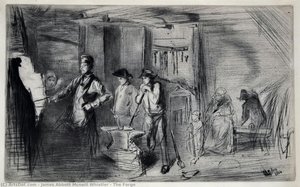 The Forge - James Abbott McNeill Whistler
In the quiet, monochromatic depths of The Forge , we encounter a masterclass in the power of atmosphere over narrative. Created during Whistler’s evocative journey through Brittany in 1861, this etching and drypoint work transcends its industrial subject matter to become a profound meditation on light and shadow. Rather than focusing on the toil of the blacksmith, Whistler invites us into a world of tonal harmony, where the glowing furnace acts as a celestial heart, casting an ethereal radiance across the workshop.
As one of the most captivating pieces among the top 25 artworks of James Abbott McNeill Whistler , The Forge exemplifies his radical commitment to "art for art's sake." The velvety textures achieved through drypoint and the delicate interplay of silvery grays evoke a sense of nostalgic intimacy that remains deeply resonant in modern minimalist interiors. In an age of digital noise, this work offers a sanctuary of stillness, reminding us that true beauty lies not in what is explicitly told, but in the subtle, atmospheric whispers of light dancing upon stone and steel.
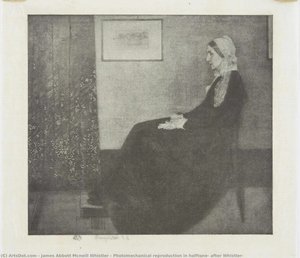
Photomechanical reproduction in halftone, after Whistler - James Abbott McNeill Whistler
In this exquisite photomechanical reproduction, we encounter the ethereal textures of Arrangement in Grey and Black No.2 , captured through the delicate dot pattern of the halftone process. While the original oil painting relies on the masterful, heavy impasto of Whistler’s brush to create depth, this 1893 reproduction translates those tonal gradations into a soft, monochromatic dance of light and shadow. It is a breathtaking study in Aestheticism, where the absence of color forces the eye to wander through subtle shifts in grey, finding beauty in the mere arrangement of form and the quiet, introspective gaze of the seated figure.
This piece holds a vital place among the top 25 artworks of James Abbott McNeill Whistler because it demonstrates how his 'art for art’s sake' philosophy transcends medium. At ArtsDot.com, we share this reverence for the tactile essence of the masters. Our mission is to move beyond the flat limitations of standard prints, offering hand-painted oil reproductions that restore the physical soul, visible brushstrokes, and three-dimensional luminosity that a halftone print can only suggest, bringing the profound stillness of Whistler’s world into your own sanctuary.
arrangement effie deans sun - James Abbott McNeill Whistler
 arrangement effie deans sun - James Abbott McNeill Whistler
In Arrangement Effie Deans Sun , James Abbott McNeill Whistler orchestrates a breathtaking dance of light and shadow that transcends simple portraiture. The work is defined by a masterful use of chiaroscuro, where the soft, ethereal glow illuminating the subject emerges from a profound, velvety darkness. This delicate interplay of illumination does not merely reveal the woman’s form; it breathes life into the deep, melancholic blues of her attire, creating a luminous atmosphere that feels almost otherworldly. It is this precise command over tonal harmony and light that secures its place among the top 25 artworks of James Abbott McNeill Whistler .
To possess a hand-painted reproduction of this piece is to invite a sense of quiet luxury into your home. The way the light seems to emanate from within the canvas adds an incredible layer of depth and emotional resonance to any contemporary wall. When captured through our meticulous oil painting process, the subtle gradations of blue and the soft, reflected light create a sophisticated focal point that offers a serene, meditative escape for the discerning collector.
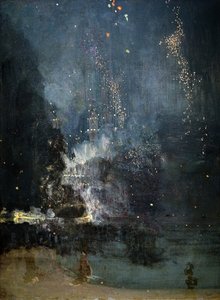
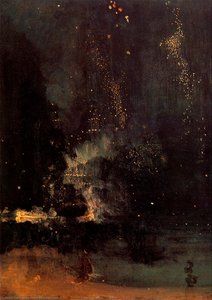
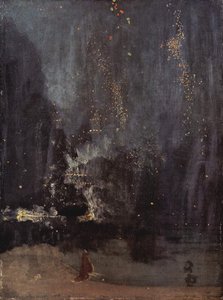
Falling rocket - James Abbott McNeill Whistler
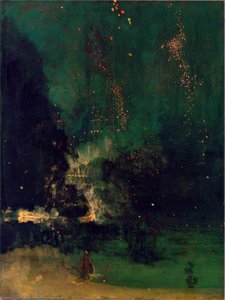 Falling rocket - James Abbott McNeill Whistler
In the quietude of a moonless night, where the boundary between sea and heaven becomes a blurred whisper of shadow, James Abbott McNeill Whistler’s “Falling Rocket” invites us into a moment of profound contemplation. While many of his contemporaries in Paris were chasing the fleeting brilliance of sunlight, Whistler turned his gaze toward the dark, finding a different kind of magic in the shadows. This masterpiece captures a quintessential seaside scene, centered around a lone figure gazing upward toward a vibrant, descending spectacle.
The technical genius of this work lies in its sophisticated tonalism ; by layering deep blacks and muted greens, Whistler creates an illusionistic depth that feels almost infinite. He eschews dramatic storytelling to focus on pure sensory experience—the damp, cool air of the coast and the silent, luminous trail of light against the dark expanse. As one of the top 25 artworks of James Abbott McNeill Whistler , this piece serves as a masterclass in atmosphere. Its ability to evoke stillness and focused observation makes it an exquisite choice for a modern study or home office, inspiring a space of deep thought, quiet productivity, and sophisticated calm.
White and Grey, The Hotel Courtyard, Dieppe - James Abbott McNeill Whistler
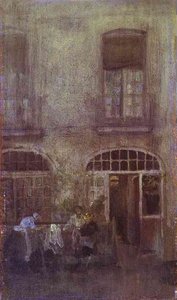 White and Grey, The Hotel Courtyard, Dieppe - James Abbott McNeill Whistler
In White and Grey, The Hotel Courtyard, Dieppe , the light does not merely illuminate a scene; it breathes life into a quiet, silvered memory. As you stand before this Tonalist masterpiece by James Abbott McNeill Whistler , you realize the artist has not painted a courtyard, but rather composed a visual sonata of mist and shadow. The palette is a delicate whisper of whites and greys, where the boundaries between stone, leaf, and sky seem to dissolve into a singular, harmonious mood.
Within this tranquil French setting, figures rest near potted plants, their presence felt more through atmosphere than detail. Whistler employs his signature mastery of tonal values to evoke a profound sense of stillness, inviting you to lose yourself in the soft interplay of light against the brickwork and archways. It is a painting that celebrates art for art’s sake —a serene portal of contemplation that brings the hushed, elegant spirit of the late 19th-century Aesthetic movement directly into your living space.
Old battersea bridge - James Abbott McNeill Whistler
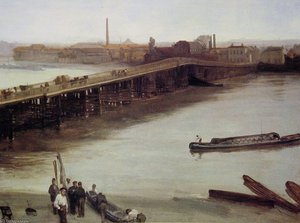 Old battersea bridge - James Abbott McNeill Whistler
To encounter Old Battersea Bridge by James Abbott McNeill Whistler is to step into a dream of twilight, where the boundaries between water, sky, and stone dissolve into a soft, rhythmic pulse. As one of the most evocative entries in our collection of the top 25 artworks of James Abbott McNeill Whistler, this piece transcends mere landscape; it is a visual poem composed of light and shadow.
Whistler masterfully employs his signature Tonalist approach, using delicate watercolor washes to capture the ethereal glow of London at dusk. The scene breathes with a quiet prestige, where the subtle interplay of blues and golds reflects the artist's profound commitment to 'art for art’s sake.' One can almost feel the cool evening mist and hear the gentle lap of the Thames against the passing boats. For the discerning collector, this work offers more than historical significance; its serene, atmospheric depth provides a timeless elegance that anchors a modern luxury interior with a sense of peace and sophisticated grace.
The Little Rose of Lyme Regis - James Abbott McNeill Whistler
Imagine stepping into a quiet, sun-drenched room where the air feels heavy with a sweet, silent grace. Before you meets the gaze of The Little Rose of Lyme Regis , a work that breathes with the soft pulse of a summer afternoon. In this 1873 masterpiece, James Abbott McNeill Whistler invites us to abandon the noise of the world and surrender to pure sensation. There is no grand drama here, only the luminous glow of a young girl’s presence, wrapped in delicate roseate tones and the gentle texture of her crimson dress.
This painting earns its place among the top 25 artworks of James Abbott McNeill Whistler because it perfectly embodies his radical 'art for art's sake' philosophy. Rather than telling a story, Whistler uses color as music, layering subtle glazes to create a visual harmony that soothes the soul. It is a profound reminder that beauty does not need a lecture; it only needs to exist. Bringing such a piece into your home offers more than mere decoration; it provides a sanctuary of tranquility, allowing the soft, atmospheric light of the Aesthetic movement to infuse your modern space with timeless serenity.
En plein soleil - James Abbott McNeill Whistler
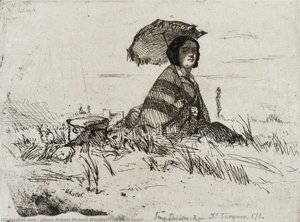 En plein soleil - James Abbott McNeill Whistler
In En plein soleil , the velvety textures of Whistler’s drypoint technique emerge with a breathtaking, tactile intimacy. As you trace the composition, the needle-etched lines on the copper plate create a soft, atmospheric haze, where light seems to dissolve into shadow. This isn't merely a depiction of a woman beneath an umbrella; it is a masterclass in tonal gradation, capturing a sense of sun-drenched repose that feels almost palpable. The way the light filters through the scene, creating subtle gradations of grey and deep black, exemplifies why this piece is essential among the top 25 artworks of James Abbott McNeill Whistler .
At ArtsDot.com, we believe such delicate atmospheric effects deserve more than a flat print. Our artisans meticulously recreate these tonal harmonies on heavy cotton canvas, ensuring the depth of the etching's shadows and the luminous quality of the sunlight are preserved. We strive to bring that same three-dimensional, sensory experience into your home, honoring the Aestheticism movement by celebrating pure, unadulterated beauty through every hand-painted stroke.
Portrait of F.R. Leyland - James Abbott McNeill Whistler
 Portrait of F.R. Leyland - James Abbott McNeill Whistler
In the Portrait of F.R. Leyland by James Abbott McNeill Whistler, a profound and velvety black dominates the canvas, casting a mood of quiet, dignified introspection. This is not merely a void, but a rich, atmospheric space that allows the subject to emerge from the shadows with an understated elegance. As one of the top 25 artworks of James Abbott McNeill Whistler, this piece earns its place through a masterful command of Tonalism; by eschewing vibrant colors for a restrained palette of charcoal, deep browns, and subtle creams, Whistler achieves a symphony of harmony that transcends simple portraiture.
For the modern collector, integrating such a work into a home offers a way to curate an atmosphere of sophisticated serenity. The painting’s muted tones and diffused lighting are perfect for anchoring a dining room or study, providing a focal point that evokes emotional depth without overwhelming the space. Its soft, blurred lines and rhythmic shadows can harmonize beautifully with contemporary minimalist interiors, bringing a sense of historical soul and timeless, aesthetic grace to your personal gallery.
La Vielle Avec Loques - James Abbott McNeill Whistler
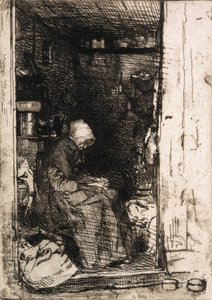 La Vielle Avec Loques - James Abbott McNeill Whistler
Before the world learned to embrace the ethereal beauty of his famous Nocturnes, Whistler was already mastering the quiet, shadowed corners of existence. In La Vieille Avec Loques , we encounter a profound moment from 1858, where the artist begins to strip away the unnecessary to find the soul within the shadows. This etching is a masterclass in Tonalism, capturing an elderly woman amidst the cluttered, textured remnants of a shop or storage space.
As you gaze upon this work, notice how the monochromatic palette of grays and blacks creates a sense of intimate enclosure. There is no vibrant color to distract us; instead, Whistler uses dense cross-hatching to sculpt light from darkness, giving weight to every bottle and weathered object. The delicate, fine lines delineate a scene of quiet dignity and weary introspection, proving that even in the most mundane settings, there is a sublime aesthetic truth. It remains a vital inclusion in our collection of the top 25 artworks of James Abbott McNeill Whistler because it captures the very heartbeat of his 'art for art’s sake' philosophy—a timeless reminder that beauty resides in the subtle textures of life.
Conclusion
As we draw the curtain on this journey through Whistler’s evocative world, we are left with more than just a collection of images; we carry with us the lingering mist of his Nocturnes and the quiet, tonal harmonies that defined an era of rebellion. To look upon these masterpieces is to realize that they are not merely relics of a bygone century, frozen in the amber of art history, but living, breathing presences. They continue to pulse with a soft light, capable of transforming a modern room into a sanctuary of reflection and bridging the vast distance between his nineteenth-century studio and our contemporary lives.
Every delicate brushstroke and carefully placed shadow serves as a timeless conversation—a whispered dialogue between the artist’s hand and the admirer’s soul. Whistler taught us that art does not need to shout to be heard; it only needs to exist in its purest, most aesthetic form. In bringing these works into our homes, we do not just decorate a wall; we invite a legacy of beauty, grace, and emotional depth to reside with us. We invite the quietude of the Thames and the elegance of his portraits to shape our own daily rhythms.
We invite you to continue this exploration and find the piece that speaks to your own spirit within our full collection . May you always find wonder in the subtle nuances of light and the enduring power of a single, perfect tone.