




The Foundation of Trust: Defining Authenticity and Provenance in the Art Market
In the rarefied atmosphere of high-stakes art acquisition, the distinction between a priceless masterpiece and a clever imitation rests upon a single, invisible pillar: truth. To the discerning collector, an artwork is far more than a mere arrangement of pigment on canvas; it is a vessel of historical significance, a tangible link to a specific moment in human creativity. Authenticity, therefore, is not merely a label but a rigorous verification of identity. It is the profound process of confirming that a work is indeed the product of the hand, mind, and era it claims to represent. This certainty provides the essential bedrock upon which the entire global art market is built, ensuring that the immense capital and cultural passion invested in these objects are anchored in reality.
Closely intertwined with authenticity is the concept of provenance, a term derived from the French provenir, meaning to come forth. Provenance serves as the chronological biography of an object, tracing its journey through time from its original creation to its current location. It encompasses the sequence of ownership, custody, and exhibition history that defines a painting's life. For the professional collector or procurement manager, a robust provenance acts as a chain of custody, providing circumstantial evidence that supports the work's legitimacy. Without this documented lineage, even the most visually stunning painting remains a mystery, vulnerable to questions of origin and legal validity.
Connoisseurship: The Discerning Eye and the Art of Stylistic Analysis
Before the advent of modern laboratory science, the primary defense against forgery was connoisseurship—the highly refined, subjective discipline of the expert eye. This practice relies on an intimate, almost intuitive familiarity with an artist's unique visual language. A true connoisseur does not merely look at a painting; they read it, identifying the specific rhythm of a brushstroke, the particular way light is captured in a glaze, or the subtle tension in a figure's pose. This method of authentication requires years of immersion in the works of masters, allowing the expert to detect even the most minute deviations from an artist's established hand.
However, while connoisseurship remains vital, it is inherently vulnerable to the sophisticated imitations that have periodically shaken the foundations of trust. The history of art is punctuated by audacious forgeries that mimic the very essence of a master's technique. Consider the way Renaissance workshops meticulously copied masterworks, or how later forgers employed materials and methods to replicate historical practices with alarming accuracy. Because this approach is subjective, it serves best as the first line of inquiry—a way to establish a stylistic hypothesis that must then be supported by more empirical evidence.
The Paper Trail: Deciphering Archives, Exhibition Histories, and Ownership Records
If connoisseurship provides the intuition, then provenance research provides the proof. Establishing provenance is essentially a matter of documentation. It involves a meticulous investigation into the archives to reconstruct an object's journey. This search leads researchers into the dusty corridors of auction house catalogs, museum records, and private dealer archives. Every exhibition sticker on the reverse of a frame, every mention in a scholarly publication, and every entry in a collector's ledger serves as a vital clue in the reconstruction of a masterpiece's history.
The complexity of this task cannot be overstated. Gaps in provenance are common, often caused by information lost to time, natural disasters, or the ravages of war. Yet, these gaps are precisely where the most intense research occurs. Researchers look for corroborating evidence in unexpected places: newspaper obituaries, family letters, and even ancestry websites. A seamless chain of ownership, documented through a series of verifiable transactions and public displays, creates a narrative of legitimacy that is difficult to dispute, transforming a beautiful object into a verified historical treasure.
Modern Forensics: The Intersection of Scientific Analysis and Technological Advancement
In the contemporary era, we stand at a fascinating intersection of tradition and technology. While the expert eye remains indispensable, it is increasingly augmented by scientific analysis that can peer beneath the surface of the paint. Modern forensics allows us to examine the chemical composition of pigments, the age of the wooden supports, and the layers of varnish applied over centuries. Techniques such as X-ray fluorescence, infrared reflectography, and carbon dating provide empirical data that can confirm or refute stylistic hypotheses with mathematical precision.
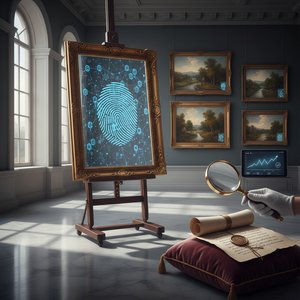
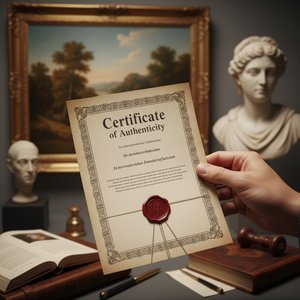
Furthermore, the digital revolution is reshaping the landscape of authentication. Emerging technologies like AI and Blockchain offer new ways to secure the integrity of artworks. AI tools are now capable of analyzing brushstroke patterns with a level of detail that exceeds human capability, while Blockchain can create immutable digital certificates of authenticity, providing a permanent, unalterable record of an artwork's provenance. As forgers continually adapt, employing methods that mimic historical practices, the tools of the authenticator must evolve in tandem, creating a continuous arms race between deception and discovery.
Ethical Stewardship: Navigating Restitution, Looted Art, and Legal Ownership
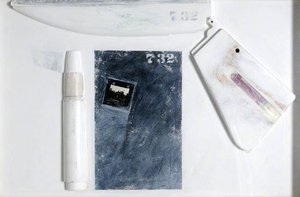 Navigator's Museum Instructions for Coast Watchers (2)
Original Navigator’s Museum Instructions by Will Maclean (2004). Detailed coastal charts & watchman guidance. Hand-painted reproduction – a unique art piece for maritime enthusiasts.
The pursuit of provenance is not merely an academic or aesthetic endeavor; it is a profound ethical imperative. In recent decades, the art world has been forced to confront the dark chapters of history, particularly regarding works that changed hands in Nazi-controlled Europe during World War II. The investigation into looted art has become a paramount concern for museums and collectors alike. Establishing a clean provenance is now essential to ensure the moral and legal validity of a collection, protecting owners from the complexities of restitution claims.
This responsibility extends beyond the 20th century to include concerns regarding the illegal export of antiquities from regions such as Africa, Iraq, and Syria. The modern collector must act as an ethical steward, ensuring that their acquisitions do not inadvertently support the destruction of cultural heritage. This heightened scrutiny has led to the creation of specialized commissions for provenance research and more rigorous due diligence processes within major institutions. In this context, provenance research is a tool for justice, helping to return stolen history to its rightful place and preserving the integrity of global cultural patrimony.
The Collector's Due Diligence: Best Practices for Verifying High-Value Acquisitions
For the elite collector, navigating the complexities of the art market requires a disciplined approach to due diligence. Acquiring a high-value work demands more than an appreciation of beauty; it requires a rigorous interrogation of the object's history and physical state. A prudent collector should never rely solely on a single source of information but should instead seek a convergence of evidence: stylistic agreement from a recognized connoisseur, a documented chain of ownership through reputable archives, and, where possible, scientific verification of the materials used.
This process involves examining not only what is present in the documentation but also what is conspicuously absent. A sudden, unexplained gap in ownership during a period of geopolitical instability should serve as a signal for deeper investigation. Furthermore, understanding the condition of the work—including any restorations or alterations that might obscure its original character—is crucial. By approaching every acquisition with the rigor of an investigator, the collector ensures that their passion is matched by a foundation of certainty, allowing them to build a collection that is not only aesthetically magnificent but historically and legally unassailable.