The Threshold of Dreams: Defining the Metaphysical Movement
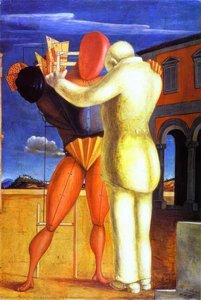
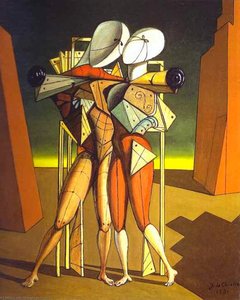
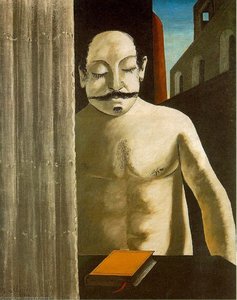
To step into a Metaphysical painting is to cross a threshold where the familiar becomes profoundly strange. At the dawn of the 20th century, as the world grappled with the rapid industrialization of reality, a new movement emerged that sought not to depict what the eye sees, but what the soul senses beneath the surface of perception. This was Metaphysical Art—a precursor to Surrealism that eschewed the chaotic distortions of Cubism in favor of a haunting, hyper-lucid clarity. It is an art of the "in-between," capturing those suspended moments of stillness where time seems to have ceased its forward march, leaving only the heavy, silent weight of existence. Unlike the dreamscapes of later movements which often relied on melting forms and impossible creatures, Metaphysical Art utilizes recognizable, classical elements—statues, empty piazzas, and long, dramatic shadows—to evoke a sense of profound mystery. The movement operates through a deliberate tension between the concrete and the inconceivable. By presenting objects with an almost clinical precision, the artist forces the viewer to confront the uncanny nature of the mundane. It is a visual language of whispers, where every empty corridor and sun-drenched courtyard serves as a stage for an unseen, metaphysical drama that unfolds just beyond the reach of human understanding.Shadows of Thought: The Philosophical Foundations of De Chirico
The intellectual architecture of this movement is built upon the profound, often unsettling pillars of European philosophy. Giorgio de Chirico, the movement's primary visionary, did not merely paint landscapes; he painted philosophical inquiries. His work was deeply infused with the existential tremors found in the writings of Friedrich Nietzsche, Arthur Schopenhauer, and Philipp Mainländer. These thinkers explored the concept of the "will," the tragedy of existence, and the profound void that lies beneath the veneer of civilization. In De Chirico’s hands, the canvas becomes a site of ontological struggle, where the interplay of light and shadow reflects the eternal conflict between consciousness and the unknown. When we observe his compositions, we are witnessing a confrontation with the nature of reality itself. The influence of Schopenhauer is felt in the heavy, melancholic atmosphere that permeates his deserted cityscapes, suggesting a world governed by forces far more primal than human reason. De Chirico’s ability to translate these abstract, often daunting intellectual concepts into tangible visual motifs allowed him to pioneer Metaphysical Realism. He invites us to reflect on our own place within the cosmos, using the unsettling juxtapositions of classical architecture and lonely artifacts to provoke a deep, contemplative response that transcends mere aesthetic appreciation.Unsettling Juxtapositions: Analyzing the Visual Language of Enigma
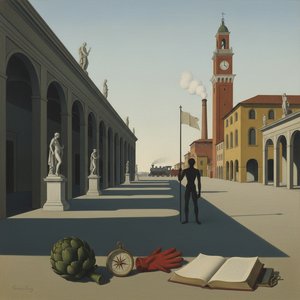
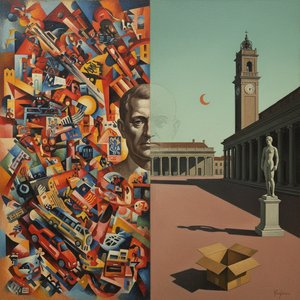
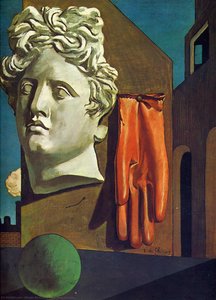
The true power of Metaphysical Art lies in its mastery of the unexpected. The movement thrives on the "unsettling juxtaposition"—the placement of two seemingly unrelated objects in a shared space to create a third, entirely new meaning. A lonely glove, a marble bust, or a simple tin of biscuits, when stripped of their functional context and placed within an expansive, silent landscape, undergo a metamorphosis. They become totems of solitude. This technique disrupts the viewer's logical processing, creating a cognitive dissonance that is both unsettling and deeply captivating. In works such as Metaphysical Interior with Biscuits, we see this haunting dreamscape in full effect. The classical objects are rendered with a starkness that feels almost too real, yet their arrangement defies the logic of the physical world. This creates a sense of "metaphysical reality," where the painting does not represent a memory or a dream, but a heightened state of being. By manipulating scale, perspective, and light, the artist crafts a visual riddle. The viewer is caught in a loop of searching for meaning within these silent encounters, finding that the more one looks, the more the mystery deepens, revealing layers of symbolic significance hidden within the seemingly simple.The Architecture of Solitude: Space and Silence in Metaphysical Interiors
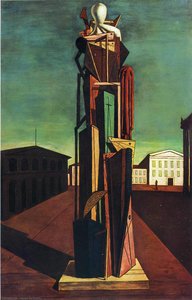
There is a specific, architectural quality to the solitude found in Metaphysical works. The movement frequently utilizes vast, empty interiors and sprawling, deserted piazzas to evoke a sense of existential loneliness. These spaces are not merely empty; they are heavy with an expectant silence. Through the use of exaggerated perspective—long, receding colonnades and deep, shadowed arcades—the artist creates a sense of infinite depth that can feel both inviting and claustrophobic. This architectural manipulation serves to isolate the viewer, stripping away the distractions of the modern world to focus on the raw essence of space. In masterpieces like Vast Metaphysical Interior, the architecture becomes a character in its own right. The interplay of light and shadow creates a rhythmic, almost musical quality to the emptiness, where the sun-drenched surfaces contrast sharply with the impenetrable darkness of the recesses. This use of chiaroscary serves to emphasize the physical boundaries of the space while simultaneously suggesting an infinite, metaphysical expanse beyond them. It is within these silent, structured voids that the viewer is most vulnerable to the profound beauty and the unsettling truth of their own existence, finding a strange comfort in the monumental stillness of the painted world.Beyond the Canvas: The Enduring Legacy of Metaphysical Realities
The echoes of the Metaphysical movement can be heard throughout the history of modern art, providing the foundational DNA for Surrealism and much of the psychological depth found in contemporary abstraction. By proving that art could explore the subconscious through the medium of the recognizable, De Chirico and his contemporaries opened a door to a new way of seeing. Their legacy is not merely found in museums, but in our continued fascination with the uncanny, the symbolic, and the profound mysteries that lie beneath the surface of our daily lives. Today, we continue to find solace and intellectual stimulation in these enigmatic visions. The ability of Metaphysical art to bridge the gap between the tangible world and the intangible realm of thought ensures its permanence in the canon of great art. It remains a testament to the power of the human imagination to transform the mundane into the monumental, and the silent into the profound. As we navigate our own complex realities, these timeless dreamscapes offer a sanctuary for contemplation, reminding us that there is always something more—something deeper, something more mysterious—waiting just beyond the edge of our perception.For those seeking to bring the profound depth of art history into their own living spaces, ArtsDot.com offers an unparalleled collection of museum-quality reproductions and bespoke oil paintings. Whether you are drawn to the haunting shadows of De Chirico or the vibrant textures of the Old Masters, our dedicated artists specialize in recreating the soul and tactile beauty of these masterpieces for the discerning collector.