The Pastoral Ideal: Understanding the Emotional Resonance of Village Art
There exists a profound, almost visceral connection between the human spirit and the depiction of the pastoral ideal. To gaze upon a village scene is not merely to observe a geographical location, but to engage in a dialogue with memory itself. These artworks serve as windows into a perceived era of simplicity, where the rhythm of life was dictated by the sun and the seasons rather than the frantic pulse of modern technology. This emotional resonance stems from a collective longing for tranquility—a sanctuary found within the soft contours of a rolling hill or the quiet dignity of a thatched cottage.
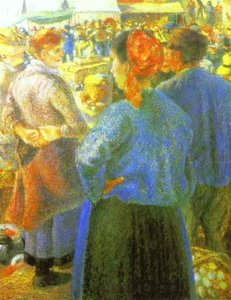
The power of these scenes lies in their ability to evoke nostalgia, a bittersweet yearning for a time that may be more myth than reality. In the brushstrokes of a master, the village becomes a symbol of stability and communal harmony. Whether it is the depiction of a bustling market square or a solitary farmhouse nestled in a valley, the subject matter taps into an ancestral recognition of home and hearth. This emotional depth transforms a simple landscape into a psychological landscape, inviting the viewer to find peace within the stillness of the painted world.
A Journey Through Time: From 19th-Century Realism to Impressionist Light
The evolution of village art is a fascinating chronicle of changing human perception. During the 19th century, the movement toward Realism brought an unprecedented level of honesty to rural depictions. Artists sought to document the grit and grace of agricultural life with meticulous detail, capturing the weight of tools, the texture of stone walls, and the authentic toil of the peasantry. This era was defined by a commitment to truth, where every furrow in the earth told a story of labor and endurance.
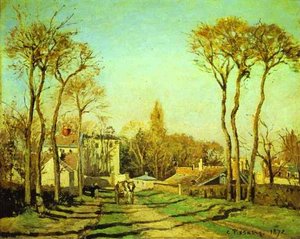
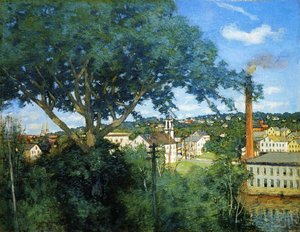
As the century progressed, however, the focus shifted from the tangible to the ephemeral. The Impressionist revolution reimagined the village through the lens of light and atmosphere. Rather than defining hard edges, painters began to prioritize the way sunlight dances across a meadow or how mist clings to a riverbank at dawn. This transition marked a move from the documentary to the sensory. In the works of masters like Sándor Ziffer or Albert Henry Krehbiel, we see the landscape dissolved into vibrant, broken brushstrokes that capture the fleeting essence of a moment. This historical progression allows us to appreciate village art not just as scenery, but as a sophisticated evolution of how we perceive our place within the natural world.
The Painter's Eye: Capturing Texture, Atmosphere, and Rural Tranquility
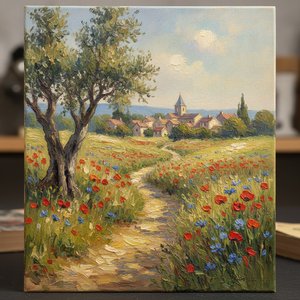
To successfully render a village scene, an artist must possess more than mere technical skill; they must possess the ability to translate atmosphere into pigment. The mastery of texture is paramount in this endeavor. A truly evocative landscape utilizes the physical properties of oil paint—often through techniques like impasto—to recreate the ruggedness of bark, the softness of grazing sheep, or the heavy dampness of a summer storm. When an artist applies multiple layers of paint, they create a three-dimensional surface that catches the light, giving the artwork a "living" quality that flat prints can never replicate.
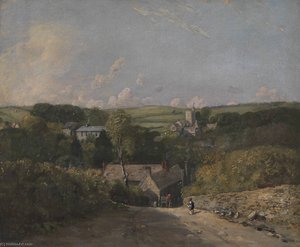
Beyond texture, the manipulation of light defines the mood of the piece. The ability to capture atmospheric perspective—the way distant hills fade into soft blues and greys—creates an illusion of infinite depth, drawing the viewer deep into the composition. Whether it is the warm, golden glow of a late afternoon in a Yorkshire valley or the cool, somber tones of a rainy English countryside, the artist’s palette dictates the emotional temperature of the scene. It is through this careful orchestration of light and substance that the profound stillness of rural life is preserved for eternity.
The Architecture of Nostalgia: Elements that Define a Classic Landscape
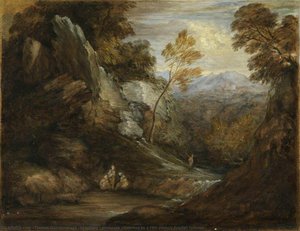
Certain recurring motifs act as the structural pillars of nostalgic art, providing a sense of familiarity that anchors the viewer. The presence of ancient trees, such as those found in the works of Martin Snape, offers a sense of permanence and wisdom, standing as silent witnesses to the passing generations. Similarly, the inclusion of livestock—horses, cows, or sheep—introduces a narrative of symbiotic existence between man and nature, reinforcing the theme of a balanced, harmonious ecosystem.
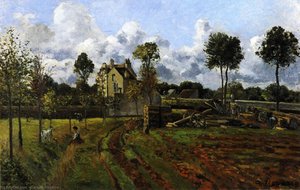
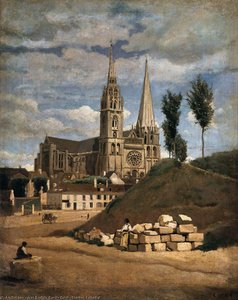
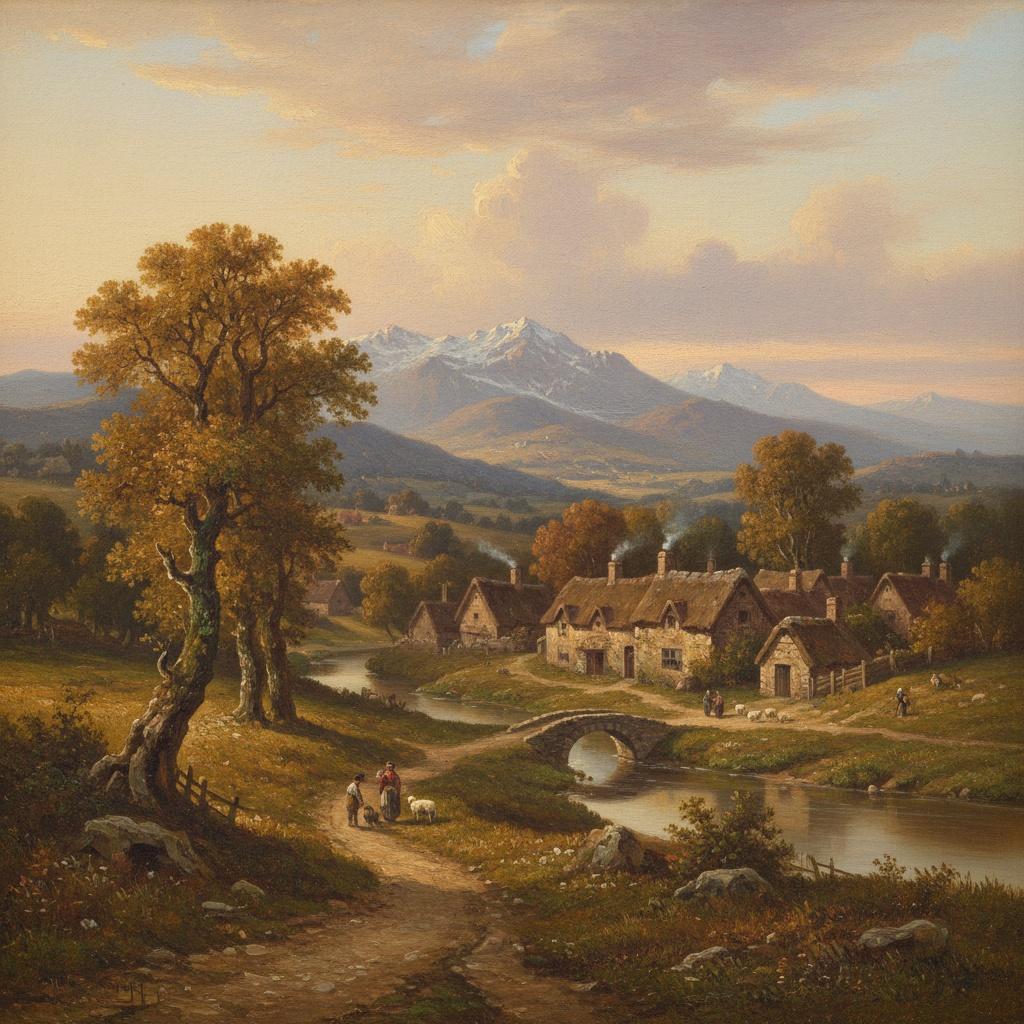
The architecture of the village itself—the weathered stone of a church, the timber frames of a cottage, or the winding dirt paths—provides the geometric framework for the composition. These elements are rarely presented as mere objects; they are integrated into the landscape as if they grew from the earth itself. When these elements are combined with the soft, organic shapes of the natural world, they create a balanced composition that feels both structured and wild, perfectly embodying the tension between human civilization and the untamed beauty of the countryside.
Curating the Countryside: Integrating Timeless Scenes into Modern Interiors
In an age dominated by digital screens and urban density, bringing the essence of the village into one's home serves as a vital restorative practice. Integrating classical landscape art into modern interior design offers a sophisticated way to introduce warmth and historical depth to a space. A large-scale, multi-panel landscape can act as a breathtaking focal point for a contemporary living room, breaking up the clean lines of modern architecture with the organic complexity of the natural world.
When selecting pieces for a collection, consider how the color palette of the artwork interacts with your existing decor. A painting featuring the lush greens and earthy browns of a British pastoral scene can complement neutral, minimalist interiors, adding a layer of "soul" to an otherwise austere room. For those looking to personalize their environment, the ability to commission bespoke reproductions allows for a seamless blend of history and personal taste. By surrounding ourselves with these timeless depictions of tranquility, we do more than decorate our walls; we curate an atmosphere of enduring peace and cultural reflection.
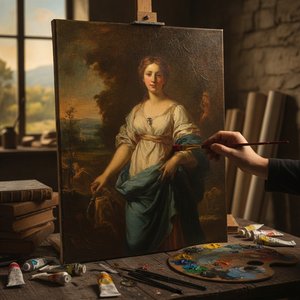
At ArtsDot.com, we are dedicated to preserving this legacy of human creativity. From museum-quality Giclée prints to exquisite, hand-painted oil reproductions that capture every tactile brushstroke, our mission is to make the beauty of the Old Masters and classical landscapes accessible to collectors worldwide. Whether you seek a custom portrait or a breathtaking landscape to transform your home, our artists bring academic excellence to every canvas.