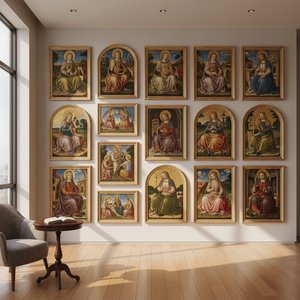




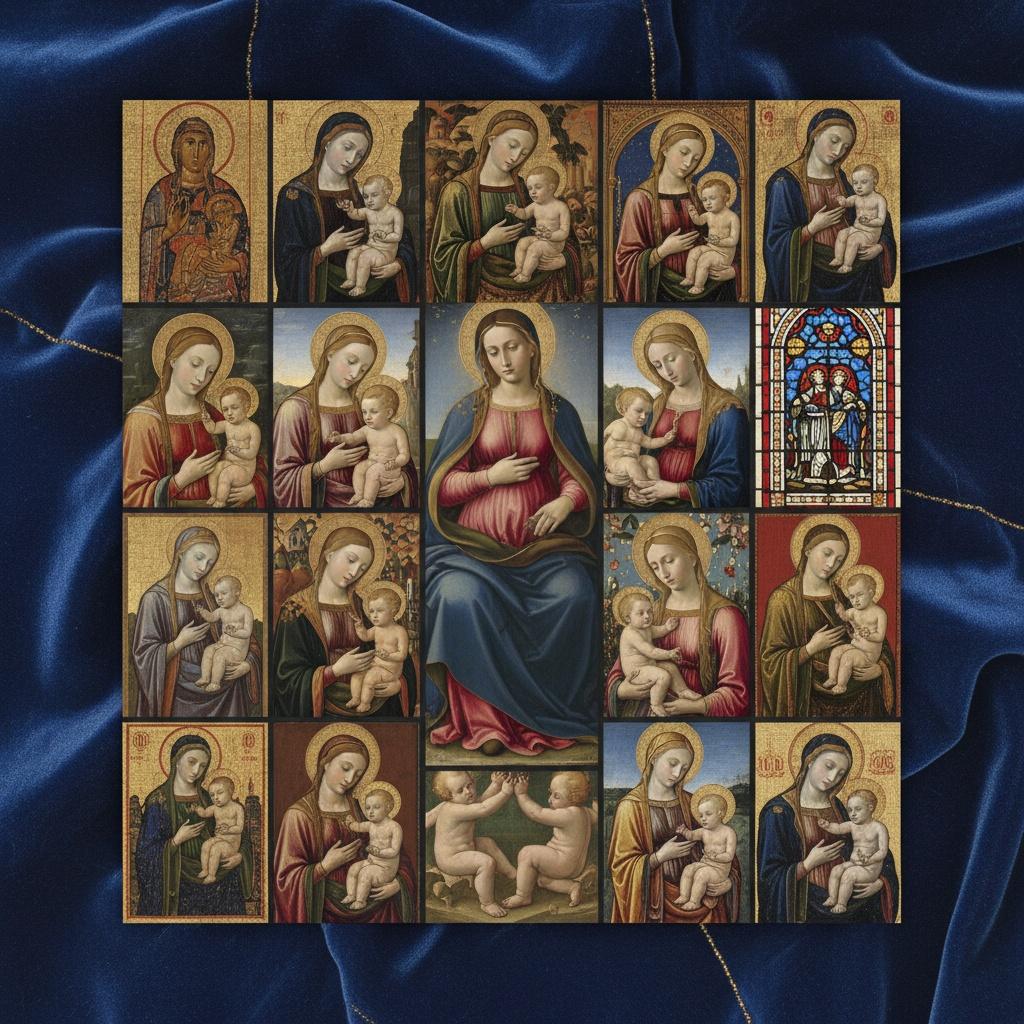
The Theology of Tenderness: Understanding the Madonna and Child Motif
To gaze upon a Madonna and Child is to witness more than mere portraiture; it is to enter a profound dialogue between the human and the divine. Throughout the annals of Western art, this motif has served as the ultimate vessel for expressing the concept of Divine Love—a love that is simultaneously celestial and deeply, achingly terrestrial. The subject matter transcends simple religious iconography, offering a window into the dual nature of Christ: the vulnerability of an infant and the majesty of a Savior. For the discerning enthusiast, these works represent a unique intersection where theological complexity meets the raw, emotional intimacy of motherhood.
The power of this imagery lies in its ability to humanize the sacred. By depicting the Virgin Mary in moments of quiet contemplation, gentle embrace, or even maternal fatigue, artists have historically bridged the gap between the worshiper and the divine. This connection is forged through a shared language of tenderness, making the monumental mysteries of faith accessible through the recognizable rhythms of human affection. As we explore these masterpieces, we do not merely study history; we participate in a timeless meditation on protection, sacrifice, and the eternal bond of love.
Raphael’s Harmony: The Serenity of the Small Cowper Madonna
In the pantheon of High Renaissance masters, few can command the sense of equilibrium as effortlessly as Raphael. His work, particularly exemplified in the exquisite Small Cowper Madonna, serves as a masterclass in compositional grace. Here, the artist employs a meticulous symmetry that places the Virgin Mary at the very heart of the universe, creating an immediate sense of stability and profound peace. There is no chaos in Raphael’s vision; instead, there is a rhythmic balance where every soft line and gentle contour contributes to an atmosphere of celestial serenity.
The technical brilliance of this piece lies in its subtle use of color and light. Rather than employing jarring contrasts, Raphael utilizes a palette of soft, luminous tones that seem to glow from within the canvas itself. This gentle approach enhances the overall tranquility of the scene, inviting the viewer into a state of quiet reverence. The way the figures interact—the delicate positioning of the Christ child and the protective gaze of the Mother—demonmicates a level of sfumato and tonal smoothness that defines the pinnacle of Renaissance achievement. It is a painting that does not demand attention through spectacle, but rather earns it through an undeniable, quiet perfection.
Devotion in Detail: Exploring the Renaissance Madonna of Humility
While some masters sought the heights of celestial grandeur, others found profound spiritual resonance in the concept of humility. The Madonna of Humility, often depicted by artists such as the Master of the Castello Nativity, offers a poignant departure from more formal, enthroned depictions. In these works, the Virgin is frequently shown seated upon the earth or a simple cushion, emphasizing her connection to the humble reality of the human condition. This stylistic choice serves to deepen the emotional accessibility of the artwork, inviting the viewer to find sanctity in the ordinary.
The beauty of such pieces resides in their intricate details and the quiet narratives they weave. One might observe the delicate way an angel leans toward the infant, or the subtle textures of the fabric draped around the Mother’s shoulders. These elements are not merely decorative; they are symbolic anchors that ground the divine event in a tangible, sensory world. The Madonna and Child with Two Angels exemplifies this era's ability to infuse religious significance with a palpable sense of warmth and intimacy, reminding us that the most profound truths are often found in the simplest gestures of care.
From Da Vinci to the Masters: The Evolution of Divine Motherhood in Art
The trajectory of the Madonna motif is one of continuous evolution, moving from the rigid, symbolic icons of the Byzantine era toward the psychological depth of the High Renaissance and beyond. Leonardo da Vinci revolutionized this progression by introducing a profound sense of mystery and atmospheric depth. His contributions, often characterized by enigmatic expressions and complex, layered compositions, challenged viewers to look beneath the surface of the paint to find the underlying spiritual truth. The influence of his techniques—the mastery of light and shadow—can be traced through subsequent generations of masters who sought to capture the elusive essence of the soul.
As art progressed, the depiction of the Madonna shifted from a focus on iconographic purity to an exploration of human emotion and drama. We see the transition from the static, eternal presence of early Renaissance figures to the more dynamic, emotionally charged compositions of later periods. This evolution reflects a broader shift in Western thought, moving toward a more personal, experiential form of devotion. Each era brought new ways to interpret the relationship between the Mother and Child, yet the core essence—the celebration of an unbreakable, sacred bond—remained the unwavering heartbeat of the tradition.
The Tactile Legacy: Preserving Sacred Imagery through Hand-Painted Reproductions
In our modern age, the preservation of these classical aesthetics is a pursuit of both passion and cultural stewardship. The true essence of a masterpiece like a Raphael or a Da Vinci does not reside solely in its historical significance, but in its tactile presence—the visible brushstrokes, the rich impasto, and the depth of color that only oil on canvas can provide. While digital prints offer convenience, they often lack the "soul" found in the physical texture of a hand-painted work. To experience art is to engage with the very movement of the artist's hand across the grain of the canvas.
This is why the tradition of high-quality, hand-painted reproduction remains vital for collectors and enthusiasts alike. A meticulously crafted oil reproduction allows the light to dance across real pigment, recreating the tonal range and structural depth of the original Old Masters. By bringing these sacred images into contemporary spaces through authentic craftsmanship, we ensure that the dialogue between the past and the present continues. Whether through a large-scale mural or a delicate portrait, the goal remains the same: to preserve the profound beauty of Divine Love for generations to come.
At ArtsDot.com, we are dedicated to this legacy of excellence. Our mission is to make the grandeur of fine art accessible to a global audience, providing hand-painted reproductions that honor the academic standards of the masters. From custom commissions that transform personal memories into Renaissance-style masterpieces to large-format frescoes for architectural wonders, we bridge the gap between historical reverence and modern living.