The Bridge Between Eras: Corot’s Role in Neoclassicism and Impressionism
To understand the evolution of modern landscape painting, one must look toward the pivotal figure of Jean-Baptiste-Camille Corot. Standing at a unique crossroads in art history, Corot acted as the essential conduit between the structured, formal rigors of Neoclassicism and the sensory, light-drenched revolution of Impressionism. While his early training was rooted in the classical tradition—emphasizing clear composition and historical gravity—his heart belonged to the ephemeral. He possessed a rare ability to respect the architectural integrity of a landscape while simultaneously introducing a sense of movement and atmospheric uncertainty that would later define the Impressionist movement.
This duality allowed him to transcend the rigid boundaries of his time. Where Neoclassicism sought to immortalize the permanent, Corot sought to capture the passing moment. He did not merely paint trees or mountains; he painted the air that surrounded them. By softening the edges of reality and prioritizing tonal harmony over sharp outlines, he paved the way for artists like Monet and Pissarro to explore the subjectivity of perception. His work serves as a profound testament to the idea that art can be both structurally sound and emotionally fluid, bridging the gap between the ancient pursuit of perfection and the modern pursuit of feeling.
The Poetry of Atmosphere: Mastering Light and Mist in the Landscape
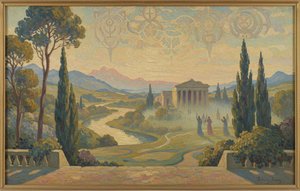
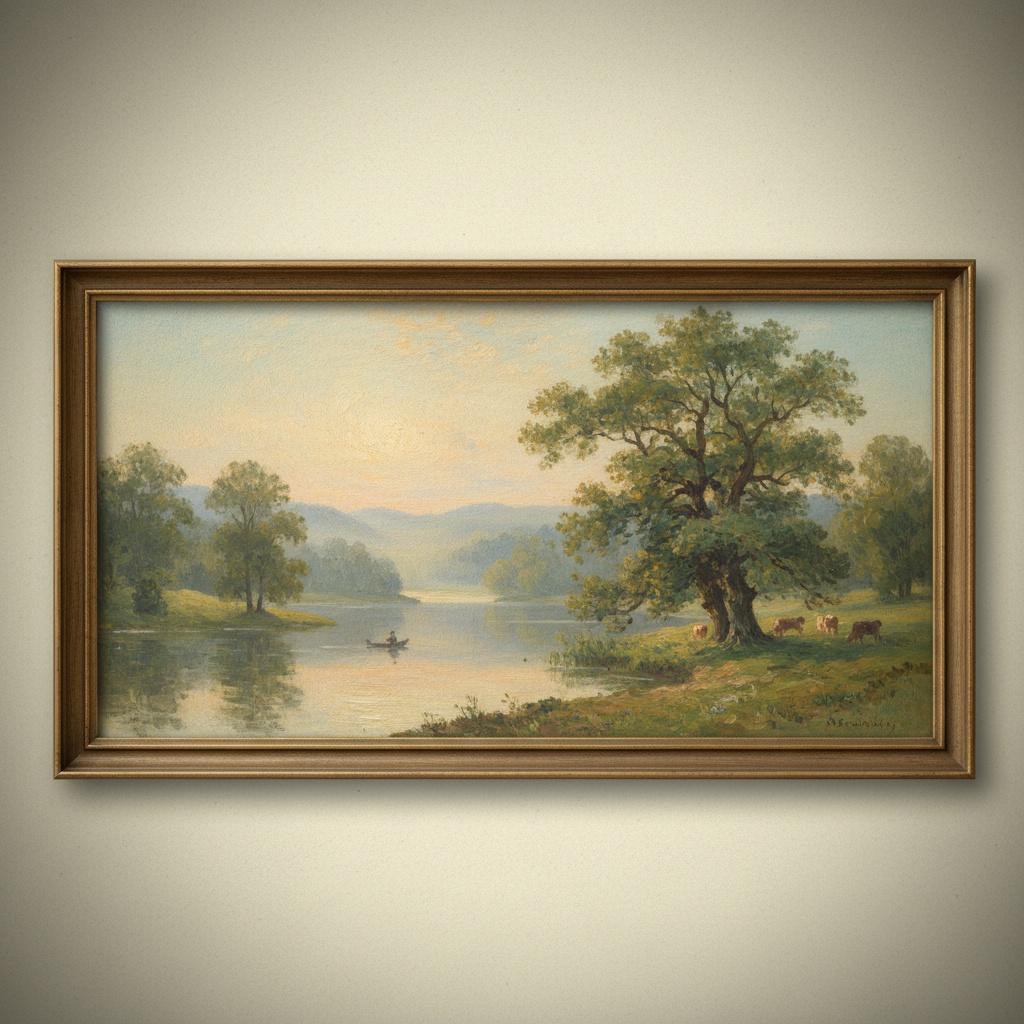
There is a certain quietude that settles over a viewer when standing before a Corot masterpiece. It is not a silence of emptiness, but a silence of profound presence. This is achieved through his unparalleled mastery of atmospheric perspective—the technique of using light, mist, and varying tones to create the illusion of depth and air. Corot’s landscapes are often shrouded in a delicate, silvery haze, a characteristic that earned him a reputation as a true master of light. He understood that light is not merely something that illuminates objects, but something that defines their very essence.
In his hands, the morning mist becomes a tangible character within the composition. Through subtle gradations of grey, soft green, and muted blue, he creates a sense of moisture and temperature. This "silvery" palette allows the viewer to feel the dampness of a French morning or the warmth of a fading dusk. By obscuring certain details behind veils of light, he invites the imagination to complete the scene, creating an intimate dialogue between the canvas and the observer. This poetic use of atmosphere transforms a simple topographical study into a deeply spiritual experience, where the boundaries between the earth and the sky seem to dissolve into a singular, luminous breath.
A Journey Through France: From the Harbors of Honfleur to the Auvergne Mountains
Corot’s oeuvre serves as a visual diary of the French landscape, capturing the diverse soul of the nation through various geographical lenses. In his earlier works, such as Honfleur - The Old Wharf (1824), we witness a fascination with the bustling energy of maritime life. Here, the artist captures the rhythmic movement of a harbor scene, where the interplay of water and wood reflects a meticulous yet soulful observation of human industry nestled within nature. These scenes possess a structural clarity that speaks to his classical foundations, yet even here, the light begins to dance upon the surface of the tides.
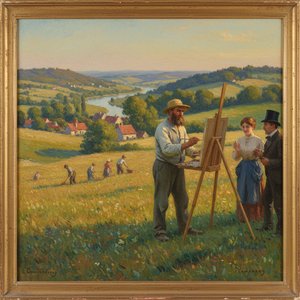
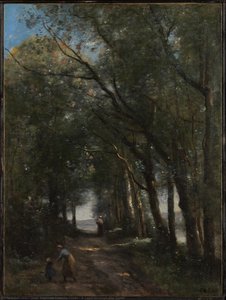
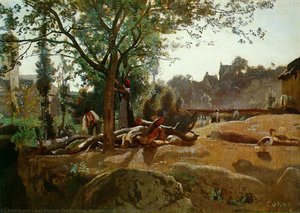
As his travels took him deeper into the heart of France, his style matured into something more contemplative and expansive. In the rugged terrains of Mountains in Auvergne (1841), we see a departure from the detailed harbor toward a more sweeping, emotive grandeur. The landscape becomes less about specific landmarks and more about the feeling of vastness and solitude. Similarly, works like Les Alinges, Haute Savoie demonstrate his ability to find tranquility in the shade of ancient trees, using figures under the canopy to provide scale and a sense of human connection to the wild. Each region he visited offered a new vocabulary of light and texture, allowing him to weave a tapestry of France that is as much about emotion as it is about geography.
The Painterly Touch: Analyzing Corot's Signature Brushwork and Tonal Palette
To look closely at a Corot painting is to witness the physical labor of an artist in pursuit of grace. His technique is characterized by a sophisticated balance of precision and spontaneity. In certain areas, his brushwork remains controlled, defining the sturdy trunks of oaks or the sharp edges of a distant cliffside. However, it is in his use of loose, expressive strokes that his true genius resides. He utilized a variety of textures to mimic the organic complexity of nature—the feathery lightness of leaves, the soft blur of distant foliage, and the reflective smoothness of still water.
'His palette was famously restrained, eschewing garish colors in favor of a sophisticated range of earth tones, silvers, and muted greens. This tonal unity is what gives his work its cohesive, dreamlike quality. By limiting the chromatic range, he forced the viewer to focus on the subtle shifts in value and light. This restraint prevents the eye from being distracted by bright pigments, instead guiding it through a rhythmic progression of shadows and highlights. It is this disciplined approach to color that allows his landscapes to feel timeless, as if they exist in a perpetual state of twilight, untouched by the frantic colors of the modern world.
The Enduring Legacy: How Corot’s Vision Continues to Inspire Modern Artistry
The influence of Jean-Baptiste-Camille Corot extends far beyond the nineteenth century. His ability to infuse landscape painting with a sense of psychological depth and atmospheric truth laid the groundwork for much of the art that followed. Every artist who seeks to capture the "mood" of a place rather than just its appearance owes a debt to his innovations. His legacy is found in the way we perceive the interplay between light and shadow, and in the recognition that the most profound truths are often found in the softest, most ephemeral moments.
Today, his work continues to resonate with collectors and enthusiasts who find solace in his serene compositions. At ArtsDot.com, we celebrate this enduring legacy by offering meticulously handcrafted oil reproductions that strive to capture the very soul of Corot’s brushwork. Whether through a textured impasto technique or a delicate Giclée print, our mission is to bring the master's atmospheric brilliance into the modern home, ensuring that his poetic vision of light and landscape remains a living, breathing part of our global cultural heritage.