
The Northern Eye: Defining the German Renaissance Aesthetic
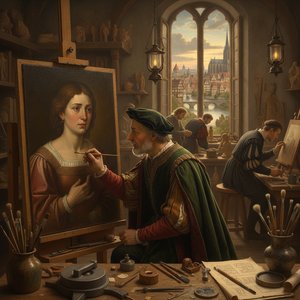
To understand the German Renaissance is to embark on a journey of microscopic observation, where the vastness of the human spirit is captured within the smallest furrow of a brow or the delicate vein of a leaf. Unlike the Italian Renaissance, which sought the idealized proportions of classical antiquity and the mathematical harmony of linear perspective, the movement in the Germanic lands was characterized by an almost devotional obsession with the tangible world. This was an era where the divine was not found merely in the ethereal heavens, but in the hyper-realistic textures of velvet, the cold glint of polished armor, and the rugged landscapes of the Holy Roman Empire.
The aesthetic of this period is defined by a profound tension between the spiritual and the material. Artists did not merely paint objects; they interrogated them. Every element within a composition served as a bridge between the physical reality of the viewer and a deeper, metaphysical truth. This meticulous approach required a unique kind of vision—a Northern Eye that found grandeur in the minute. It was a movement that celebrated the tactile, inviting the observer to feel the weight of heavy furs and the crispness of linen through the mere act of looking, creating an immersive experience that remains as potent today as it was in the sixteenth century.
Albrecht Dürer and the Architecture of Precision
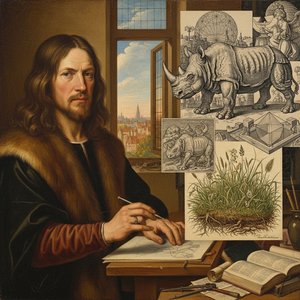
At the heart of this movement stands a titan whose name is synonymous with technical perfection: Albrecht Dürer. A polymath of the Renaissance, Dürer possessed the rare ability to marry the intellectual rigor of Italian humanism with the painstaking craftsmanship of the German tradition. His work serves as the architectural blueprint for the era’s precision. When one examines his studies, such as the Portrait of William Pirckheimer, one does not simply see a man; one witnesses a masterclass in pen and ink technique, where every line is calculated to build volume, shadow, and character.
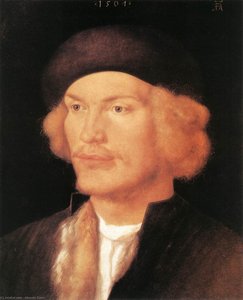
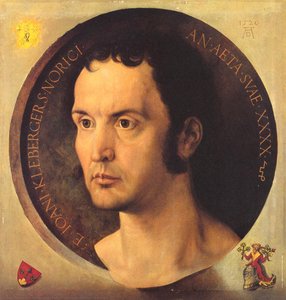
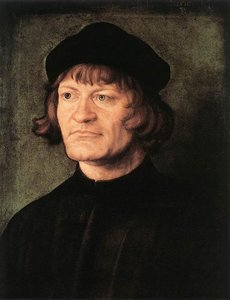
Dürer’s genius lay in his ability to command both the broad stroke and the microscopic detail. He approached the canvas and the copper plate with the discipline of an engineer. In his self-portraits and portraits of contemporaries like Oswolt Krel, he utilized light not just to illuminate, but to sculpt. The way light catches the heavy red robes or the intricate textures of fur in his works demonstrates a profound understanding of how surface tension and material density affect visual perception. He elevated the status of the artist from a mere craftsman to an intellectual force, proving that through extreme precision, one could capture the very essence of the human soul.
The Art of the Intricate: Mastery of Printmaking and Engraving
While oil paintings offered a window into the era's splendor, it was the medium of printmaking that allowed the German Renaissance to communicate its complex visual language to the wider world. The mastery of engraving and woodcut reached unprecedented heights during this period, transforming reproducible media into high art. Through the controlled application of burins on metal, artists could achieve a level of detail that seemed almost impossible for the human hand. These prints were not mere copies; they were intricate tapestries of line and dot, capable of conveying immense psychological depth.
Humanism in Focus: Portraiture and the Dignity of the Individual
The German Renaissance coincided with a profound shift in how humanity viewed itself. The rise of humanism brought a renewed focus on individual agency, intellect, and the dignity of the person. This philosophical evolution found its most striking expression in the period's portraiture. Unlike the stylized icons of the Middle Ages, these portraits sought to capture the psychological reality of the sitter. There is a palpable sense of presence in works like Albrecht Dürer the Elder, where the subject’s gaze and posture suggest a life lived with purpose and reflection.
Portraiture became a vehicle for documenting the social and intellectual landscape of the time. Artists focused on the attributes that defined a person's station and character—the scholarly tools of a humanist, the opulent fabrics of a merchant prince, or the somber attire of a cleric. By rendering these details with such unflinching honesty, painters bestowed a sense of immortality upon their subjects. The dignity found in these works arises from this very realism; by acknowledging the specific, physical truths of the individual, the artist honors the universal importance of the human experience.
Symbolism and Texture: Decoding the Hidden Narratives in Detail
To the untrained eye, a German Renaissance painting may appear to be a simple collection of beautifully rendered objects. However, for the contemporary viewer, every texture and object serves as a coded message. The movement utilized a sophisticated system of iconography where the material world was saturated with meaning. A single piece of fruit, a specific flower, or even the way a shadow falls across a tabletop could signify themes of mortality, purity, or divine presence.
The mastery of texture played a crucial role in this symbolic language. The tactile contrast between the cold, hard surface of a metal orb and the soft, organic texture of a velvet sleeve was not merely a display of skill; it was a way to ground symbolic concepts in physical reality. This layering of meaning—where the visible texture supports the invisible symbol—creates a rich, multi-dimensional narrative. Deciphering these works requires an appreciation for the "hidden" art within the visible, a process that rewards the patient observer with a deeper understanding of the era's complex spiritual and social landscape.
Preserving the Legacy: Bringing Renaissance Grandeur to Modern Interiors
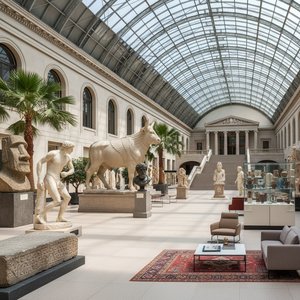
In our modern, often minimalist world, the profound depth and intricate detail of the German Renaissance offer a much-needed sense of soul and historical continuity. Integrating these masterpieces into contemporary spaces is not merely an act of decoration, but an act of curation. Whether through high-quality oil reproductions that capture the tactile impasto of the masters or museum-grade Giclée prints that preserve every fine line of an engraving, bringing this era into the home allows us to surround ourselves with the enduring values of precision and humanism.
At ArtsDot.com, we specialize in bridging the gap between the Old Masters and the modern collector. Our artisans utilize traditional techniques—applying multiple layers of oil paint on heavy-duty cotton canvas—to ensure that the "living" quality of the original works is preserved. From custom commissions that transform personal memories into Renaissance-style portraits to large-scale murals that recreate historical grandeur, we provide the tools to make art history a tangible part of your living environment. We invite you to explore our vast library and discover how the meticulous beauty of the German Renaissance can breathe new life and profound meaning into your personal space.