The Architecture of Dreams: Defining the Surrealist Movement
To step into a Surrealist canvas is to abandon the rigid scaffolding of logic and enter a realm where the impossible becomes palpable. Emerging from the ashes of the First World War, Surrealism was far more than a mere aesthetic rebellion; it was a profound philosophical endeavor to reconcile the fractured reality of the waking world with the untamed truths of the sleeping mind. This movement sought to dismantle the hegemony of rationalism, which many artists believed had led humanity toward catastrophe, and instead championed the irrational, the marvelous, and the unexpected. It was an era where the boundaries between the tangible and the ethereal dissolved, allowing for a new architecture of thought—one built not on stone and mortar, but on the fluid, often unsettling structures of our deepest desires and fears.
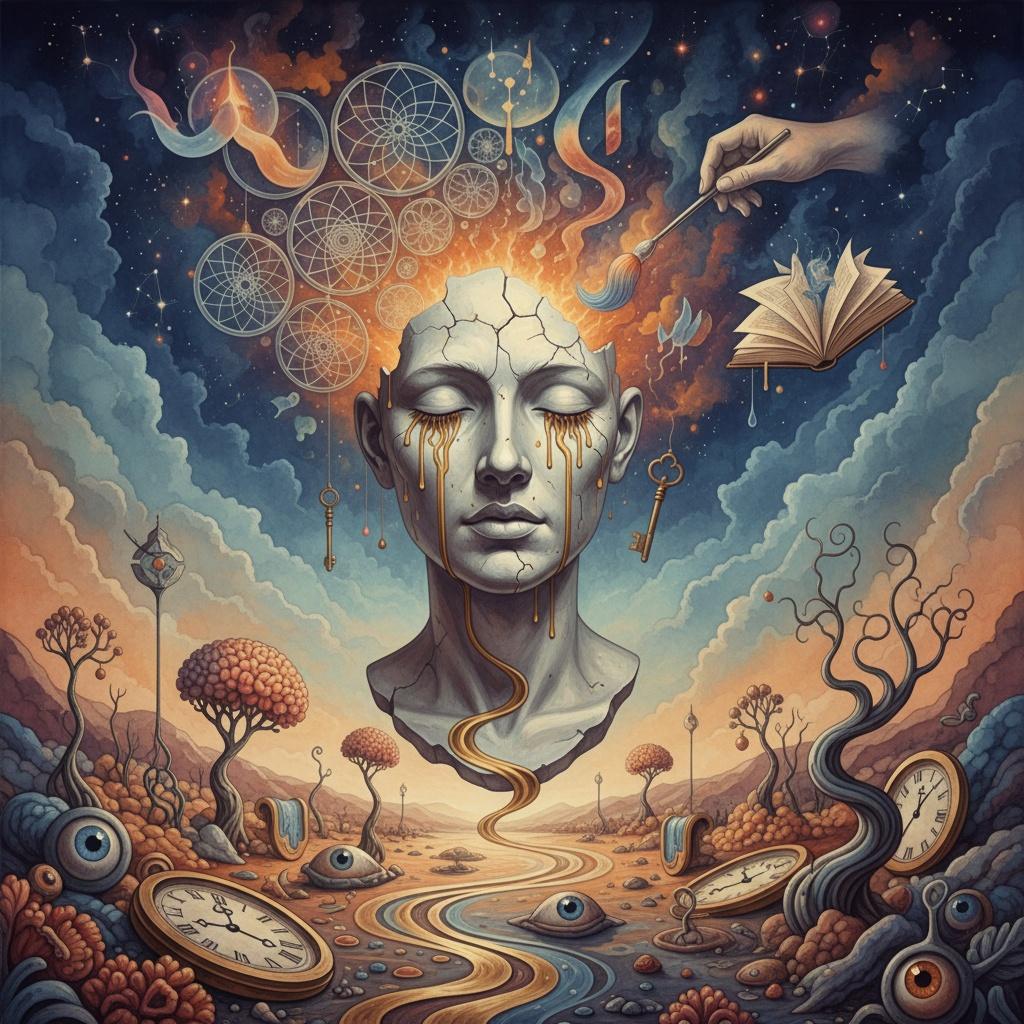
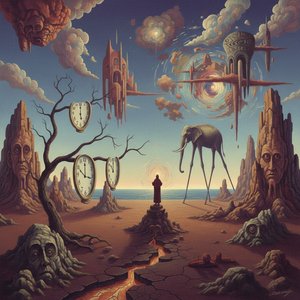
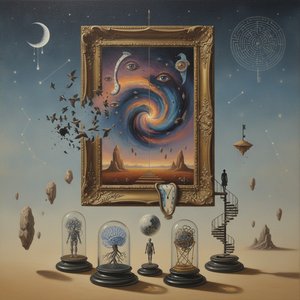
The movement’s strength lay in its ability to utilize the familiar to evoke the unfamiliar. By placing recognizable objects in impossible juxtapositions, Surrealists created a sense of cognitive dissonance that forced the viewer to question the very nature of perception. This was not an escape from reality, but an expansion of it. Through the careful manipulation of scale, light, and shadow, artists constructed landscapes that felt hauntingly authentic yet fundamentally alien. It was a period of intense intellectual vigor, where poetry, psychoanalysis, and visual art converged to create a unified front against the mundane, forever altering the trajectory of modern art history.
The Subconscious Canvas: Exploring Freudian Influence and Automatism
At the heart of the Surrealist project lay the revolutionary theories of Sigmund Freud, whose explorations into the unconscious mind provided the movement with its psychological compass. The Surrealists were captivated by the idea that beneath the polite veneer of civilization lies a reservoir of repressed impulses, primal instincts, and symbolic narratives. To access this hidden wellspring, they pioneered techniques such as psychic automatism—a method of creating without the interference of conscious thought or moral censorship. By allowing the brush to move with a spontaneous, almost rhythmic autonomy, artists sought to bypass the intellect and allow the true essence of the psyche to manifest directly upon the canvas.
This pursuit of spontaneity often resulted in works that felt organic, as if they were being birted from the earth or exhaled by the soul itself. Beyond pure automatism, the movement embraced the concept of the "uncanny"—that which is strangely familiar yet deeply unsettling. Through the use of dream logic, where time is non-linear and space is elastic, painters could navigate the labyrinthine corridors of the mind. This psychological depth transformed the act of painting from a mere representation of the external world into an archaeological excavation of the internal self, making every stroke a potential revelation of a hidden truth.
Masters of the Uncanny: Analyzing Iconic Surrealist Imagery
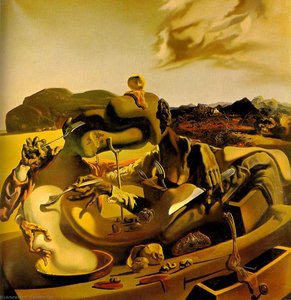
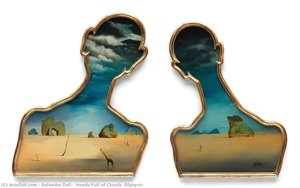
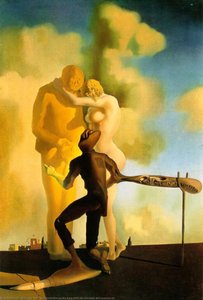
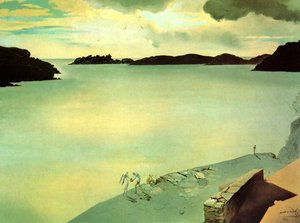
The visual vocabulary of Surrealism is perhaps most famously articulated through the works of masters like Salvador Dalí and Max Ernst. Dalí, with his meticulous, almost hyper-realistic technique, mastered the art of the "hand-painted dream photograph." His ability to render melting clocks or elongated figures with such academic precision made the impossible feel disturbingly real. In pieces such as Figure with Flag, one observes a profound command over composition that anchors even the most bizarre imagery in a sense of historical weight. Similarly, his explorations of biblical and mythological themes, seen in works like David et Philistaeus, demonstrate how Surrealism could breathe new, unsettling life into classical narratives.
In contrast, Max Ernst utilized texture and layered compositions to evoke a sense of primordial mystery. His work often featured enigmatic creatures and desolate landscapes that seemed to pulse with an ancient, subterranean energy. The movement also found profound expression in the works of artists like Georges Papazoff, whose early Parisian influences brought a unique, dreamlike lyricism to the genre. Even in more contemporary echoes, such as the hauntingly beautiful paintings of Maria Chevska, we see the enduring legacy of these masters—the exploration of identity and transformation through imagery that remains evocative and deeply moving. These artists did not merely paint pictures; they constructed windows into a dimension where the laws of physics are replaced by the laws of emotion.
Metamorphosis and Identity: The Evolving Language of Dreamscapes
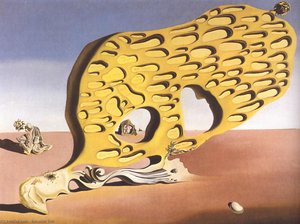
Surrealism is inherently a language of change, a study in the fluid state of being. One of its most potent themes is metamorphosis—the process by which one form transitions into another, mirroring the instability of identity itself. This is masterfully captured in works like Max Ernst’s The Equivocal Woman, where the boundaries between human and object, or between different states of existence, become blurred. Such imagery serves as a metaphor for the human condition: our constant state of flux, our struggle to define ourselves amidst the shifting sands of experience and memory.
This preoccupation with transformation extends to the very landscapes the Surrealists inhabited. The terrain is rarely static; mountains may breathe, trees may possess limbs, and the sky may drip like liquid gold. This fluidity challenges the viewer's sense of permanence. By presenting a world in a state of perpetual becoming, Surrealism invites us to contemplate our own capacity for growth, decay, and rebirth. It suggests that identity is not a fixed monument, but a continuous narrative, written in the language of symbols and shadows, constantly being rewritten by the tides of the subconscious.
Preserving the Impossible: Bringing Surrealism into the Modern Interior
In the contemporary era, the allure of Surrealist expression remains undiminished, offering a sophisticated way to inject depth and intellectual intrigue into modern living spaces. Integrating such evocative art requires an appreciation for balance; a single, powerful Surrealist piece can serve as the psychological anchor of a room, prompting conversation and reflection. Whether through the bold, textured impasto of a custom oil reproduction or the precise clarity of a museum-grade Giclée print, these works bring a sense of narrative complexity to architectural environments.
For the discerning collector, the challenge lies in selecting pieces that resonate with the personal "dreamscape" of their home. The use of multi-panel layouts can expand the reach of a surrealist vision across wide walls, creating an immersive experience akin to a modern fresco. As we continue to find new ways to bridge the gap between historical mastery and modern technology, the power of the subconscious remains a vital tool for artistic expression. By honoring the textures, layers, and profound mysteries of the Surrealist masters, we ensure that the dialogue between the waking world and the dream remains eternally vibrant within our most cherished spaces.
At ArtsDot.com, we specialize in preserving this legacy. From meticulously handcrafted oil reproductions that capture every tactile brushstroke to bespoke commissions that allow you to reimagine your own memories through a Surrealist lens, our mission is to make the profound beauty of art history accessible to all. Whether you seek a grand mural or a delicate print, our commitment to academic excellence and technical precision ensures that every piece we create carries the enduring spirit of the masters.