

The Essence of Giclée: Defining High-Fidelity Artistry for the Discerning Collector
 Giclée Prints Explained: The Ultimate Guide to Museum-Quality Art Reproductions
Defining Giclée: The Science and Artistry Behind High-Fidelity Reproductions The term Giclée —pronounced zhee-KLAY—carries an air of French sophistication that belies its technical origins. Emerging in the 1990s from a period of rapid innovation in i...
To enter the world of fine art acquisition is to embark on a lifelong pursuit of beauty, depth, and resonance. For the modern connoisseur, the desire to surround oneself with masterpieces often meets the practical reality of the inaccessible original. It is within this delicate tension between aspiration and acquisition that the Giclée process emerges—not merely as a method of printing, but as a sophisticated bridge to the sublime. Derived from the French word gicler, meaning to spray or squirt, the term carries an air of elegance that belies its technical precision. Since its emergence in the early 1990s, Giclée has transcended the realm of mere commercial reproduction to become a respected medium in its own right, specifically designed to capture the very soul of a masterpiece through high-resolution inkjet technology.
Unlike standard digital prints that often feel like hollow echoes of an original, a true Giclée is a high-fidelity resurrection. It utilizes specialized printers capable of depositing millions of microscopic droplets with surgical accuracy, allowing for the reproduction of the most subtle gradations of light and shadow. Whether one is admiring the dappled sunlight of a Monet garden or the profound, monochromatic tension found in contemporary abstract works, the Gclé process seeks to honor the artist's original intent. It is an art form born from the marriage of technological innovation and artistic ambition, offering a way to bring the grandeur of museum-quality works into the intimate sanctuary of one's private estate.
The Anatomy of Excellence: Pigment-Based Inks and Museum-Grade Substrates
 Giclée Prints: Archival Quality & Aesthetic Nuances for the Discerning Collector
Introduction: The Rise of Giclée Printing in Fine Art Wikipedia: Giclée Giclée ( zhee-KLAY) describes digital prints intended as fine art and produced by inkjet printers. The term is a neologism, ultimately derived from the French word gicleur, coine...
The true distinction between a common print and a museum-quality reproduction lies beneath the surface, in the very chemistry of its creation. For the discerning collector, the longevity of an investment is paramount. This is why the use of pigment-based inks is non-negotiable. While traditional dye-based inks may offer immediate vibrancy, they are notoriously susceptible to the ravages of UV exposure and time, leading to a tragic fading of hues. In contrast, pigment inks consist of tiny, solid particles of color suspended in a liquid carrier. These particles bond deeply with the substrate, ensuring that the deep midnight navies, ethereal creams, and soulful teals remain remarkably true and resistant to light for generations.
However, the ink is only half of the equation; the foundation upon which it rests—the substrate—is equally vital. To achieve archival excellence, these prints must be rendered on museum-grade papers or heavy-duty cotton canvases that are strictly acid-and pH-neutral. Such materials prevent the yellowing, brittleness, and degradation that plague lesser reproductions. When these two elements of technical mastery meet, the result is a work of art that possesses an incredible tonal range and color depth, mimicking the subtle transitions found in the finest oil paintings or delicate watercolor washes.
Beyond the Flat Surface: The Emergence of Premium Textured Giclée Prints
 ArtsDot.com F.A.Q.: Get the 3D Look with Premium Textured Giclée Prints
The Art of Dimension: Defining Premium Textured Giclée Prints In the rarefied world of fine art acquisition, the pursuit of perfection often lies in the subtle nuances that escape the casual observer. For the discerning collector, a mere image is rar...
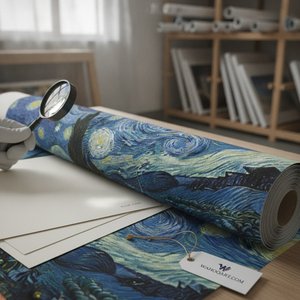
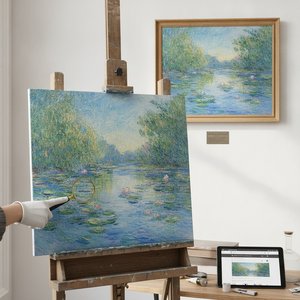
In the rarefied world of fine art acquisition, a mere image is rarely sufficient; one seeks the visceral presence of the masterpiece. A profound challenge with traditional digital reproductions has long been their two-dimensional limitation—they lack the physical topography that gives an original painting its life. This is where the concept of the premium textured Giclée emerges as a transformative medium. It represents a move beyond simple reproduction and into the realm of true interpretation, bridging the gap between the flat limitations of modern printing and the tactile majesty of classical oil painting.
The magic of this process lies in its ability to resurrect the essence of the impasto technique—that celebrated method where paint is laid thickly upon the surface, allowing brushstrokes to rise and catch the light. By introducing physical depth through proprietary texture applications, these prints allow the viewer to experience a sense of weight and dimension. One can almost feel the rhythmic ridges and sculptural troughs that define a contemporary abstract work. This evolution allows the collector to engage both the eye and the sense of touch, providing an authentic experience that honors the physical soul of the original canvas.
Archival Integrity: Ensuring Longevity and Color Permanence in Fine Art Reproductions
Capturing the Light: The Soul of Impressionism and the Quest for Perfect Reproduction Printmaking Printmaking is the process of creating artworks by printing, normally on paper, but also on fabric, wood, metal, and other surfaces. "Traditional printm...
For those who view art as a legacy, the concept of archival integrity is the cornerstone of every acquisition. A masterpiece should not merely decorate a room; it should endure as a testament to history. This endurance is achieved through a rigorous commitment to materials that resist the environmental pollutants and atmospheric changes of our modern world. The use of flexible gesso to prevent cracking, specific oils like safflower to ensure whites do not yellow, and a final protective coating of Damar varnish all work in concert to shield the artwork from dust, moisture, and oxidation.
True archival excellence also demands a commitment to preservation in the home. To protect such an investment, the connoisseur must understand the importance of environmental control—avoiding direct sunlight and utilizing acid-free matting to create a necessary air gap between the print and the glass. This prevents moisture entrapment and ensures that the pigments remain as vibrant in fifty years as they are on the day of installation. When these standards are met, the reproduction ceases to be a temporary decoration and becomes a permanent heirloom.
Curating Your Collection: Selecting the Perfect Medium for Sophisticated Interiors
 Excellences Excellences and Perfections Perfections (Episode 03) 14th September 2014
Excellences Excellences & Perfections by Amalia Ulman – a captivating black & white photograph exploring identity & urban life. Hand-painted reproductions available.
Selecting art for a sophisticated interior is an exercise in curation, requiring a balance between aesthetic vision and technical understanding. The modern collector must decide which medium best serves their architectural space. For wide, expansive walls or grand staircases, one might consider the multi-panel trend, where a single image is elegantly split across three, four, or even five panels to create a cohesive, modern architectural look. For more intimate settings, a single, high-resolution Giclée on heavy cotton canvas may provide the necessary focal point.
Ultimately, the choice between a Handmade Oil Reproduction and a Giclée print depends on the desired "soul" of the piece. If one seeks the physical texture of visible brushstrokes and the unmistakable depth of real paint, the handmade oil remains unparalleled. However, if the goal is the precise, high-fidelity reproduction of color and detail with unmatched durability, the Giclée stands as a triumph of modern artistry. At ArtsDot.com, we pride ourselves on guiding collectors through this spectrum of excellence, offering everything from breathtaking hand-painted commissions to museum-quality prints, all backed by our unwavering commitment to authenticity and a 100% satisfaction guarantee.