The Soul of the Canvas: Defining Folk Art Through Heritage
To understand folk art is to embark on a journey through the very marrow of human identity. Unlike the high-art movements born within the gilded confines of academies and salons, folk art emerges from the soil, the hearth, and the shared breath of a community. It is an art form that does not seek permission from critics; rather, it finds its legitimacy in the continuity of tradition and the unyielding pulse of cultural memory. For the history lover, every stroke of a folk artist’s brush serves as a temporal bridge, connecting the contemporary observer to the ancestral rhythms of a bygone era.
At its essence, this genre is characterized by a profound intimacy with one's surroundings. It is an aesthetic shaped by the availability of local pigments, the motifs of regional flora, and the legends passed down through oral histories. There is no separation between the artist’s life and their work; the two are inextricably entwined. This lack of academic pretension allows for a raw, honest expression that captures the essence of a people's struggle, celebration, and spiritual devotion, making it one of the most authentic repositories of human heritage in existence.
Ultimately, defining folk art requires us to look beyond mere technique and instead recognize the spirit of preservation. It is a testament to the resilience of culture, ensuring that even as the world undergoes rapid modernization, the foundational stories of a civilization remain visible, vibrant, and deeply felt by subsequent generations.
Vibrant Narratives: The Language of Color and Symbolism
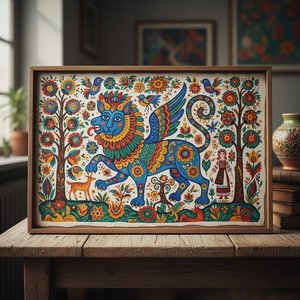
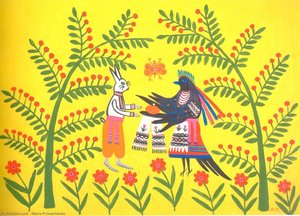
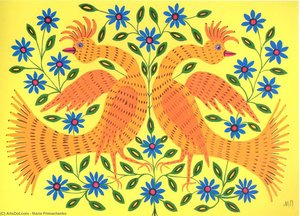
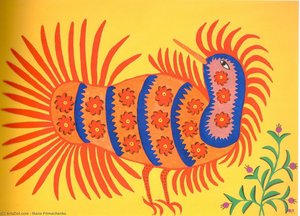
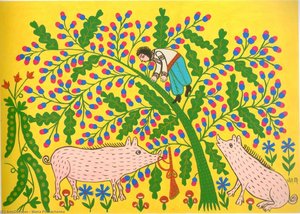
In the realm of folk art, color is never merely decorative; it is a sophisticated vocabulary. Each hue carries a weight of meaning, acting as a silent language that communicates complex emotions and social truths. When we observe the works of masters such as Maria Primachenko, we see how a palette of bold, saturated tones can evoke the blooming vitality of a landscape or the joyous intensity of a communal ritual. In these canvases, a bright yellow might represent the sun’s life-giving warmth, while deep blues and greens ground the composition in the fertile earth of the homeland.
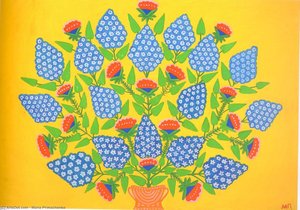
This chromatic storytelling is complemented by a rich tapestry of symbolism. Every motif—be it a stylized flower, a particular bird, or a geometric pattern—functions as a glyph within a larger cultural narrative. These symbols are often deeply rooted in folklore and religious iconography, providing layers of meaning that reward the attentive viewer. A single floral arrangement can symbolize fertility and peace, much like Primachenahenko’s evocative piece 'My Flowers To Those Who Love Peace', where the abundance of blossoms serves as a visual prayer for global harmony.
The interplay between color and symbol creates a sensory experience that transcends linguistic barriers. It allows the viewer to participate in a universal dialogue of human values. By decoding these visual metaphors, we gain access to the collective subconscious of a culture, discovering how ancient beliefs continue to manifest in modern aesthetic choices.
Masterpieces of the People: Exploring Naive Art and Cultural Icons
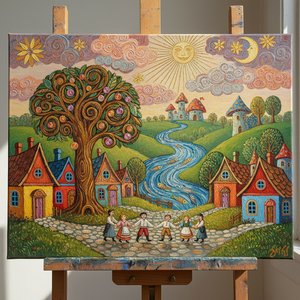
The emergence of Naive Art represents one of the most captivating chapters in art history, where the "unlearned" hand achieves a level of expressive power that rivals the most trained academicians. Naive artists, often working outside the formal structures of art education, possess a unique perspective characterized by flattened perspectives, exaggerated proportions, and an extraordinary attention to detail. This stylistic choice is not a lack of skill, but rather a deliberate focus on the clarity of the narrative and the emotional impact of the subject matter.
Consider the profound impact of Ukrainian folk traditions, where artists like Primachenko have captured pivotal historical and cultural moments. Her work 'Taras Hryhorovych Shevchenko Arrives From His Exile to Flowering Ukraine' is not merely a painting; it is a monumental tribute to national identity and the resilience of the Ukrainian spirit. Similarly, depictions of communal milestones, such as in 'Ukrainian Wedding', transform personal celebrations into timeless icons of cultural continuity. These works celebrate the dignity of everyday life, elevating the mundane to the level of the monumental.
Beyond Eastern Europe, the tradition thrives in regions like Oaxaca, Mexico, where the Secretariat of Culture of Oaxaca works tirelessly to champion and preserve these vibrant folk traditions. This global network of "artists of the people" ensures that the unique visual dialects of different regions are not lost to the homogenization of global culture, but are instead celebrated as essential masterpieces of human creativity.
Preserving the Past: The Role of Tradition in Modern Artistic Expression
In an era defined by digital ephemeralness, the persistence of folk art traditions offers a necessary anchor. The preservation of these techniques—whether it be traditional weaving, pottery, or painting—is a form of resistance against the erosion of cultural specificity. For the modern enthusiast, engaging with these works is an act of historical stewardship. It is about recognizing that the patterns used by an artisan today are the same patterns that provided comfort and identity to their ancestors centuries ago.
Modernity does not necessarily signify the death of tradition; rather, it provides new platforms for its survival. We see a fascinating intersection where ancient motifs meet contemporary mediums. The challenge lies in maintaining the integrity of the original storytelling while allowing the art to breathe within a modern context. This requires a deep respect for the "master's step-by-step process," ensuring that the tactile, physical nature of the art—the visible brushstrokes and the texture of the medium—remains intact.
By valuing these traditions, we ensure that the dialogue between the past and the present remains unbroken. The preservation of folk art is not about looking backward with nostalgia, but about carrying forward the wisdom, the beauty, and the profound human truths that only a deep connection to one's heritage can provide.
From Ancestral Roots to Contemporary Collections
The journey of a piece of folk art from a local village to a global collection is a testament to the universal appeal of authentic storytelling. Today, collectors from all walks of life seek out these works not just for their aesthetic beauty, but for the "soul" they bring to a space. There is a growing movement toward integrating these culturally rich pieces into modern interiors, creating a dialogue between contemporary design and historical depth.
For the discerning collector, acquiring folk art is an investment in human history. Whether it is a large-scale mural that recreates a historical fresco or a delicate print that captures a moment of cultural celebration, these pieces serve as much more than decoration; they are conversation starters and vessels of memory. The ability to bring such profound narratives into our homes allows us to surround ourselves with the enduring strength of human tradition.
As we continue to explore the vast library of human creativity, let us remember that every piece of folk art is a heartbeat captured in time. It invites us to listen to the stories of those who came before us and to find, within their vibrant colors and symbolic patterns, a reflection of our own shared humanity.
At ArtsDot.com, we are dedicated to preserving this global legacy of human creativity. From hand-painted oil reproductions that capture the tactile texture of Naive Art masterpieces to high-quality Giclée prints that ensure the longevity of cultural symbols, our mission is to make the world's most profound artistic traditions accessible to everyone. Whether you are looking to commission a custom portrait in a historical style or seeking an expert consultation to find the perfect piece for your collection, ArtsDot provides a bridge between the timeless beauty of the past and the sophisticated homes of the present.