The Genesis of Rawness: Defining Art Brut and the Outsider Aesthetic
To understand the profound impact of Art Brut, one must first strip away the polished veneers of traditional art history. The term itself, famously coined by Jean Dubuffet, translates literally to raw art, a designation that serves as both a description and a manifesto. Unlike the curated movements emerging from prestigious academies, Art Brut finds its pulse in the margins—within the works of those untouched by the formal constraints of aesthetic theory or the suffocative expectations of the art market. It is an aesthetic born of necessity, often manifesting through the visions of individuals operating outside the conventional social and artistic hierarchies.
This movement is characterized by a singular, unmediated connection between the creator’s psyche and the canvas. There is no pretense of "correct" perspective or anatomical accuracy; instead, there is an urgent, visceral drive to externalize internal truths. For the discerning collector, the allure of Outsider Art lies in this very lack of artifice. It offers a window into a realm where the boundaries between the subconscious and the physical world dissolve, presenting a visual language that is as haunting as it is hypnotic. It is not merely a style, but a state of being—a pure, unadulterated expression of human existence.
Beyond the Academy: The Revolutionary Vision of Jean Dubuffet
At the heart of this movement stands Jean Philippe Arthur Dubuffet, a figure whose defiance of tradition reshaped the landscape of twentieth-century modernism. Dubuffet viewed the "cultural art" produced by trained professionals as a sterile, suffocating force that stifled true creativity. He sought instead to champion the art brut—the works of those who painted not for fame or critique, but from an irrepressible internal compulsion. His own practice became a bridge between the high-brow and the primal, utilizing collage, assemblage, and thick, tactile layers to challenge the very definition of beauty.
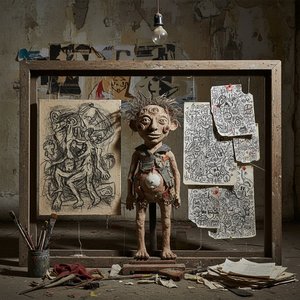
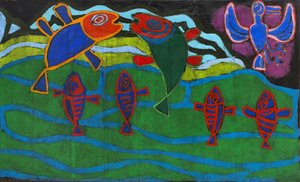
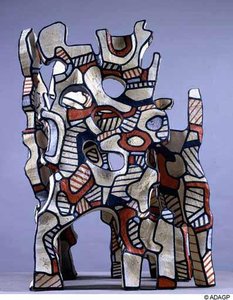
Consider his 1978 masterpiece, Comments, a vibrant assemblage that functions as a complex dialogue between diverse paintings and drawings. In such works, Dubuffet does not merely observe; he participates in the raw energy of the medium. His ability to weave together disparate elements into a cohesive, expressive whole serves as a masterclass in the power of the unconventional. By elevating the "primitive" to the level of high art, Dubuff precisely dismantled the walls of the academy, inviting us to find profound meaning in the textured, the fragmented, and the seemingly chaotic.
The Texture of Instinct: Materiality and Unconventional Mediums in Outsider Art
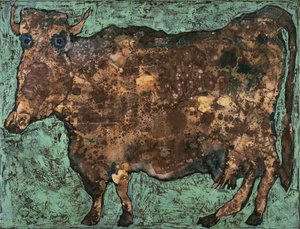
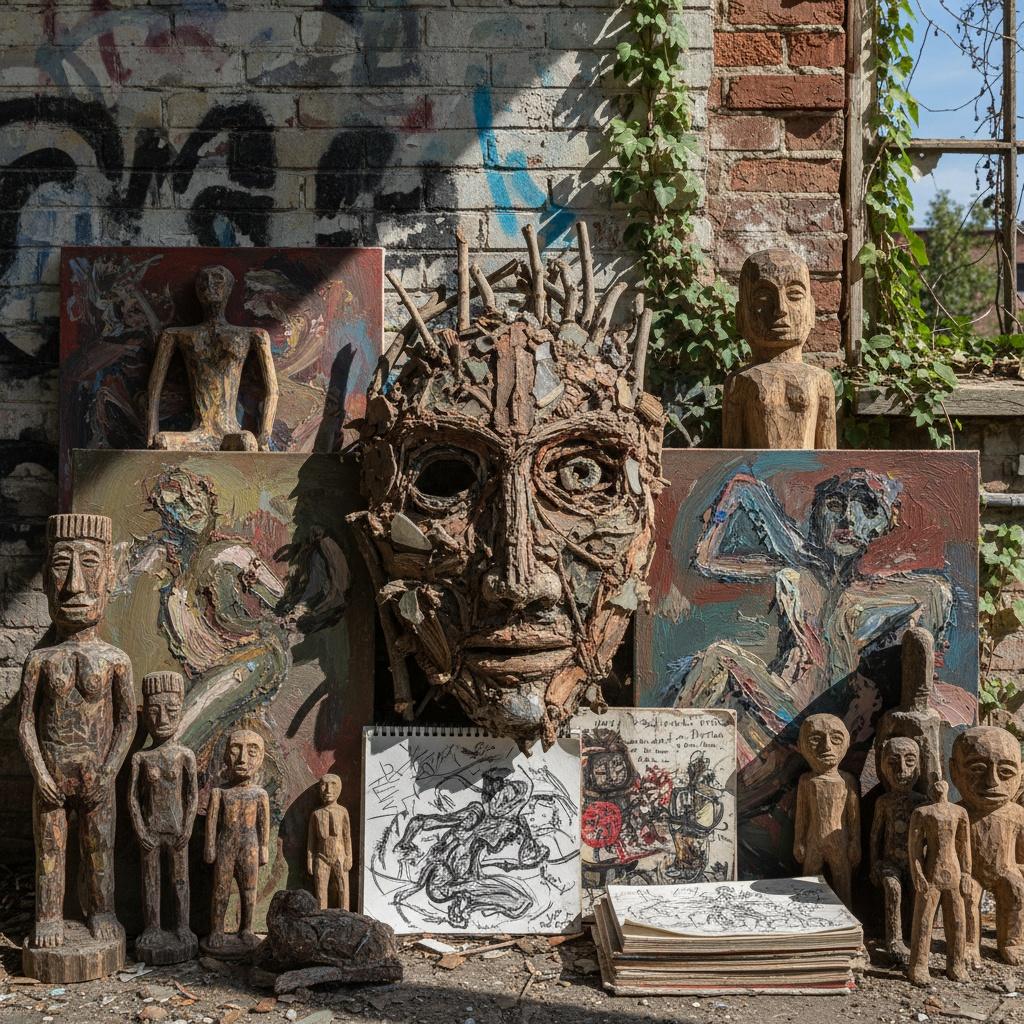
One cannot discuss the power of Art Brut without addressing its tactile, almost sculptural presence. The movement is defined by a rejection of refined pigments in favor of whatever materials are at hand—sand, gravel, tar, or thick impasto that rises from the canvas like a topographical map of the soul. This heavy use of texture creates a three-dimensional experience, where the artwork demands to be seen not just with the eyes, but felt with the spirit. The physical weight of the paint becomes an extension of the artist's emotional gravity.
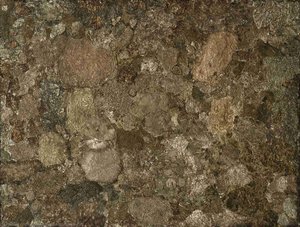
In works such as Dubuffet’s Geometry, we see how even a black and white palette can achieve immense depth through the strategic application of texture and scattered, star-like motifs. This reliance on unconventional materials allows for a unique form of storytelling; the grit of the earth or the roughness of the medium becomes part of the narrative itself. For the collector, these works offer a sensory richness that flat, digital reproductions can never replicate. The visible, tactile brushstrokes and the interplay of light across uneven surfaces ensure that the artwork remains a living, breathing entity within a room.
Psychological Landscapes: Exploring the Subconscious through Primitive Form
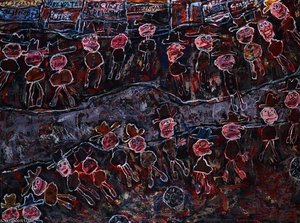
The landscapes of Art Brut are rarely depictions of the external world; rather, they are cartographies of the mind. In pieces like Landscape with Ghosts (Paysage aux fantasmes), we encounter a vision that transcends mere scenery to explore the spectral architecture of dreams and nightmares. These works utilize primitive forms—simplified shapes, distorted figures, and dreamlike compositions—to tap into universal archetypes. There is a haunting quality to these landscapes, as if the viewer is peering through a veil into a realm where the laws of physics are replaced by the laws of emotion.
This psychological depth is achieved through a deliberate disregard for traditional composition. By embracing the surreal and the uncanny, Outsider artists invite us to confront our own shadows. The "ghosts" within these landscapes are reflections of the human condition—our fears, our desires, and our deepest memories. To collect such art is to curate a gallery of the subconscious, bringing pieces into one's home that provoke introspection and challenge the boundaries of perceived reality.
Collecting the Untamed: Integrating Art Brut into Modern Curatorial Spaces
Integrating the raw energy of Art Brut into a sophisticated collection requires a delicate balance of curation. Because these works are so visually potent, they serve as extraordinary anchors in modern interior design. They possess the unique ability to provide contrast against the clean lines of contemporary architecture or the refined elegance of classical settings. A single, textured piece of Outsider Art can transform a minimalist room into a space of profound narrative depth.
For the professional collector or interior designer, the challenge lies in creating a dialogue between the "refined" and the "raw." This can be achieved through strategic placement—using large-scale, multi-panel arrangements to command attention on wide walls, or utilizing smaller, intimate works to create focal points in study areas. The goal is to allow the untamed spirit of the artwork to breathe, ensuring that its visceral energy complements rather than overwhelms the surrounding environment. When curated with intention, Art Brut becomes a cornerstone of a truly worldly and intellectually stimulating collection.
Preserving the Primal: The Role of ArtsDot in Honoring Artistic Legacies
At ArtsDot.com, we recognize that the true value of art lies in its ability to preserve human creativity across generations. Our mission is to make the profound textures and historical significance of movements like Art Brut accessible to a global audience. We specialize in high-quality, hand-painted reproductions that honor the meticulous techniques of the masters—from the thick impasto of Dubuffet to the light-drenched strokes of the Impressionists.
Our artists, all holders of prestigious Fine Arts degrees, approach every commission with a deep respect for the original's soul. Whether you are seeking a museum-quality oil painting that captures the tactile depth of an original or a durable Giclée print for a modern space, we provide a seamless experience through our Digital Order Management System. From personalized digital mockups to our global logistics network reaching over 70 countries, ArtsDot ensures that the raw power of art history continues to inspire and transform homes and collections worldwide.