Early Life & Training: Foundations in Edinburgh and Antwerp
William Stewart MacGeorge (1 April 1861 – 9 November 1931) was a Scottish artist associated with the Kirkcudbright School. Born in Castle Douglas, lived at 120 King St. He attended the Royal Institution Art School in Edinburgh before studying under...
William Stewart MacGeorge, born in the quiet Scottish town of Castle Douglas in 1861, embarked on an artistic journey that would see him become a celebrated member of the Kirkcudbright School. His initial training at the Royal Institution Art School in Edinburgh provided a solid grounding in traditional techniques, but it was his subsequent studies under Charles Verlat in Antwerp that truly began to shape his aesthetic sensibilities. Antwerp, a vibrant hub for European painting, exposed MacGeorge to a broader range of influences and a more progressive approach to art education. He absorbed the lessons of continental realism, yet a nascent desire for something beyond strict representation already stirred within him – a yearning for color and atmosphere that would define his mature style.
The Influence of Edward Atkinson Hornel and the Kirkcudbright School
 william stewart macgeorge
Explore the evocative landscapes & poignant portraits of William Stewart Macgeorge (1861-1931). Canadian artist known for rural scenes, wildlife, and a distinctive style.
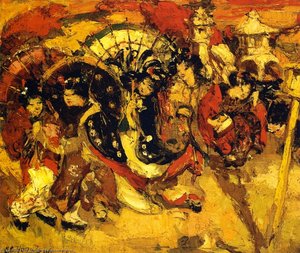
A pivotal moment in MacGeorge’s development arrived with his encounter with Edward Atkinson Hornel. Hornel, also a student under Verlat, had already begun to forge a distinctive path, characterized by bold color palettes and a fascination with Japanese aesthetics. The two artists shared an immediate affinity, and Hornel's influence proved transformative for MacGeorge. They weren’t merely colleagues; they were kindred spirits exploring similar artistic territories. The Kirkcudbright School, of which both became central figures, wasn’t defined by a rigid set of rules but rather by a shared rejection of academic constraints and an embrace of individual expression. This small community of artists in the Scottish countryside fostered a spirit of experimentation and mutual encouragement, allowing MacGeorge to fully develop his unique voice.
Embracing Japonisme: Aesthetic Influences on MacGeorge’s Style
Aestheticism (also known as the aesthetic movement) was an art movement in the late 19th century that valued the appearance of literature, music, fonts, and the arts over their functions. According to Aestheticism, art should be produced to be beauti...
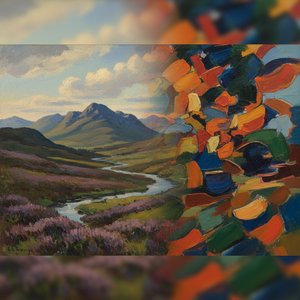
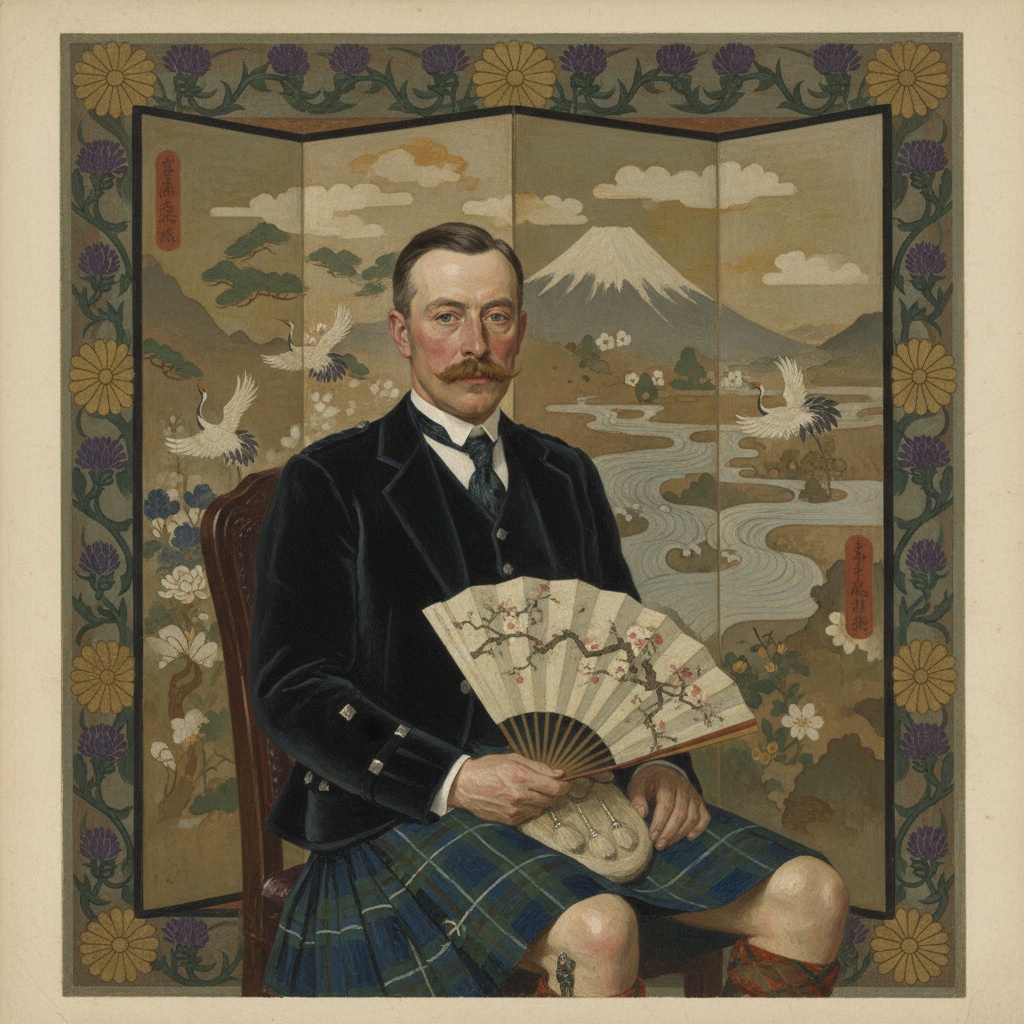
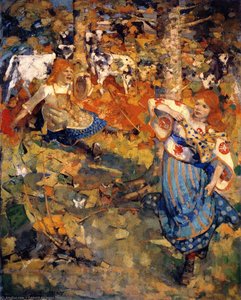
The late 19th century witnessed an explosion of interest in Japanese art and design – a phenomenon known as Japonisme. For artists like MacGeorge, the arrival of *ukiyo-e* woodblock prints was nothing short of revelatory. These prints weren't simply admired for their exotic subject matter; they offered a radically different approach to composition, color, and perspective. The asymmetrical arrangements, flattened planes, and bold outlines challenged traditional Western conventions. MacGeorge didn’t merely copy Japanese motifs; he absorbed the underlying principles of design, integrating them into his own work with remarkable subtlety. This influence is visible in his use of vibrant, often unconventional colors, his emphasis on decorative patterns, and a sense of spaciousness that departs from the more crowded compositions favored by many Victorian artists. The Aesthetic movement’s core tenet – “art for art's sake” – resonated deeply with MacGeorge, allowing him to prioritize beauty and visual harmony over narrative or moralizing content.
Portraiture and Landscape: A Synthesis of Tradition and Innovation
 Wikipedia: Japonisme
Japonisme is a French term that refers to the popularity and influence of Japanese art and design among a number of Western European artists in the nineteenth century following the forced reopening of foreign trade with Japan in 1858. Japonisme was f...
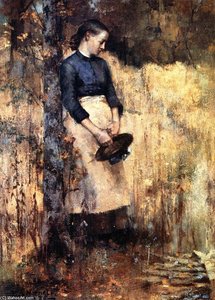
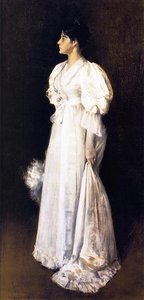
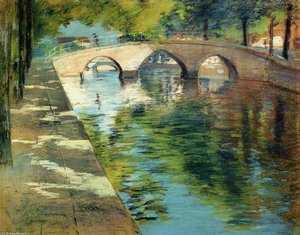
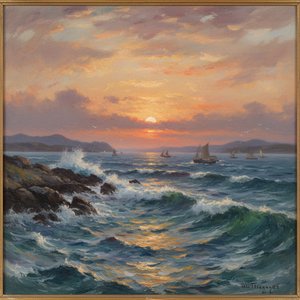
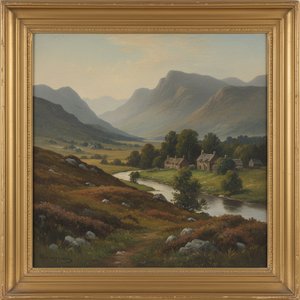
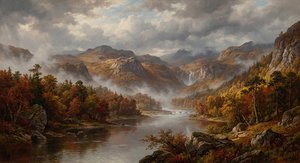
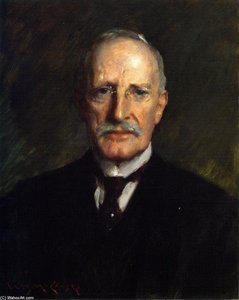
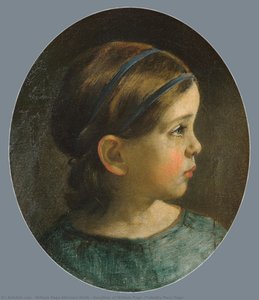
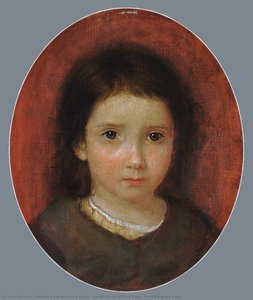
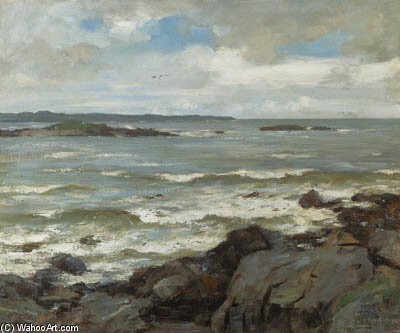
MacGeorge excelled in both portraiture and landscape painting, but he rarely treated these genres as separate entities. His portraits are not simply likenesses; they are studies in character and atmosphere, often set within evocative landscapes that reflect the sitter’s personality or social standing. He possessed a keen eye for capturing subtle nuances of expression and a remarkable ability to convey mood through color and light. His landscapes, meanwhile, are imbued with a sense of intimacy and psychological depth. They aren't grand vistas designed to inspire awe but rather quiet scenes that invite contemplation. Coastal Scene With Figures Bathing, for example, exemplifies his skill in capturing the fleeting beauty of nature and the delicate interplay between light and water. He often employed an impressionistic technique, using loose brushstrokes and a vibrant palette to create a sense of movement and atmosphere. This approach allowed him to capture not just what he saw but also how it *felt* – the warmth of the sun, the scent of the sea air, the tranquility of the moment.
MacGeorge's Later Years & Legacy: Preserving a Scottish Vision
In later life, MacGeorge settled in Gifford, East Lothian, where he continued to paint until his death in 1931. His marriage to the widow of Hugh Munro provided him with stability and allowed him to focus entirely on his art. Fortunately, his artistic legacy was preserved thanks to the generosity of his widow, who bequeathed approximately forty-five of his paintings to Haddington Town Council. These works offer a valuable glimpse into the mind of an artist who successfully blended tradition and innovation, creating a uniquely Scottish vision. While perhaps not as widely recognized as some of his contemporaries, MacGeorge’s contribution to the Kirkcudbright School and his sensitive exploration of Aesthetic principles deserve continued appreciation. His paintings are a testament to the power of art to capture beauty, evoke emotion, and preserve a sense of place – qualities that continue to resonate with audiences today.