The Scholar’s Brush: Xie Zhiliu's Early Life & Artistic Foundations
Xie Zhiliu (1910–1997) stands as a pivotal figure in 20th-century Chinese art, embodying the spirit of tradition while navigating a period of immense social and political change. Born in Changzhou, Jiangsu province – a region steeped in the legacy of bird-and-flower painting – Xie’s artistic journey began not merely as a pursuit, but as an immersion into a centuries-old cultural inheritance. From the age of nine, he dedicated himself to mastering the fundamental techniques that would define his life's work: drawing from life and meticulously copying the masterpieces of past masters. This rigorous training wasn’t simply about replicating form; it was about internalizing the essence of artistic expression, understanding the subtle nuances of brushwork, ink density, and compositional balance. His early exposure to the local traditions instilled a deep reverence for nature and a commitment to capturing its inherent beauty – qualities that would become hallmarks of his distinctive style.
The importance of this foundational period cannot be overstated. Unlike many artists who sought immediate innovation, Xie believed in the power of disciplined study as a prerequisite for genuine creativity. He wasn’t simply learning *how* to paint; he was absorbing a philosophy, a way of seeing and interpreting the world through the lens of artistic convention. This dedication laid the groundwork for his later explorations and ultimately allowed him to transcend mere imitation, developing a voice uniquely his own.
Embracing Tradition: Ink Wash Painting in the Context of Chinese Literati Culture
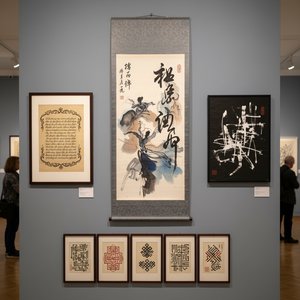
Nanga (南画, "Southern painting"), also known as Bunjinga (文人画, "literati painting"), was a school of Japanese painting which flourished in the late Edo period among artists who considered themselves literati, or intellectuals. While each of these art...
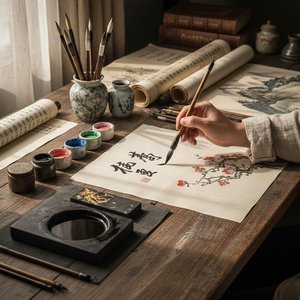
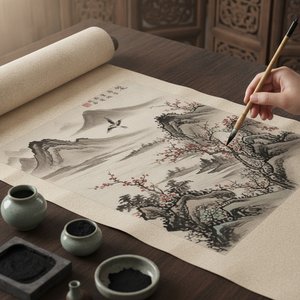
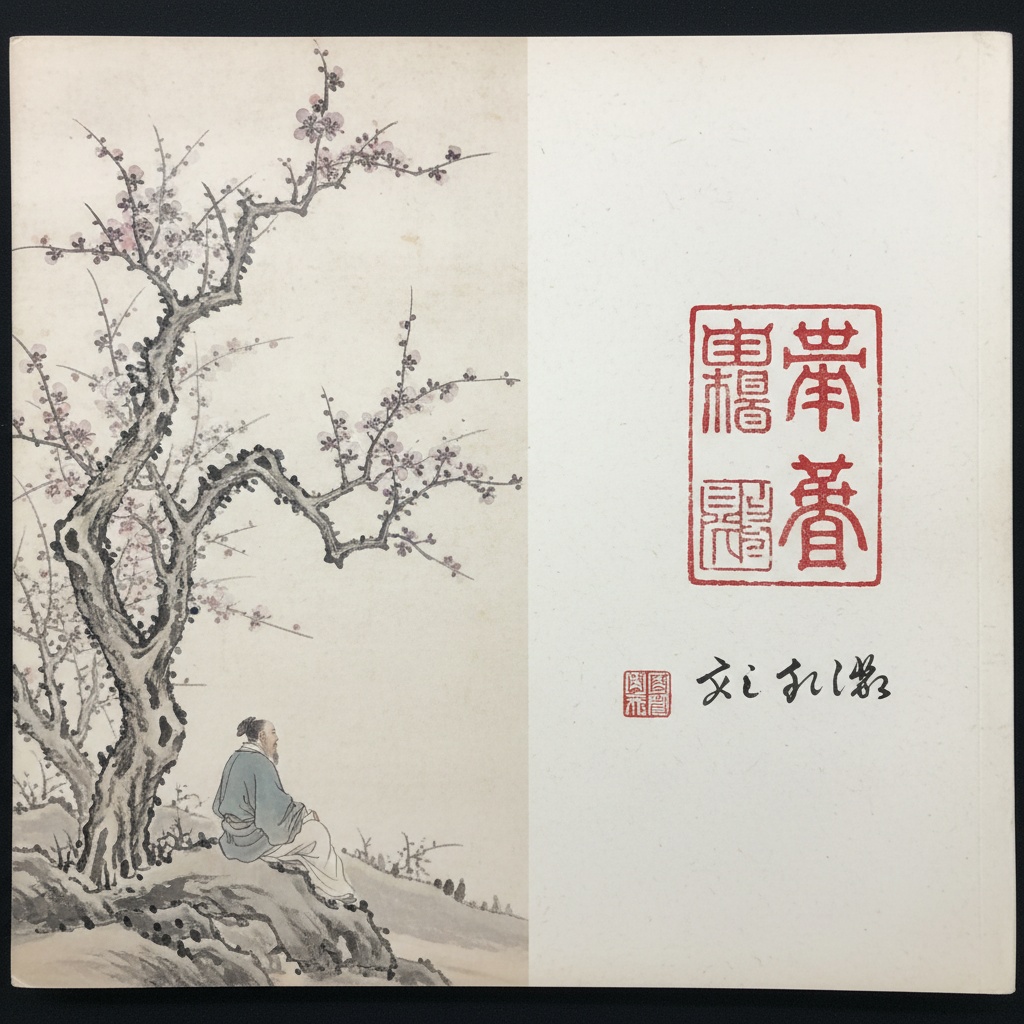
To understand Xie Zhiliu’s art is to understand the rich tapestry of Chinese literati culture. Ink wash painting – shuǐmòhuà, as it's known in China – wasn’t simply a technique; it was an extension of scholarly pursuits, deeply intertwined with poetry, calligraphy, and philosophy. Emerging during the Tang dynasty, this art form rejected earlier realism in favor of capturing the “spirit” or essence of a subject. It became the domain of the educated elite, those who valued intellectual contemplation and self-expression above all else. The paintings themselves were often not intended for commercial sale but rather as gifts exchanged among friends – visual embodiments of shared aesthetic sensibilities and philosophical understanding.
This emphasis on personal expression is crucial. Literati painters didn’t strive to perfectly replicate the external world; they sought to convey their inner state, their emotional response to nature, or their reflections on classical literature. Brushwork became a metaphor for character – controlled strokes representing discipline and refinement, spontaneous flourishes embodying freedom and intuition. Xie Zhiliu wholeheartedly embraced this tradition, viewing painting not as a technical exercise but as a means of cultivating the self and connecting with the broader cultural heritage. His works often feature subtle allusions to classical poetry or philosophical concepts, rewarding attentive viewers with layers of meaning beyond the purely visual.
Dunhuang’s Influence: A Pivotal Journey and its Impact on Xie Zhiliu’s Style
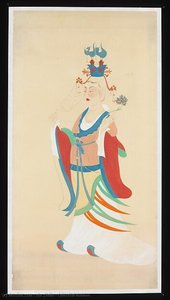
A turning point in Xie Zhiliu's artistic development came in 1942 when he embarked on a transformative journey to Dunhuang with the renowned painter Zhang Daqian. The Mogao Caves, a UNESCO World Heritage site containing centuries of Buddhist art, proved to be profoundly influential. The sheer scale and spiritual power of these murals – depicting scenes from Buddhist scriptures, celestial beings, and intricate patterns – captivated Xie’s imagination. He meticulously studied the techniques employed by ancient artists, absorbing their mastery of line, color, and composition.
This experience wasn't merely about technical acquisition; it was a spiritual awakening. The art of Dunhuang embodied a profound sense of devotion and artistic dedication that resonated deeply with Xie’s own values. He subsequently published extensively on his findings – “Records of Dunhuang Art” and “Compilation of Dunhuang Cave Art” – sharing his insights with a wider audience. The influence of Dunhuang can be seen in the increased complexity of his compositions, the heightened sense of spirituality in his figures, and a renewed appreciation for the power of line to convey emotion and narrative. The journey instilled a lifelong commitment to preserving China’s artistic heritage.
Mastering Technique: The Balance of Copying and Creative Expression in Xie Zhiliu's Work
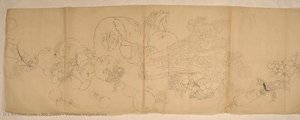
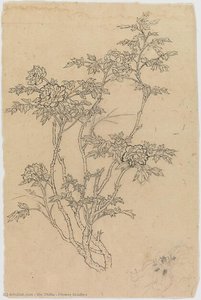
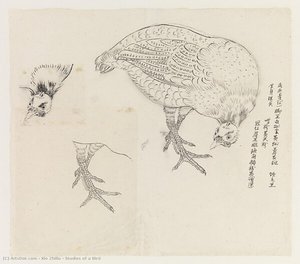
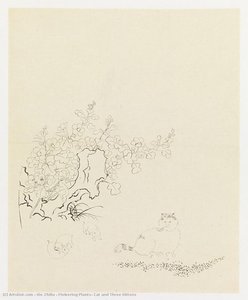
Xie Zhiliu’s approach to painting was characterized by a remarkable balance between meticulous copying and spontaneous creative expression. He understood that true mastery wasn’t about abandoning tradition but rather about internalizing it, using it as a springboard for innovation. His studio became a repository of sketches, drafts, and copies – a testament to his unwavering dedication to the learning process. These preparatory works reveal a fascinating insight into his artistic methodology, demonstrating how seemingly effortless compositions were often preceded by careful planning and experimentation.
He wasn’t afraid to revisit the work of earlier masters, meticulously recreating their brushstrokes and compositional elements. However, these copies weren't simply exercises in imitation; they were opportunities for deeper understanding, a way of absorbing the essence of another artist’s style. This process liberated him from the constraints of preconceived notions, allowing him to concentrate on the fluidity of his brushwork and the dynamic interplay of ink and water. The result is paintings that appear both spontaneous and deeply considered – a testament to years of disciplined practice and artistic refinement.
Xie Zhiliu as Connoisseur: Preserving & Promoting Chinese Artistic Heritage
Beyond his own painting, Xie Zhiliu dedicated much of his life to preserving and promoting China’s rich artistic heritage. After the founding of the People's Republic of China in 1949, he became a highly respected advisor and connoisseur for the Shanghai Museum, playing a crucial role in evaluating and cataloging its vast collection. He served as vice chairman of the Shanghai branch of the China Artists Association, using his expertise to guide emerging artists and foster a deeper appreciation for traditional art forms.
His access to the museum’s holdings allowed him to expand his stylistic repertoire, drawing inspiration from Tang, Song, and Yuan dynasty painting. He published extensively on these topics, sharing his insights with scholars and collectors alike. Between 1983 and 1990, he led a team of experts in evaluating the collections of China’s leading cultural institutions, resulting in a monumental twenty-four-volume illustrated index of over seventy thousand paintings and calligraphies – a lasting legacy that continues to inform scholarship today.
A Lasting Impression: Xie Zhiliu’s Place in Modern Art History
Xie Zhiliu's contributions to modern Chinese art are undeniable. He successfully bridged the gap between tradition and innovation, demonstrating that artistic progress wasn’t about abandoning the past but rather about building upon it. His paintings – serene landscapes, delicate flower studies, and evocative figure compositions – embody a profound sense of harmony and spiritual depth.
His works are now held in prestigious collections around the world, including the National Art Museum of China in Beijing and the Metropolitan Museum of Art in New York City. The 2010 exhibition at the Met, featuring around 150 of his paintings donated by his daughter Sarah Shay, served as a powerful tribute to his life’s work. Xie Zhiliu wasn't merely a painter; he was a scholar, a connoisseur, and a cultural guardian – a true embodiment of the literati tradition. His legacy continues to inspire artists and collectors alike, reminding us of the enduring power of art to connect us with the past and illuminate the human spirit.
Explore the timeless beauty of Xie Zhiliu’s work and discover the rich heritage of Chinese ink wash painting at ArtsDot.com, where museum-quality reproductions bring masterpieces to life.