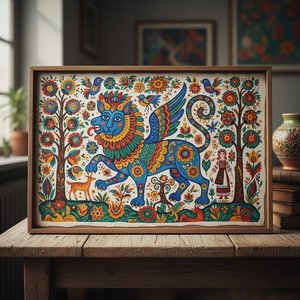
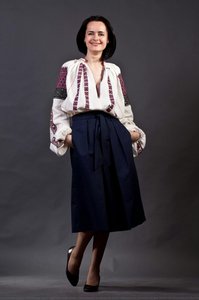
The Weaver of Heritage: The Artistry of Christina Larii
In the quiet, textured landscapes of contemporary textile art, few voices resonate with as much cultural reverence as Christina Larii. Hailing from Chisinau, Moldova, Larii has carved a unique niche for herself by transforming the humble medium of linen into a profound vessel for historical storytelling. Her work is not merely an exercise in craftsmanship but a deliberate act of preservation, acting as a bridge between the vanishing echoes of Moldovan folk traditions and the modern aesthetic gaze. Through her hands, the ancient rhythms of weaving and embroidery are reimagined, ensuring that the ancestral legacies of her homeland continue to breathe within a contemporary context.
While the specific details of Larii’s early life remain as delicate and veiled as the fabrics she works with, her artistic soul is deeply rooted in the vibrant tapestry of Romanian peasant culture. This heritage, celebrated globally for its intricate symbolic motifs and meticulous handiwork, serves as the primary heartbeat of her creative output. Her development as an artist is characterized by a deep reverence for the National Museum of the Romanian Peasant, where she draws inspiration from historical artifacts to breathe new life into forgotten patterns. This connection to the past allows her work to transcend simple decoration, turning each piece into a scholarly yet emotive dialogue with history.
The Aievea Collection: A Symphony of Linen and Lore
The pinnacle of Larii’s artistic achievement is undoubtedly her groundbreaking Aievea Collection. This body of work represents a masterful synthesis of historical research and technical virtuosity. In this collection, Larii meticulously recreates the essence of the traditional Muntenia shirt, utilizing an artifact from the National Museum as her foundational guide. However, she does not merely replicate; she interprets. By manipulating linen—a fabric that demands immense patience, precision, and a rhythmic discipline—she creates textured surfaces that capture the subtle nuances of light, color, and form.
The symbolism embedded within her weaves is both profound and multifaceted:
- Floral Patterns: These elements serve as organic tributes to the natural beauty of the Moldovan landscape, representing growth and the cyclical nature of life.
- Geometric Designs: These structured motifs echo the mathematical precision of ancient embroidery, grounding the ethereal quality of the linen in a sense of permanence and order.
- Stylized Rural Life: Through subtle textural shifts, Larii evokes the spirit of agrarian traditions, honoring the hardworking hands that once shaped the very culture she celebrates.
A Legacy of Cultural Revitalization
Beyond the technical mastery of her weaving, Christina Larii’s significance lies in her role as a cultural custodian. In an era of rapid globalization and mass-produced textiles, her dedication to the slow, deliberate art of linen manipulation stands as a powerful counter-narrative. She treats every thread as a vital link in a chain that connects the modern viewer to the ancestral spirit of Moldova and Romania. Her work serves as a testament to the idea that tradition is not a static relic of the past, but a living, evolving entity that can be revitalized through contemporary expression.
As she continues to explore the boundaries between historical documentation and artistic innovation, Larii remains a vital figure in the textile arts. Her ability to weave the weight of history into the lightness of linen ensures that the stories of Muntenia and the broader Moldovan identity are not lost to time, but are instead woven into the very fabric of our collective cultural memory.