The Gothic Visionary of the Marche
In the quiet, storied landscapes of 14th-century Italy, specifically within the Marche region, the name Francescuccio Ghissi—also known as Francesco di Cecco Ghissi—emerges from the shadows of history as a profound exponent of the Gothic style. While the precise dates of his birth and death remain shrouded in the mists of time, historical records place his active period between approximately 1359 and 1395. He was an artist whose life was deeply intertwined with the spiritual and communal fabric of his native lands, particularly around Fabriano and Ascoli Piceno. Ghissi did not merely paint; he crafted visual liturgies that served as windows into the divine, adhering to a tradition of solemn grandeur and emotional intensity that defined the late Middle Ages.
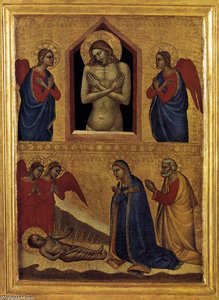
The artistry of Ghissi was characterized by a steadfast devotion to Gothic conventions at a time when the broader European landscape was beginning to stir with the early whispers of the Renaissance. Rather than pursuing the burgeoning humanist ideals or classical anatomical precision that would later define the era, Ghissi focused his creative energy on the narrative power of religious iconography. His work is marked by a masterful command of color and texture, utilizing palettes that could evoke both the celestial light of heaven and the somber weight of earthly suffering. This ability to imbue sacred figures with palpable emotion allowed his devotional pieces to resonate deeply with the faithful, turning every brushstroke into an act of prayer.
Collaborations and Masterworks
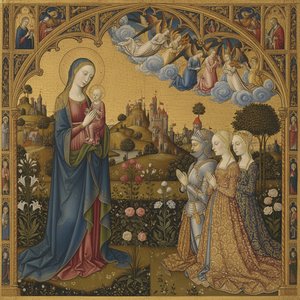
One cannot discuss the legacy of Francescuccio Ghissi without acknowledging the significant influence of his collaborations, most notably with the prominent Marche artist Allegretto Nuzi. Together, these masters shared a commitment to visual storytelling that sought to convey complex spiritual truths through accessible, beautiful imagery. Their most celebrated joint achievement is the monumental triptych known as the Madonna of Humility, currently preserved within the Polesden Lacey National Trust collection. This work stands as a testament to their shared aesthetic, showcasing an exquisite attention to detail and a delicate handling of form that brings the tender relationship between the divine and the human into sharp, emotive focus.
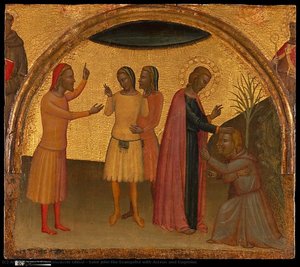
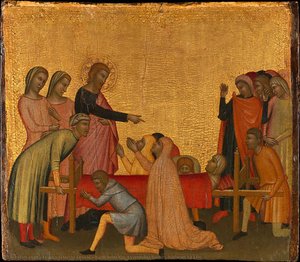
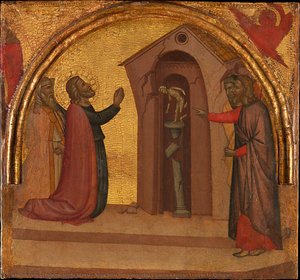
Beyond these collaborative triumphs, Ghissi’s independent commissions reveal a painter of immense narrative skill. His St. John Altarpiece remains one of his most ambitious undertakings, a complex series of canvases designed to illustrate the miraculous life of Saint John the Evangelist. Through these panels, Ghissi explored themes of resurrection and divine intervention, such as:
- The Resurrection of Satheus: A poignant scene depicting the saint raising a young man from the dead, showcasing the artist's ability to capture dramatic tension.
- The Rebuking of Disciples: A moment of moral instruction where the saint confronts those tempted by worldly goods, reflecting the era's preoccupation with spiritual purity.
- The Collapse of the Pagan Temple: A powerful display of divine wrath and the triumph of faith over idolatry, rendered with characteristic Gothic intensity.
Historical Significance and Legacy
Though his name may not occupy the same mainstream prominence as the giants of the High Renaissance, the historical significance of Francescuccio Ghissi lies in his role as a guardian of the Gothic tradition. He represents a vital link in the evolution of Italian painting, maintaining the integrity of the Marchigian school during a period of profound cultural transition. His works, which continue to grace the altars and collections of museums across Italy and beyond, serve as essential artifacts for understanding the religious fervor and artistic identity of the 14th century.
The enduring legacy of Ghissi is found in the way his paintings bridge the gap between the earthly and the eternal. Through his meticulous craftsmanship and his ability to weave complex biblical narratives into cohesive, visually arresting compositions, he helped shape the spiritual visual language of his region. To study the works of Francesco di Cecco Ghissi is to encounter a world where every pigment and every line was dedicated to the service of a higher truth, leaving behind a trail of luminous beauty that continues to inspire awe in the modern observer.