The Architect of the Engraved Line
Born in the verdant surroundings of Richmond, England, in 1837, Harry Fenn began his artistic journey not as a painter of canvases, but as a disciplined apprentice to the intricate craft of wood engraving. Under the rigorous tutelage of the renowned firm Dalziel & Forster in London, he mastered the delicate language of the burin and the block, honing a precision that would become the hallmark of his career. His relocation to New York City in 1857 marked a profound transformation, as he transitioned from the traditional workshops of England to the vibrant, expanding frontiers of the American landscape. This period of his life was defined by an unwavering dedication to capturing the textures of the natural world, translating the rugged beauty of new territories into the fine, rhythmic lines of masterly engraving.
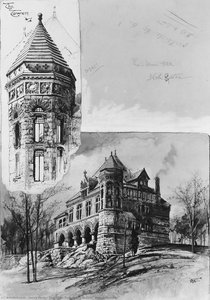
As his technical proficiency grew, so did his ability to infuse monochromatic medium with a sense of atmospheric depth. Fenn possessed a rare talent for utilizing light and shadow to suggest the vastness of a horizon or the intimate stillness of a forest glade. This mastery of detail allowed him to bridge the gap between mere documentation and fine art, setting the stage for his emergence as one of the most influential illustrators of the nineteenth century.
The Dawn of Pictorial Narrative
The mid-1860s heralded a golden era for Fenn, characterized by a revolutionary approach to the relationship between text and image. His collaboration with the poet John Greenleaf Whittier for the publication of Snow-Bound in 1867 remains a landmark moment in the history of book arts. In this work, Fenn did not simply provide illustrations to accompany verse; he created a symbiotic visual experience where the engravings breathed life into the poetry. Through innovative page layouts and evocative compositions, he earned the prestigious moniker "the Father of Decorative Printing," demonstrating how the aesthetic arrangement of images could amplify the emotional resonance of the written word.
This era of his development saw Fenn moving beyond the technical constraints of traditional wood engraving to embrace a more expressive, painterly style. His work began to capture the very soul of the American landscape, from the quiet, snow-dusted New England towns to the sweeping vistas of the West. By integrating fine art sensibilities into the burgeoning field of mass illustration, he helped elevate the status of the periodical and the gift book, turning the act of reading into a profound visual journey.
A Global Visionary and Lasting Legacy
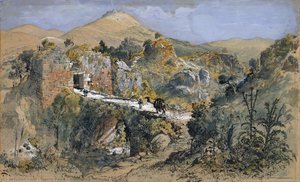
As his fame expanded, Fenn’s artistic gaze traveled far beyond the borders of North America, encompassing the ancient and exotic landscapes of the Old World. He became a primary contributor to the monumental Picturesque series, a collection of works that brought the wonders of the globe to an increasingly curious public. His meticulous depictions in Picturesque America, Picturesque Europe, and the breathtaking Picturesque Palestine, Sinai and Egypt showcased his ability to render distant, sun-drenched locales with startling clarity and reverence.
His contributions can be summarized by several defining achievements:
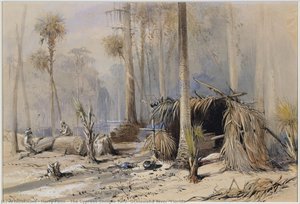
- The mastery of landscape: A unique ability to capture the distinct character of diverse terrains, from the lush riverbanks of Florida to the arid majesty of the Sinai Peninsula.
- Innovation in publishing: Pioneering the use of decorative printing techniques that transformed books into immersive works of art.
- Cultural bridge-building: Using his illustrations to connect the American public with the historical and geographical wonders of Europe and the Middle East.