The Keeper of Kerala's Verdant Wisdom
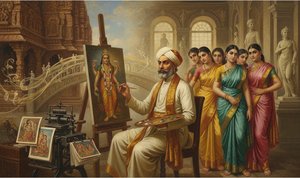
In the lush, coastal landscapes of seventeenth-century Malabar, where the air is thick with the scent of damp earth and tropical blooms, lived a man whose intellect would eventually bridge the gap between ancient oral traditions and the burgeoning scientific curiosity of Europe. Itty Achuden, a name etched into the annals of botanical history, was far more than a mere physician; he was a vital conduit of knowledge. Born around 1640 in the village of Kadakkarappally, within the vibrant Ezhava community of Kerala, Achuden was a scion of the Kollatt family, a lineage of hereditary healers who practiced pre-Ayurvedic systems of medicine. His expertise was not forged in the lecture halls of distant universities but was instead harvested from generations of ancestral wisdom, passed down through the rhythmic cadence of oral tradition and the meticulous study of the local flora.
Achuden’s life was a profound testament to the power of indigenous science. As a practitioner of traditional medicine, his daily existence was an intimate dialogue with the natural world. He possessed an unparalleled ability to discern the medicinal potencies hidden within the dense foliage of the Indian subcontinent. This deep-seated connection to the land provided the foundation for what would become one of the most significant scientific collaborations in the history of botany. His role as a botanical expert and herbalist was not merely about identifying plants, but about understanding their complex spiritual and physical interactions with human health—a nuance that only a lifetime of immersion in the local ecosystem could provide.
A Scientific Symphony: The Hortus Malabaricus
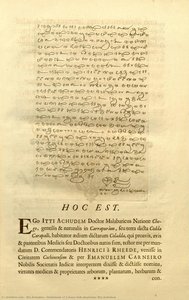
The trajectory of Achuden’s legacy changed forever when he was introduced to Hendrik van Rheede, the Dutch Governor of Malabar. This encounter, facilitated by Veera Kerala Varma, the ruler of the state of Kochi, ignited a monumental intellectual endeavor. Van Rheede sought to document the medicinal properties of the flora in Malabar, and in Achuden, he found the perfect collaborator. Together, they embarked on the creation of Hortus Malabaricus, a botanical treatise that would become a cornerstone of global scientific literature. Achuden served as the primary informant, the living encyclopedia whose vast knowledge was translated from the Malayalam Kolezuthu script into Latin for a European audience.
The process of compiling this masterpiece was an intricate dance of cross-cultural exchange and rigorous verification. While Achuden provided the essential ethno-medical information—often culled from ancient palm leaf manuscripts—the work underwent a meticulous scrutiny involving scholars such as Ranga Bhat, Vinayaka Pandit, and Appu Bhat. This collaborative spirit ensured that the botanical descriptions were not only accurate but also deeply rooted in the authentic medicinal practices of the region. The resulting publication, released posthumously between 1678 and 1693, stands as a groundbreaking fusion of Eastern traditional knowledge and Western scientific methodology, representing one of the earliest comprehensive botanical works produced in Asia.
Legacy of a Botanical Pioneer
The historical significance of Itty Achuden cannot be overstated. In an era when much of the world's scientific progress was being driven by colonial expansion, Achuden ensured that the indigenous voices and medicinal secrets of Kerala were not lost to time but were instead immortalized in print. His contribution to Hortus Malabaricus provided a window into the sophisticated botanical understanding of the Malabar coast, offering European scientists unprecedented insights into the medicinal potential of tropical plants.
Today, we remember Achuden not just as a physician or an herbalist, but as a pioneer who navigated the complexities of language and culture to preserve a vanishing heritage. His life work remains a symbol of how traditional wisdom can enrich global scientific discourse. Through his dedication, the verdant secrets of the Kerala landscape were transformed into a lasting scientific legacy that continues to inspire botanists, historians, and artists alike.