The Inherited Lens: A Life Shaped by Nature
To understand the artistry of Julian Burroughs, one must first look toward the verdant landscapes of Roxbury and the profound legacy of his father, the legendary naturalist John Burroughs. Born in 1878, Julian did not merely inhabit a world of scientific inquiry; he was raised within its very heartbeat. His childhood was an immersive education in the rhythms of the earth, spent hiking through the woods and observing the delicate intricacies of flora and fauna alongside a father who taught him that nature was the ultimate storyteller. This early intimacy with the wild instilled in Julian a lifelong devotion to documenting the ephemeral beauty of the American landscape, a pursuit that would eventually manifest through his diverse talents as a painter, photographer, writer, and architect.
His formative years were marked by a rigorous intellectual curiosity, leading him from the local Riverview Academy to the prestigious halls of Harvard University. It was during this period that his technical skills began to coalesce; as a member of the Harvard Camera Club, he honed a photographic eye capable of capturing the precise, fleeting moments of light and shadow. This era also brought significant personal milestones, most notably his meeting with Emily Dubois Mackay. Their union would eventually lead them back to the ancestral soil of Riverby, a sanctuary in West Park, New York, where Julian could continue to translate his observations of the natural world into tangible art.
A Tapestry of Artistic Expression
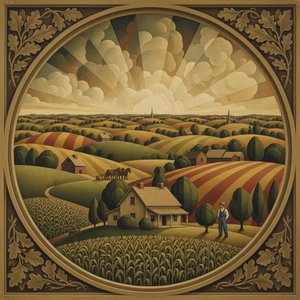
Julian Burroughs’ creative output was never confined to a single medium, as he viewed each discipline as a different way to honor the environment. As a landscape painter, his work served as a lyrical tribute to the rural splendor of Delaware County. He possessed a rare sensitivity to the changing seasons, able to render the tender blossoms of spring, the heavy, sun-drenched foliage of summer, and the melancholic, golden hues of autumn with remarkable nuance. His canvases were not merely topographical records but emotional landscapes, imbued with an understated power that captured the very spirit of the New York woodlands.
Beyond the brush, his contributions to the visual record were equally significant:
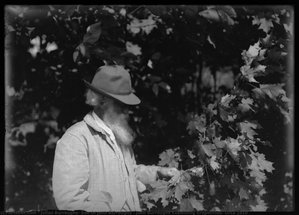
- Photography: Utilizing glass negatives and early photographic techniques, he documented the natural world and the estate of Riverby with a scientific precision tempered by artistic grace.
- Literature: His writings for publications such as Forest and Stream magazine allowed him to share his deep ecological insights with a broader audience, bridging the gap between art and natural history.
- Architecture and Stewardship: His role as a superintendent of grand estates and his work in architecture demonstrated a structural understanding of how human habitation can exist in harmony with the landscape.
Legacy of the Naturalist Artist
The historical significance of Julian Burroughs lies in his ability to act as a bridge between the scientific naturalism of the 19th century and the expressive landscape traditions of the early 20th. While he lived in the shadow of a famous patriarch, Julian carved out a distinct identity defined by a multifaceted approach to creation. He was a man who could cultivate grapes and celery with the same care he applied to a photographic composition or an architectural plan, seeing no distinction between the labor of the farmer and the vision of the artist.
Though his life ended in 1954, the echoes of his vision remain preserved in the archives of American art and natural history. His work stands as a testament to a period when the observation of nature was both a scientific necessity and a profound spiritual practice. Through his eyes, we are invited to revisit the quiet majesty of the Catskills and the enduring, tranquil beauty of a landscape captured with reverence, precision, and an unwavering love for the earth.