Louis Majorelle: A Pioneer of Art Nouveau Furniture Design
Louis Majorelle (1859-1926) stands as a towering figure in the annals of French Art Nouveau furniture design, embodying the movement’s fascination with organic forms and meticulous craftsmanship. Born in Toulouse, France, he inherited his artistic inclinations from his father, Auguste Majorelle, who himself was a celebrated furniture maker—a lineage that instilled within Louis a profound understanding of material manipulation and aesthetic vision. His formative years were spent honing his skills at the École des Beaux-Arts in Paris, immersing himself in the burgeoning artistic landscape of the era.
- Early Life & Education: Majorelle’s passion for design blossomed early on, fueled by a desire to transcend conventional styles and embrace the beauty inherent in natural forms.
- Marriage & Family: He married Marie Léonie Jane Kretz in 1885, establishing a family rooted in artistic pursuits. Their son, Jacques Majorelle, would later become an artist in his own right, continuing the Majorelle legacy of creative expression.
The École de Nancy & Artistic Influence
Majorelle’s career gained considerable momentum following Auguste Majorelle's passing and he took over leadership of the École de Nancy—a pivotal institution dedicated to fostering Art Nouveau aesthetics. Serving as Vice President from 1901 onwards, he actively championed the movement’s principles within the educational sphere, shaping a generation of designers and artisans. This association profoundly impacted his artistic sensibilities, grounding him in the collaborative spirit and experimental techniques characteristic of École de Nancy.
- École de Nancy Collaboration: Majorelle's involvement ensured that Art Nouveau ideals persisted within the school’s curriculum, influencing its output for decades to come.
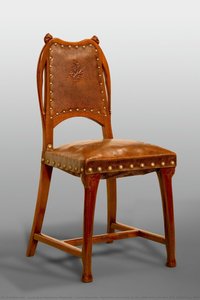
- Material Innovation: He skillfully utilized materials like bronze and leather, pushing boundaries in furniture construction and elevating decorative arts.
Distinctive Style & Design Philosophy
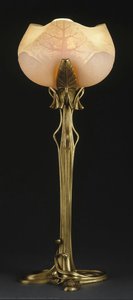
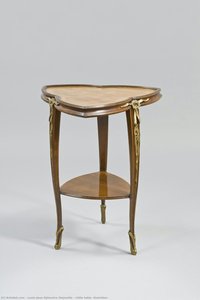
Majorelle’s designs are instantly recognizable for their elegant curves, flowing lines, and masterful incorporation of floral motifs—a hallmark of Art Nouveau. He eschewed rigid geometric shapes in favor of organic forms inspired by plants and blossoms, reflecting the movement's reverence for nature. His meticulous attention to detail extended beyond mere ornamentation; he meticulously crafted furniture pieces with an unparalleled level of precision, demonstrating a dedication to both beauty and functionality.
- Bronze & Marquetry Techniques: Majorelle’s signature style involved intricate bronze castings combined with exquisite marquetry—a technique that inlaid delicate floral patterns into wooden surfaces.
- Nature-Inspired Aesthetics: Recurring themes of foliage, stems, and petals permeated his creations, embodying the Art Nouveau ethos of harmonizing art and nature.
Notable Achievements & Legacy
Louis Majorelle achieved considerable renown during his lifetime, notably showcasing his furniture at the 1900 Paris World’s Fair—a testament to France's artistic prowess. His work continues to inspire designers and collectors today, securing his place as one of Art Nouveau’s foremost practitioners. Explore his stunning creations on ArtsDot.com and delve deeper into the Musée d'art et d'histoire de Cholet to appreciate the breadth of his artistic vision.