Manuel de Almeida: A Portuguese Eye on History
Manuel de Almeida, a name perhaps less familiar than some of his contemporaries, stands as a quietly powerful figure in 20th-century Portuguese photography. Born into a world undergoing rapid transformation – the rise of journalism, the echoes of colonialism, and the burgeoning complexities of modern life – Almeida’s work offers a deeply human perspective on pivotal moments in Portugal's history and beyond. He wasn’t a grand propagandist or a flamboyant celebrity; instead, he was a meticulous observer, a keen chronicler of everyday realities, and a master of capturing the subtle nuances of human experience through his lens.
Almeida’s career unfolded primarily within the service of *Lusa*, the Portuguese state news agency. This association shaped not only his subject matter but also his approach to photography – an emphasis on documenting events as they unfolded, prioritizing accuracy and immediacy over artistic embellishment. Initially working in a period marked by political upheaval and international tensions, Almeida’s early photographs often depicted scenes of national pride, military parades, and diplomatic engagements. However, as he matured as a photographer, his work gradually shifted towards a more introspective and socially conscious perspective.
The Early Years & The Influence of OEI
Information regarding Almeida's precise birthdate and early life remains somewhat elusive, shrouded in the gaps of historical records. What is known is that he began his career within *Lusa* during a period of significant change for Portugal – the aftermath of World War II and the beginning of the decolonization process. Crucially, his work intersected with the activities of the Organization of Ibero-American States for Education, Science and Culture (OEI), an organization dedicated to fostering cultural exchange between Portugal and its former colonies. This connection proved formative, exposing Almeida to a wider range of perspectives and experiences that would later inform his artistic vision.
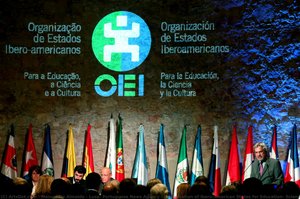
The OEI’s influence is particularly evident in one of Almeida's most striking photographs – “Organization of Ibero-American States.” This image, a documentary photograph capturing a diplomatic event, showcases Almeida’s ability to distill complex situations into powerful visual narratives. The composition—layered with detail and imbued with a sense of quiet observation—demonstrates his mastery of light and shadow, creating an atmosphere that is both formal and intimate. It's a testament to his skill in conveying the subtle tensions and unspoken dynamics within international relations.
A Portrait of Miguel Real: Memory and Melancholy
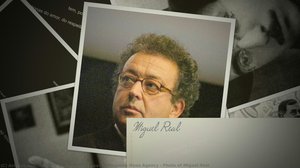
Perhaps one of Almeida’s most memorable works is his digitally manipulated portrait of Miguel de Unamuno, a Spanish philosopher and writer. This piece, titled “Photo of Miguel Real,” transcends the boundaries of simple documentation, transforming into a poignant meditation on memory, identity, and the passage of time. The image is not a straightforward likeness but rather a carefully constructed collage—a layering of photographic elements, textures, and subtle manipulations that evoke a sense of melancholy and introspection.
Almeida’s use of vintage aesthetics – faded colors, grainy textures, and a deliberate blurring of details – creates an atmosphere of nostalgia. The portrait feels like a fragment of a forgotten dream, inviting the viewer to contemplate the complexities of human experience and the elusive nature of memory. It's a masterful example of how photography can be used not merely to record events but to evoke emotions and stimulate reflection.
Documenting Portugal & Beyond: A Legacy in Journalism
Throughout his career, Almeida’s work has consistently focused on documenting significant moments in Portuguese history – from political transitions and social movements to cultural celebrations and everyday life. His photographs offer a valuable record of a nation grappling with its past while navigating the challenges of modernity. He wasn't interested in grand gestures or heroic narratives; instead, he sought to capture the quiet dignity and resilience of ordinary people.
Beyond Portugal, Almeida’s work has also extended to documenting events across Europe and beyond. His photographs have captured scenes of diplomacy, cultural exchange, and humanitarian aid – offering a glimpse into the interconnectedness of the world. The Museum of Medeiros e Almeida in Lisbon houses several of his works, including “Manuel de Almeida / Lusa,” which provides a comprehensive overview of his career and artistic vision.
The Enduring Significance
Manuel de Almeida’s legacy lies not in flashy exhibitions or critical acclaim but in the quiet power of his photographs. His work offers a rare glimpse into the heart of Portugal – its history, its people, and its enduring spirit. He was a master of observation, a keen chronicler of everyday realities, and a testament to the transformative potential of photography as a tool for understanding and empathy. His commitment to documenting events with honesty and integrity ensures that his photographs will continue to resonate with audiences for generations to come.