María del Rosario Nadal y Fuster de Puigdorfila: A Convergence of Art, Architecture, and Basque Identity
Xabier Salaberria’s work is a compelling exploration at the intersection of art, design, and architecture – a space where history, memory, and the tangible world collide. Born in San Sebastián, Spain, in 1969, María del Rosario Nadal y Fuster de Puigdorfila (known as Rosario Nadal) has cultivated a singular artistic practice deeply rooted in her Basque heritage while simultaneously engaging with broader contemporary concerns. Her journey, marked by both personal and professional transitions – including a marriage to Prince Kyril of Preslav and her role at the prestigious Colección Jumex – reveals an artist constantly seeking new dialogues and perspectives. Initially trained in fine art, Nadal’s career evolved into one of strategic curation and independent consulting, shaping her unique approach to understanding and presenting contemporary art.
Early Life and Influences: Basque Roots and European Connections
Rosario Nadal's lineage is rich with historical significance. Born into the Spanish nobility through her maternal family, tracing back to the Aztec Emperor Montezuma II, she inherited a legacy of cultural connection and artistic patronage. Her upbringing in Palma de Mallorca instilled within her an appreciation for both traditional craftsmanship and European artistic movements. Crucially, her marriage to Prince Kyril introduced her to a world beyond Spain – a journey that profoundly influenced her perspective on global art and design. This exposure extended to Princeton University, where she earned a degree in physics, demonstrating a surprisingly analytical mind alongside her burgeoning artistic sensibilities. The combination of Basque identity, aristocratic heritage, and academic rigor forms the bedrock of Nadal’s creative vision.
A Practice Defined by Concrete and Layered Meaning
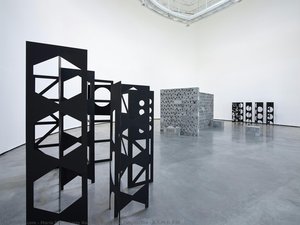
Nadal's work is instantly recognizable for its use of concrete – a material she often employs to create monumental, textured sculptures that evoke both Brutalist architecture and the rugged landscapes of her native Basque Country. Her most celebrated piece, “A.T.M.O.T.W.” (Atmosphere of Time), exemplifies this approach. This imposing concrete installation, exhibited at the Guggenheim Museum Bilbao and Artium, is not merely a sculpture; it’s an architectural statement layered with symbolic meaning. The work references Basque art history, particularly the modernist movement, while simultaneously exploring themes of memory, time, and the relationship between humans and their environment. Salaberria's meticulous attention to detail – from the precise arrangement of aggregates to the subtle variations in texture – reveals a deep understanding of material properties and their expressive potential.
Beyond Sculpture: Advisory Roles and Contributions to Contemporary Art
While her sculptural work is undoubtedly central to Nadal’s artistic identity, her career extends far beyond individual creations. She has served as an independent art advisor, guiding private collectors in navigating the complexities of the contemporary art market. Her role as deputy director of Colección Jumex, a leading private collection showcasing international contemporary art, demonstrates her commitment to fostering dialogue and promoting innovative artistic voices. This position allows her to curate exhibitions, acquire significant works, and contribute to the ongoing evolution of the art world. Furthermore, her involvement with institutions like the Barcelona Museum of Contemporary Art and Museo Nacional Centro de Arte Reina Sofía highlights her dedication to supporting and expanding access to contemporary art.
Recognition and Legacy: A Rising Star in the Art World
María del Rosario Nadal y Fuster de Puigdorfila’s work has garnered significant recognition within the art community. Ranked among the top 10,000 artists by Artfacts, she is a respected figure whose influence extends beyond her own creations. Her unique blend of artistic vision, historical awareness, and professional acumen positions her as a key player in shaping the landscape of contemporary art. Her ongoing work continues to explore the intersections of art, architecture, and culture, solidifying her place as an artist deeply connected to both her Basque roots and the global art scene. The combination of her personal life – including her past marriage to Prince Kyril – adds another layer of intrigue to her story, further cementing her status as a compelling and multifaceted figure in the world of art.