Early Life and Education
- Born: March 18, 1867, Kolhapur, India
- Died: June 1, 1944
- Family Background: Rao Bahadur Mahadev Vishwanath Dhurandhar came from a Marathi Pathare Prabhu family.
- Early Education: He attended Rajaram High School in Kolhapur.
- Formal Art Training: Dhurandhar studied at the Sir J. J. School of Art in Mumbai, where he was a student of John Griffiths.
- Academic Achievements: He won numerous medals for his work and graduated in 1895.
Career and Contributions to Indian Art
- Teaching Career: In 1896, Dhurandhar joined the Sir J. J. School of Art as a teacher, dedicating the rest of his career there. He rose through the ranks, becoming Head Master in 1910 and Inspector of Drawing and Craft in 1918.
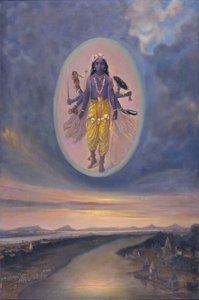
- Illustrative Works: Dhurandhar was prolific illustrator, creating works for books, periodicals (like *Amar* and *Bhoot*), calendars, advertisements, and postcards.
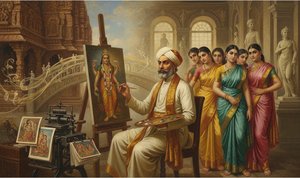
- Subject Matter: His popular works documented the city of Bombay and its people, scenes from Hindu mythology, and illustrations inspired by Omar Khayyam. He also created ethnographic postcards widely used during the British colonial era.
- Notable Publications: Dhurandhar contributed illustrations to Otto Rothfield's *Women of India* (1920) and S. M. Edwardes’ *By-Ways of Bombay* (1912).
- Recognition: He was elected as a Fellow of the Royal Society of Arts in 1938.
Style, Influences, and Artistic Development
- Influences: Dhurandhar's style was significantly influenced by his training at the Sir J. J. School of Art, where he was exposed to Western artistic techniques.
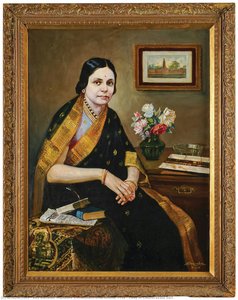
- Artistic Style: His paintings often depicted scenes from everyday life with meticulous attention to detail and vibrant colors. He blended academic realism favored by British colonials with Indian subjects.
- Evolution of Technique: Dhurandhar embraced the phenomenon of outdoor painting, contributing significantly to this genre alongside artists like Abalall Rahiman and N. R. Sardesai.
- Early Inspiration: Raja Ravi Varma was a significant inspiration for Dhurandhar, who later created works for Varma's printing press.
Major Achievements and Historical Significance
- Prolific Output: Dhurandhar produced an extensive body of work, estimated to include over 5,000 paintings and 50,000 illustrations.
- Awards and Recognition: He received numerous awards throughout his career, including several gold and silver medals from the Bombay Art Society.
- Royal Patronage: His works were acquired by Buckingham Palace and the South Kensington Museum, demonstrating international recognition.
- Pioneer of Indian Art: Dhurandhar is considered a pioneer of Indian art, bridging Western artistic traditions with Indian cultural themes. He played a crucial role in shaping the Bombay School of painting.
- Autobiography: He wrote an autobiography in Marathi titled *Kalamandirantil ekechalish varsham*, providing valuable insights into his life and career at the J.J. School.
Legacy
- Influence on Subsequent Generations: Dhurandhar mentored numerous students, contributing to the development of Indian art education.
- Continued Appreciation: His paintings continue to be admired for their realism, cultural richness, and historical significance.
- Availability of Works: His works are available as reproductions and prints on platforms like ArtsDot.com.